 EN
EN

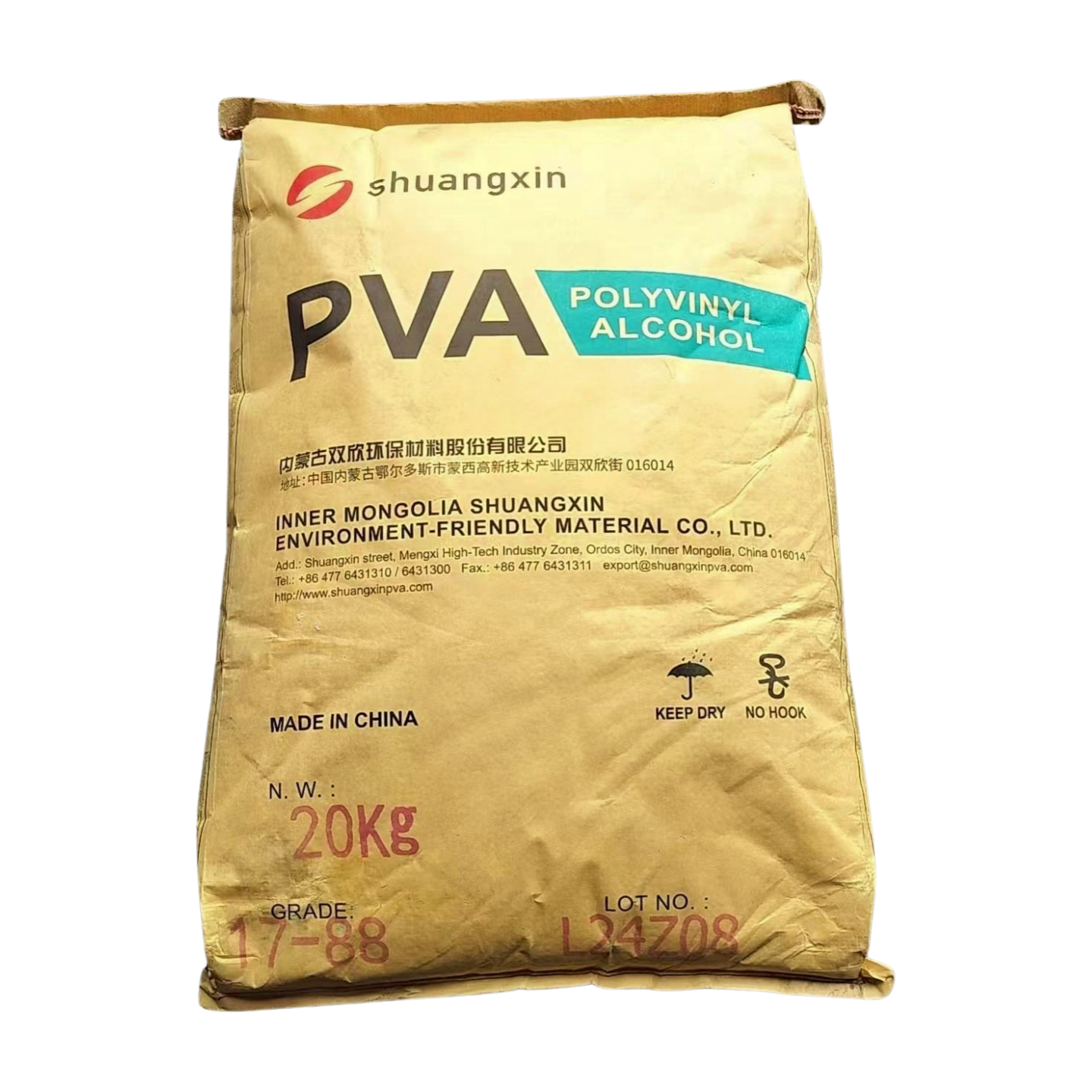
Core Functional Properties of Polyvinyl Alcohol Enabling Sustainable Packaging
Water solubility and tunable dissolution kinetics for precision applications
Polyvinyl alcohol (PVA) dissolves readily in water, and its dissolution rate can be precisely engineered by adjusting the degree of hydrolysis and molecular weight during synthesis. This tunability enables tailored performance—from rapid, residue-free release in unit-dose detergent pods to delayed dissolution in agricultural mulch films. Its exceptional film-forming ability ensures structural integrity during storage and handling, while guaranteeing complete, water-triggered breakdown when needed. These attributes make PVA uniquely suited for precision packaging where controlled release or single-use dissolution is critical.
Inherent low toxicity and global regulatory approval for food and pharma use
PVA exhibits an inherently low toxicity profile and is globally approved for direct food contact and pharmaceutical applications. The U.S. FDA classifies it as Generally Recognized as Safe (GRAS), with equivalent approvals from the European Food Safety Authority (EFSA), Japan’s Ministry of Health, Labour and Welfare (MHLW), and other major regulatory bodies. This safety profile supports its use in edible fruit and vegetable coatings, sterile medical device wraps, and oral thin-film drug delivery systems. Unlike many synthetic polymers, PVA does not leach monomers or plasticizers—reinforcing its trustworthiness in sensitive consumer and clinical applications.
Competitive barrier performance against oxygen and moisture in thin-film formats
In thin-film form, PVA delivers outstanding barrier performance against oxygen, oils, and organic vapors—often surpassing conventional plastics in preventing oxidative spoilage. Its highly crystalline structure creates a dense, tortuous path that impedes gas diffusion. However, its hydrophilicity limits moisture barrier efficacy under high-humidity conditions. To address this, manufacturers commonly formulate PVA with natural polymers like starch or chitosan, or reinforce it with nano-clay fillers. These hybrid films retain superior oxygen-blocking capability while significantly improving humidity resistance—extending shelf life without compromising compostability or aquatic biodegradability.
Biodegradability Realities: Environmental Fate and Operational Constraints of Polyvinyl Alcohol
Dependence on aerobic wastewater treatment infrastructure for complete mineralization
PVA’s full biodegradation—and ultimate mineralization into CO₂, water, and biomass—depends critically on industrial aerobic wastewater treatment infrastructure. Research shows degradation rates in professionally managed aerobic facilities can be up to 40× faster than in domestic composting or ambient environments. Complete mineralization requires specific enzyme-producing microbes (e.g., Pseudomonas and Sphingomonas strains) that thrive only under tightly controlled conditions: sustained temperatures near 50°C, continuous aeration, and stable pH. These parameters are unattainable in passive home composting, landfill, or marine settings—where incomplete breakdown may leave residual polymer fragments.
Risk of microplastic persistence under anaerobic conditions or improper disposal
When discarded in oxygen-deprived environments—such as landfills or stagnant waterways—PVA resists microbial degradation and fragments into persistent, microplastic-like particles within weeks. Soil incubation studies confirm detectable PVA residues after 90+ days under anaerobic conditions, due to the absence of key aerobic degraders. In marine environments, elevated salinity further suppresses enzymatic activity, slowing breakdown even more. While advanced municipal wastewater treatment plants can capture dissolved PVA via tertiary filtration and biological treatment, unregulated disposal bypasses these safeguards entirely—posing tangible environmental risks if mismanaged.
High-Impact Commercial Applications of Polyvinyl Alcohol Packaging Solutions
Market adoption of PVA packaging is driven by its unique convergence of functional performance, regulatory acceptance, and end-of-life compatibility with industrial infrastructure—not by universal biodegradability. Its commercial value lies in solving specific, high-stakes packaging challenges across sectors demanding reliability, safety, and sustainability-aligned design.
Unit-dose detergent pods: Dominant market segment leveraging PVA’s rapid, residue-free dissolution
PVA-based water-soluble films dominate the unit-dose detergent and cleaning product market. Their precisely tuned dissolution kinetics ensure full payload release in 20–40 seconds across standard and high-efficiency washing machines—without leaving behind visible film fragments or gelatinous residues that risk clogging plumbing or contaminating waterways. This performance consistency, combined with GRAS status and compatibility with automated filling lines, has made PVA the de facto standard for premium single-use formulations.
Pharmaceutical oral films and sterile medical packaging requiring GMP-compliant solubility
In pharmaceuticals, PVA serves as a foundational excipient in orally disintegrating films (ODFs) and sterile medical packaging—meeting strict Good Manufacturing Practice (GMP) requirements for purity, batch-to-batch consistency, and controlled dissolution. Its predictable hydration and film strength enable accurate dose delivery in sublingual and buccal films, while its hermetic seal integrity protects sterile devices until point-of-use. Unlike cellulose- or gelatin-based alternatives, PVA offers superior thermal stability during processing and avoids allergenic or religious compliance concerns—making it a preferred choice for global pharmaceutical supply chains.
Transparency Challenges: Greenwashing Risks and the Need for Standardized Polyvinyl Alcohol Claims
The absence of harmonized standards for environmental claims around PVA creates significant greenwashing exposure. A 2024 industry survey found that 68% of sustainability executives admitted to overstating environmental benefits—while 57% of consumers reported abandoning brands over perceived misleading claims. Regulatory fragmentation intensifies this risk: California’s Environmental Marketing Claims Law (effective 2025) mandates supply-chain-level substantiation, whereas the EU’s upcoming Green Claims Directive will require independent third-party verification for all biodegradability assertions. Without standardized, real-world–validated testing protocols—specifically assessing PVA’s fate under both aerobic wastewater treatment and anaerobic landfill conditions—marketing claims risk misrepresenting actual environmental behavior. Industry consortia must urgently align on performance benchmarks grounded in operational waste stream realities to uphold credibility and accelerate responsible innovation in sustainable packaging.
FAQ
What are the key properties of Polyvinyl Alcohol (PVA)?
PVA is water-soluble, low in toxicity, and provides excellent barrier performance against oxygen and organic vapors. It is globally approved for food and pharmaceutical applications, making it ideal for sustainable packaging solutions.
Can PVA biodegrade in home composts or marine settings?
PVA requires industrial aerobic wastewater treatment facilities for complete mineralization. In-home composts, landfills, or marine environments, it biodegrades incompletely and may leave polymer residues.
Why is PVA widely used for detergent pods and pharmaceutical applications?
Its tunable dissolution kinetics enable precise payload release, while its low toxicity and GMP compliance make it suitable for sensitive applications like single-dose pods and oral films.
What are the risks of greenwashing with PVA claims?
The lack of standardized testing protocols for biodegradability under various conditions may lead to overstated environmental benefits, emphasizing the need for harmonized industry benchmarks.
Table of Contents
- Core Functional Properties of Polyvinyl Alcohol Enabling Sustainable Packaging
- Biodegradability Realities: Environmental Fate and Operational Constraints of Polyvinyl Alcohol
- High-Impact Commercial Applications of Polyvinyl Alcohol Packaging Solutions
- Transparency Challenges: Greenwashing Risks and the Need for Standardized Polyvinyl Alcohol Claims
- FAQ