 EN
EN

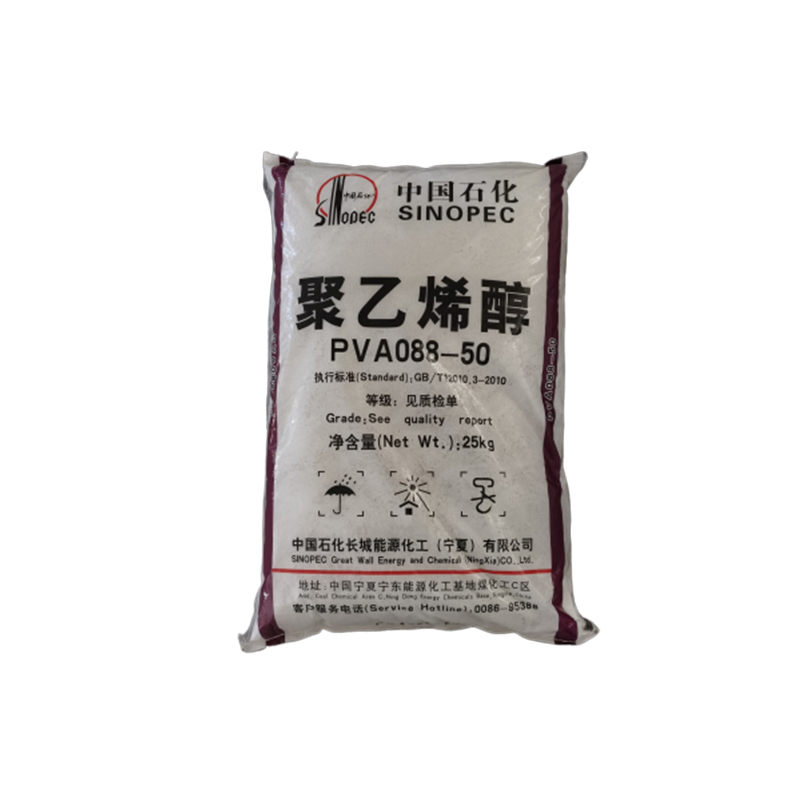
Matching Polyvinyl Alcohol Grades to Adhesive Applications
Comparing key polyvinyl alcohol grades (PVA 17-88, 24-88, 0588, 088-07) for paper, woodworking, textile, and paint adhesives
Selecting the right polyvinyl alcohol (PVA) grade directly impacts adhesive performance—particularly bond strength, drying speed, solubility, and environmental resistance. For paper adhesives—such as envelope gums and bookbinding formulations—low-viscosity, low-molecular-weight PVA 0588 (88% hydrolyzed) delivers rapid drying and reliable rewettability. Woodworking adhesives require high cohesive strength and deep substrate penetration; PVA 24-88 meets these demands with its higher molecular weight and robust film toughness. In textile sizing, partial hydrolysis balances solubility and fiber adhesion: PVA 17-88 offers optimal compatibility with synthetic warp yarns while minimizing residue buildup during desizing. For interior paint adhesives, clarity and moisture resistance are critical—fully hydrolyzed PVA 088-07 provides superior film integrity and long-term durability without yellowing. Crucially, viscosity and hydrolysis degree must align with both substrate porosity and processing parameters: lower hydrolysis improves cold-water solubility, whereas higher molecular weight increases melt viscosity and cohesive strength. Matching these intrinsic properties to application requirements is foundational to high-performance adhesive design.
Critical Performance Properties Beyond Grade Specifications
Grade specifications alone cannot guarantee consistent adhesive performance in production. Three functional properties—film-forming ability, thermal stability, and aging resistance—determine real-world reliability and long-term functionality.
Film-forming ability, thermal stability, and aging resistance in real-world adhesive use
Film-forming ability governs how uniformly PVA spreads, dries, and bridges substrate surfaces—directly influencing bond consistency, appearance, and strength distribution. Poor film formation creates weak spots, especially on uneven or low-energy substrates. Thermal stability becomes critical during high-speed coating, hot-melt extrusion, or hot-press lamination; PVAs with insufficient heat resistance undergo chain scission, leading to unpredictable viscosity drops and compromised bond integrity. Aging resistance reflects how well the cured adhesive retains performance under humidity cycling, ambient temperature fluctuations, and UV exposure. In woodworking, inadequate aging resistance manifests as progressive delamination; in textile sizes, it accelerates brittleness and fiber breakage during weaving. These properties are not fully captured by standard grade data sheets—and must be verified through application-relevant testing protocols to ensure sustained performance across manufacturing and end-use conditions.
Validating Polyvinyl Alcohol Reliability Through Rigorous Testing
Stepwise validation: solubility → rheology → bond strength and water resistance testing
A robust PVA supply chain begins with a disciplined, sequential validation process—not just supplier certifications. Solubility testing first verifies complete, reproducible dissolution under defined temperature, pH, and agitation conditions; persistent undissolved particles indicate inconsistent polymerization or contamination, risking nozzle clogging and formulation variability. Rheology assessment follows, measuring viscosity profiles across shear rates to confirm predictable flow behavior—essential for uniform coating, sprayability, and pump transfer. Bond strength evaluation then applies industry-standard methods (e.g., ASTM D903 peel or D1876 T-peel tests) to quantify adhesion under simulated service loads. Finally, water resistance testing—using controlled humidity chambers (e.g., ASTM D2247) or immersion protocols—quantifies moisture-induced bond loss over time. This tiered approach identifies performance gaps early, reduces batch rejection risk, and ensures the selected PVA grade delivers not only technical compliance but also field-proven reliability in final adhesive applications.
FAQ
What is the significance of hydrolysis degree in polyvinyl alcohol?
The hydrolysis degree determines PVA's solubility and moisture resistance. Lower hydrolysis improves cold-water solubility, while higher hydrolysis boosts cohesive strength and environmental durability.
Why is rigorous validation important for PVA performance?
Validation ensures consistent adhesive reliability through testing parameters like solubility, rheology, bond strength, and water resistance. This prevents operational issues and secures field-proven effectiveness.
How is film-forming ability crucial to adhesive applications?
Film-forming property affects how uniformly an adhesive spreads, dries, and bonds substrates. Poor film formation can create weak spots, reducing bond strength and durability.
What testing methods can measure bond strength?
Standard methods like ASTM D903 peel tests or D1876 T-peel tests simulate service loads to measure adhesion and verify reliability.