 EN
EN

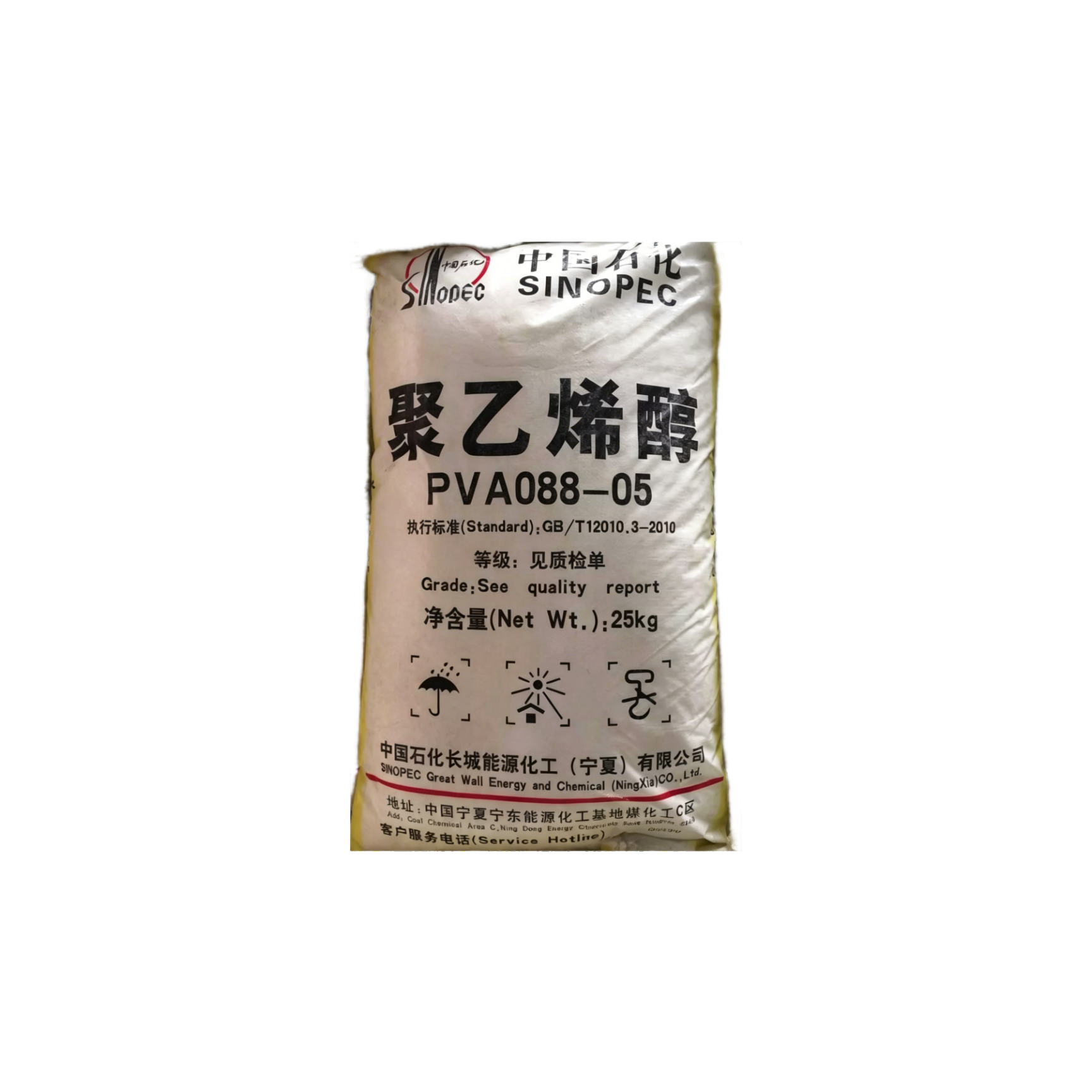
Molecular Consistency: How Factory-Packaged PVA Ensures Reliable Polymer Structure
Original factory-packaged PVA (polyvinyl alcohol) eliminates the variables that degrade polymer integrity between synthesis and use. Sealed directly after production, the resin maintains the precise molecular architecture that adhesive formulators rely on for repeatable performance.
Controlled polymerization and narrow molecular weight distribution
Factory-controlled polymerization runs under tightly managed conditions—temperature, initiator feed, and solvent purity—that yield a narrow molecular weight distribution. The result is a PVA with a polydispersity index (PDI) typically well below 2.0, meaning chain lengths cluster tightly around a target range. This uniformity directly governs dissolution rate, solution viscosity, and film-forming capacity—ensuring consistency across batches. When the molecular weight distribution broadens, low-MW fractions can create weak boundary layers, while high-MW segments may form gel particles that disrupt metering and bonding. Original packaging preserves this narrow distribution by isolating the polymer from moisture and oxygen, which otherwise promote chain scission or cross-linking during storage. Manufacturers switching to factory-sealed PVA often report fewer unplanned emulsion process adjustments, as the raw material’s rheological fingerprint remains predictable—reducing viscosity drift and maintaining tack in the final adhesive.
Stable hydrolysis degree and minimized residual catalysts
The hydrolysis degree—the proportion of acetate groups converted to hydroxyl groups—defines PVA’s water interaction and crystallinity, two critical determinants of adhesive performance. Even a 1% shift (e.g., from 88% to 89%) can measurably reduce cold-water solubility, altering open time and wet-out behavior. Original packaging locks in the as-produced hydrolysis degree by blocking ambient humidity, preventing slow, uncontrolled saponification over time. Equally important, factory processing includes thorough washing and neutralization steps that minimize residual alkaline or acidic catalysts left over from polyvinyl acetate saponification. Traces of these catalysts, if present, accelerate backbone degradation during transport and storage—lowering molecular weight and triggering premature gelling in the adhesive. By specifying factory-packaged PVA, formulators receive material with a chemically stable profile: consistent hydrolysis degree and negligible catalyst carry-over—so dispersion, emulsification, and final bond properties remain true to design specifications from first to last container.
Batch-to-Batch Reliability: Eliminating Variability in PVA Performance
Root causes of adhesive inconsistency: purity, moisture content, and rheology shifts
Variability in adhesive performance often originates at the raw material level. For PVA, three interrelated factors drive batch-to-batch inconsistency. First, residual impurities—such as sodium acetate or methanol from incomplete saponification—alter how the polymer interacts with plasticizers and crosslinkers; even a 0.5% shift in ash content can destabilize an emulsion. Second, moisture content acts as a silent disruptor: PVA is highly hygroscopic, and inconsistent packaging allows post-manufacture hydrolysis to continue, gradually reducing molecular weight. A 2023 polymer shelf-life study found improperly sealed PVA lots gained 1.2% moisture over six months—directly correlating with reduced tensile strength in finished adhesives. Third, these chemical changes manifest as rheology drift: minor increases in high-MW fractions significantly elevate solution viscosity, forcing compensatory adjustments to water or additive ratios—and moving the formulation away from its validated baseline. Understanding these root causes is the first step toward control, as emphasized in industry guidance on quality assurance techniques for batch-to-batch consistency.
Real-world evidence: 47-lot failure analysis linking PVA variability to bond strength drift
A forensic analysis of 47 failed production lots at a leading adhesive manufacturer revealed that PVA variability was the dominant contributor to performance failure. Over 18 months of production data, 82% of bond strength deviations were traced to shifts in the incoming PVA’s hydrolysis degree and volatile content. Lots with hydrolysis degrees varying by more than ±0.8 mol% from specification produced adhesives whose peel strength ranged from 15% to 22%—well outside client tolerances. The analysis further showed that PVA moisture content exceeding 5% correlated with a 12% increase in viscosity deviation, necessitating formulation overrides that eroded bond integrity. Crucially, cross-referencing incoming QC data with final product outcomes confirmed that variability originated in the raw material—not the mixing process. This evidence underscores that controlling PVA lot-to-lot consistency is the most effective strategy for mitigating performance risk.
Formulation Confidence: Predictable Dispersion, Dosing, and Final Product Performance
Standardized PVA rheology enabling precise metering and stable emulsion formation
Factory-packaged PVA delivers standardized rheology—including viscosity and flow behavior—enabling precise dosing in adhesive formulations. Repackaged or exposed PVA, prone to moisture uptake, introduces metering errors that destabilize emulsions and compromise bond strength. Consistent rheology ensures uniform dispersion and reliable emulsion formation—both essential for reproducible final performance. Precise dosing directly influences viscosity, tack, and open time; variability here undermines formulation integrity. Stable emulsification depends on PVA’s ability to dissolve uniformly and interact predictably with other components—something only achievable when molecular weight and hydrolysis degree remain tightly controlled. On automated lines, even minor rheological shifts can trigger alarms and costly stoppages. Factory-packaged PVA mitigates this risk through tight control of particle size and moisture content, ensuring smooth flow through dosing equipment. The result is reduced recalibration, less waste, and scalable efficiency—rooted in raw material reliability.
End-to-End Traceability and Risk Mitigation with OEM PVA Packaging
Original factory-packaged PVA provides end-to-end traceability via lot-specific QC data and ISO-certified documentation. Each shipment includes verified measurements of hydrolysis degree, molecular weight, moisture content, and ash residue—all assessed under ISO 9001-certified protocols. This eliminates redundant in-house testing and guarantees conformance to exact specifications. Manufacturers can track batches across the supply chain, rapidly isolate quality deviations, and maintain full chain-of-custody records. The resulting transparency streamlines regulatory audits, accelerates root cause analysis, and reduces recall risk. Ultimately, comprehensive traceability safeguards product integrity and reinforces customer confidence.
FAQ
What does factory-packaged PVA ensure?
Factory-packaged PVA ensures the preservation of polymer integrity, maintaining consistent molecular architecture, hydrolysis degree, and minimizing residual catalysts.
Why is hydrolysis degree critical for adhesive performance?
Hydrolysis degree defines PVA’s interaction with water and crystallinity, which influence cold-water solubility, open time, and wet-out behavior in adhesive applications.
How does original packaging minimize variability in PVA performance?
Original packaging prevents exposure to moisture and oxygen, maintaining stable molecular weight distribution and rheological properties.
What are the benefits of end-to-end traceability in OEM PVA packaging?
OEM PVA packaging provides verified QC data and ISO-certified documentation, enabling efficient regulatory audits, quality assurance, and reduced recall risk.
How does moisture content affect PVA consistency?
Moisture uptake can alter viscosity and lead to rheological drift, reducing adhesive performance and increasing formulation instability.
Table of Contents
- Molecular Consistency: How Factory-Packaged PVA Ensures Reliable Polymer Structure
- Batch-to-Batch Reliability: Eliminating Variability in PVA Performance
- Formulation Confidence: Predictable Dispersion, Dosing, and Final Product Performance
- End-to-End Traceability and Risk Mitigation with OEM PVA Packaging