 EN
EN

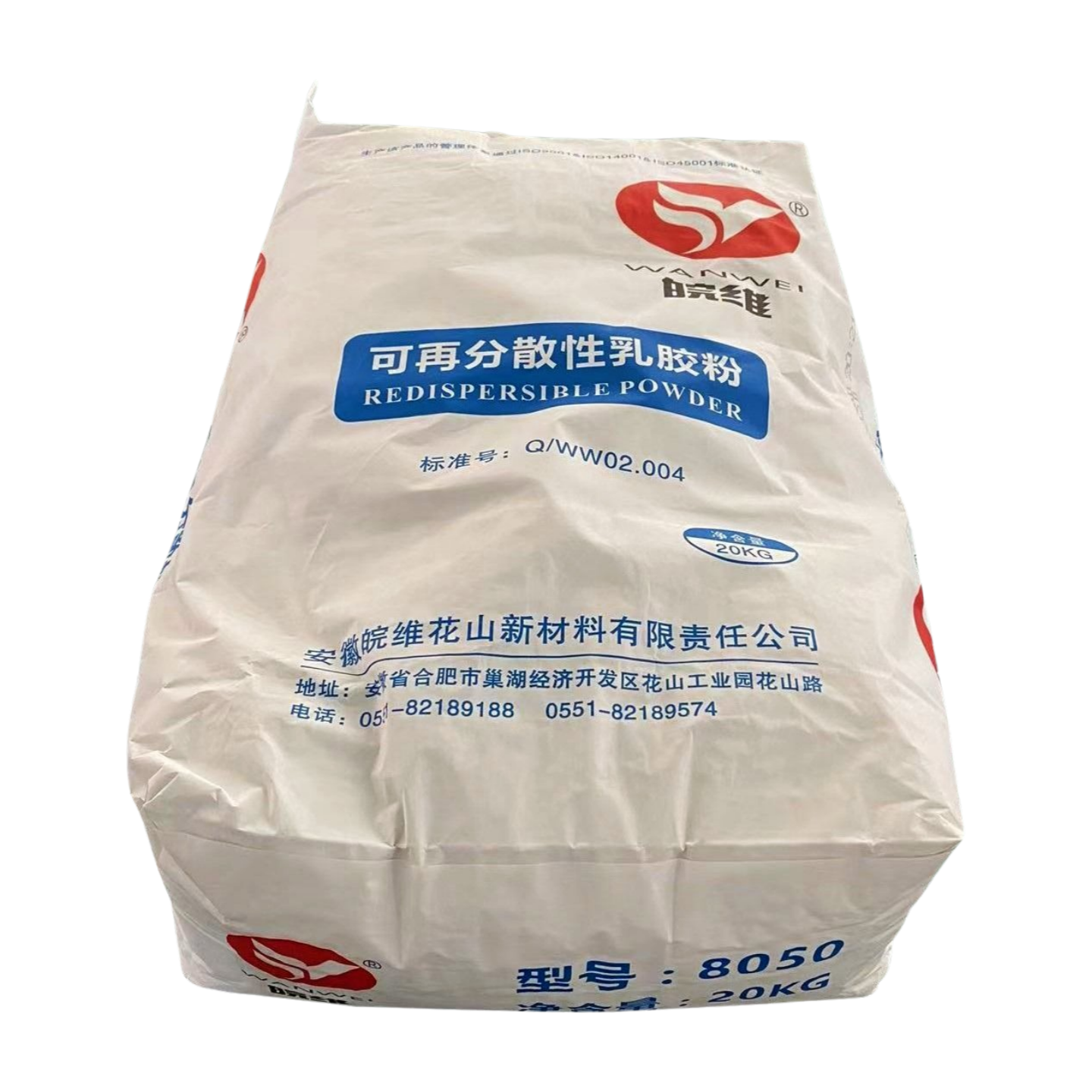
Chemical and Physical Compatibility of Redispersible Polymer Powder and PVA
Molecular Affinity Between VAE-Based Redispersible Polymer Powder and PVA in Dry-Mix Systems
The compatibility of redispersible polymer powder (RDP) with polyvinyl alcohol (PVA) in dry-mix tile adhesives stems from structural similarity between their polymer backbones. Most commercial RDPs are vinyl acetate–ethylene (VAE) copolymers spray-dried using PVA as a protective colloid—a process that embeds PVA directly into the powder particles. This integration prevents irreversible aggregation and ensures rapid, uniform redispersion in water. The molecular affinity arises because vinyl acetate segments in VAE closely resemble the partially hydrolyzed polyvinyl acetate chains in PVA, enabling strong hydrogen bonding between PVA’s hydroxyl groups and VAE’s acetate moieties. As a result, PVA acts as an intrinsic compatibilizer, facilitating instantaneous re-emulsification upon hydration.
The degree of PVA hydrolysis—typically 80–99 mol%—critically influences rewetting speed and final film homogeneity. A moderate hydrolysis level (87–89 mol%) strikes the optimal balance: sufficient water solubility for rapid dissolution, coupled with adequate surface activity to ensure full integration of redispersed VAE particles into the PVA matrix without phase separation. This synergy underpins consistent adhesive performance across production batches.
Phase Behavior, Film Formation, and Coalescence During Hydration and Drying
When water is added, the PVA protective colloid dissolves, forming a continuous aqueous phase while VAE particles swell and redisperse. As the mortar cures and water evaporates, capillary pressure and residual moisture plasticize the polymer phase, driving interdiffusion between PVA and VAE domains. This leads to coalescence and formation of a homogeneous polymer film that bridges cement hydrates and aggregate particles. For VAE-based RDP, ethylene content lowers the minimum film-forming temperature (MFFT), enabling robust film formation at ambient conditions—no coalescing agents required.
Partially hydrolyzed PVA contributes semi-crystalline domains that reinforce the film, improving tensile strength and reducing water sensitivity. During drying, the resulting flexible interpenetrating network encapsulates the inorganic matrix, enhancing adhesion and mitigating shrinkage cracks. However, excessive PVA hydrolysis (e.g., >95 mol%) can trigger premature gelation, leading to uneven film distribution and compromised bond integrity.
Performance Synergy: How Redispersible Polymer Powder Enhances PVA-Based Tile Adhesive Properties
Crack Resistance and Flexibility via VAE/PVAC Blend Ratios
Crack resistance and flexibility in tile adhesives depend critically on the ratio of VAE-based RDP to polyvinyl acetate (PVAC) homopolymer. Ethylene segments in VAE act as internal plasticizers, enabling elongation up to 300% without rupture—whereas pure PVAC yields a stiff, brittle film. Blending creates a dual-phase network: PVAC domains supply rigidity and cohesive strength; VAE phases dissipate stress through controlled deformation. An 80:20 VAE:PVAC ratio typically delivers 15–25% tensile elongation and a low modulus of 50–100 MPa—ideal for bridging substrate microcracks while maintaining bond integrity. Exceeding 30% PVAC raises the glass transition temperature and increases susceptibility to brittle failure under thermal or mechanical cycling. Precisely tuned VAE/PVAC blends are therefore essential for achieving EN 12004-compliant crack-bridging performance.
Wet-Bond Strength Optimization Through RDP Type and PVA Hydrolysis Degree
Wet-bond strength hinges on both RDP chemistry and PVA hydrolysis. VAE-based RDPs with 10–15% ethylene content form hydrophobic films that resist water intrusion, outperforming acrylic or styrene-butadiene alternatives in sustained wet-adhesion scenarios. Meanwhile, PVA hydrolysis governs water solubility and film flexibility: grades hydrolyzed to 87–89 mol% dissolve rapidly and coalesce into adhesive, flexible films—delivering wet-bond strengths consistently exceeding 0.5 N/mm² after immersion. Fully hydrolyzed PVA (98–99 mol%) offers superior water resistance but forms a more crystalline, less deformable film that can reduce adhesion to damp substrates. Formulators therefore pair medium-ethylene VAE RDP with partially hydrolyzed PVA to meet C2S1 requirements—ensuring durable, moisture-resistant bonds on porcelain and other impervious tiles.
Formulating for Compliance and Cost Efficiency Using Redispersible Polymer Powder
Optimal Redispersible Polymer Powder:PVA Ratios (70:30–90:10) for EN 12004 C2TE Certification
Achieving EN 12004 C2TE classification—which mandates high tensile adhesion after water immersion and heat ageing—requires precise control of the RDP:PVA ratio. Testing confirms that blends containing 70–90% VAE-based RDP and 10–30% fully hydrolyzed PVA reliably deliver the necessary cohesion, elastic modulus, and thermal stability. Within this range, higher RDP fractions (80:20 to 90:10) maximize film flexibility and crack-bridging capacity during thermal cycling, while the PVA component enhances interfacial affinity with cement hydrates—boosting wet-bond performance.
Even at the lower end (70:30), systems remain compliant, though marginally increased water sensitivity must be offset by optimized curing protocols. From a cost perspective, each 10% increase in PVA substitution reduces raw material expense by up to 18%, making the 70:30 ratio especially attractive for high-volume applications where margins are constrained. Ultimately, selection within this band reflects a deliberate trade-off between regulatory compliance, long-term durability, and production economics—avoiding over-specification without compromising performance.
Redispersible Polymer Powder Interaction with Critical Additives in Tile Glue Systems
HPMC–RDP–PVA Triad: Synergistic Rheology Control and Enhanced Film Integrity
Hydroxypropyl methyl cellulose (HPMC) controls fresh-state rheology—suppressing segregation while retaining water for cement hydration. When combined with redispersible polymer powder (RDP), it supports a two-stage functional synergy: HPMC governs open time and slump resistance, while RDP—and its inherent PVA stabilizer—co-builds a continuous, flexible polymer matrix during drying. This matrix bridges cement hydrates and aggregate particles, reinforcing film integrity and minimizing microcracking. The triad delivers reliable non-sag behavior, high wet-bond adhesion to dense tiles, and robust performance on impervious substrates—without requiring additional thickeners or film-forming aids.
FAQs
What is redispersible polymer powder (RDP)?
Redispersible polymer powder (RDP) is a spray-dried polymer emulsion used in construction materials to improve adhesion, flexibility, and durability. It's commonly based on vinyl acetate-ethylene (VAE) copolymers.
How does PVA influence the performance of RDP-based systems?
Polyvinyl alcohol (PVA) acts as a stabilizer for RDP, ensuring rapid and uniform dispersion in water. It also enhances the overall film integrity, tensile strength, and moisture resistance in dry-mix adhesive applications.
Why is the hydrolysis degree of PVA important?
The hydrolysis degree of PVA affects its water solubility and compatibility with other components. Partially hydrolyzed PVA (87–89 mol%) strikes an optimal balance between solubility and film flexibility.
What is the ideal RDP:PVA ratio for tile adhesives?
A ratio between 70:30 and 90:10 is optimal, depending on the performance needs and cost considerations of the application. These ratios ensure EN 12004 certification while maintaining adhesive performance.
What role does VAE play in improving crack resistance?
VAE contributes ethylene segments that act as internal plasticizers, enhancing flexibility and crack-bridging capacity. This is critical for applications requiring robust adhesion under mechanical or thermal stress.
Table of Contents
- Chemical and Physical Compatibility of Redispersible Polymer Powder and PVA
- Performance Synergy: How Redispersible Polymer Powder Enhances PVA-Based Tile Adhesive Properties
- Formulating for Compliance and Cost Efficiency Using Redispersible Polymer Powder
- Redispersible Polymer Powder Interaction with Critical Additives in Tile Glue Systems
- FAQs