 EN
EN

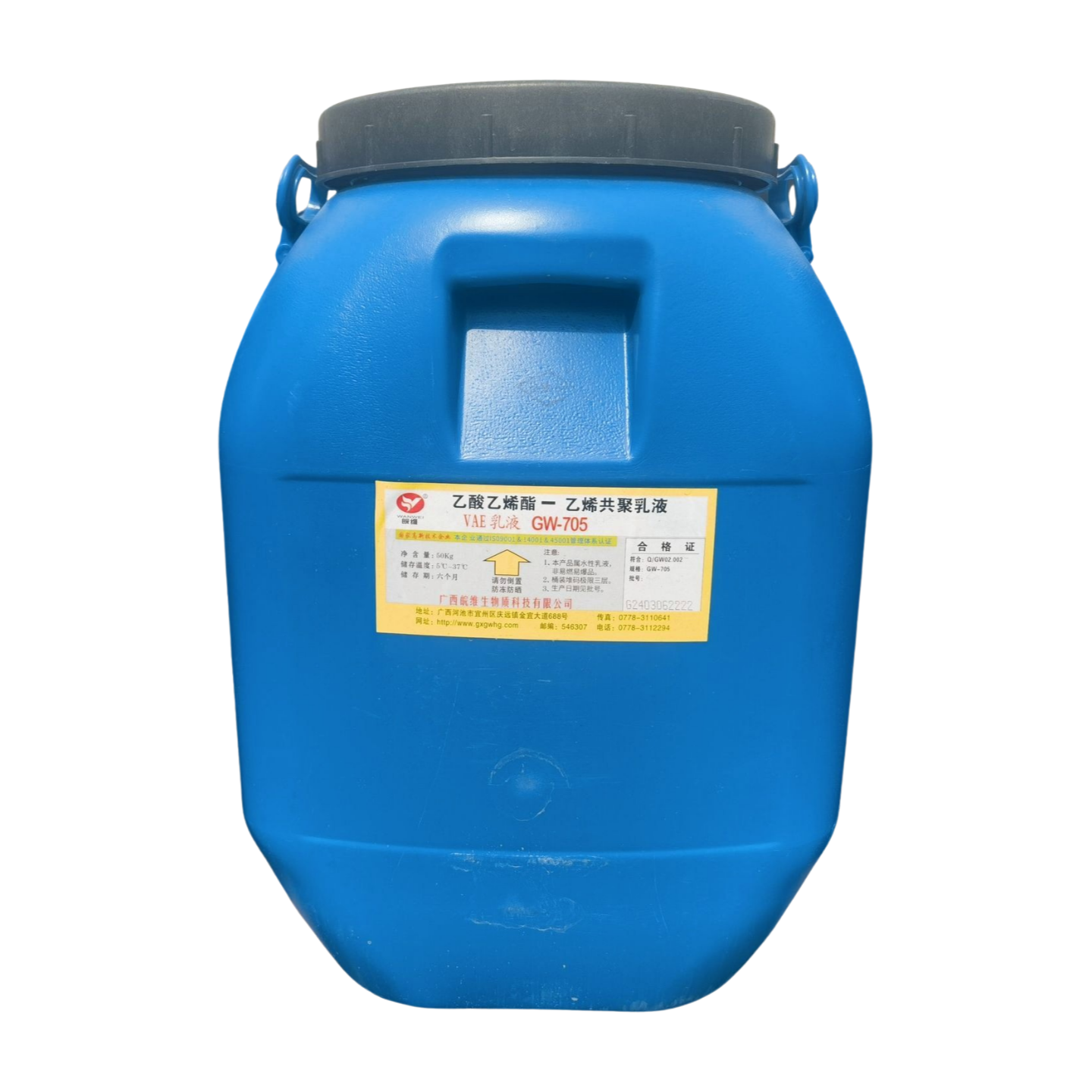
Temperature Control: The Primary Factor for VAE Emulsion Stability
Temperature stands as the single most decisive factor in preserving VAE emulsion during warehousing and workshop storage. Even slight deviations from the recommended range can trigger coalescence, viscosity drift, or irreversible particle damage—directly shortening usable shelf life.
Critical Safe Range: Why 5–30°C Prevents Coalescence and Viscosity Loss
A stable VAE emulsion depends on maintaining a narrow temperature window between 5°C and 30°C. Within this range, Brownian motion remains gentle enough to prevent excessive particle collisions that cause coalescence, yet sufficient to sustain dispersion homogeneity. Prolonged exposure above 30°C accelerates hydrolysis of protective colloids—commonly polyvinyl alcohol—and increases ethylene-vinyl acetate chain scission. A 2022 technical bulletin from a leading polymer producer reported only a 3% viscosity increase after 12 months at 25°C, whereas samples stored at 35°C suffered a 28% viscosity loss over the same period due to micro-coalescence. Near 5°C, risk remains low—but diurnal fluctuations in industrial workshops demand consistent monitoring. This 5–30°C band also suppresses microbial growth and preserves the rheological profile essential for reliable adhesive or coating application. Maintaining it requires insulated storage zones and, where needed, active climate control—a modest investment given that 90% of premature emulsion failures in field surveys (PSTC 2023) trace back to thermal abuse.
Why Freezing Below 0°C Causes Irreversible Damage to VAE Emulsion Particles
Freezing ruptures the surfactant-stabilized interface around VAE polymer particles with ice crystal formation, causing catastrophic and permanent destabilization. Unlike reversible viscosity shifts, freeze-thaw damage forces particles into intimate contact, resulting in coalescence into an irreversibly gelled mass. A 2021 peer-reviewed study on ethylene-vinyl acetate dispersions found that a single 24-hour cycle at −5°C increased gel content tenfold, eliminating film-forming capability. Thawing rarely restores functionality: water separation, grit formation, and pH collapse are typical outcomes. Deep-freeze conditions below −10°C—common in unheated winter warehouses—can also fracture container seals, introducing moisture and further degrading the matrix. Fused polymer domains resist redispersion even under high-shear workshop mixing. Insurance claims data from 2022 show cold-weather losses accounted for 36% of all storage-related emulsion spoilage. Warehouses in cold climates must therefore use heating traces, insulated jackets, or climate-controlled rooms to ensure emulsion stays above 5°C at all times—because one night of sub-zero exposure can negate months of careful handling.
Packaging and Environmental Protection for Long-Term VAE Emulsion Integrity
Proper packaging is a critical frontline defence for preserving VAE emulsion quality by shielding it from atmospheric oxygen, moisture ingress, and light-induced degradation. Even when temperature and pH are tightly controlled, suboptimal containment can trigger coalescence, skin formation, and loss of application performance over time.
HDPE Drums with Hermetic Seals: Blocking Oxygen and Moisture Ingress
High-density polyethylene (HDPE) drums with true hermetic seals create a near-impermeable barrier, limiting oxygen permeation to under 0.1 cm³/m²·day·atm at 23°C—significantly reducing oxidation-driven thickening and destabilization. Leak-tested closures maintain moisture vapor transmission rates below 0.5 g/m²·day, preventing dilution or surface crusting. Gaskets should be inspected annually for compression set; even a 2% rise in oxygen exposure can shorten shelf life by 4–6 weeks. By minimizing headspace gas exchange, hermetic HDPE packaging sustains the emulsion’s original viscosity profile and surfactant equilibrium—supporting long-term process reliability without overreliance on preservatives.
UV Shielding: How Opaque Containers Prevent Radical Degradation in VAE Emulsion
Ultraviolet radiation (UV-A and UV-B) generates hydroxyl and peroxyl radicals in water-based polymers, cleaving backbone bonds and causing discoloration and sharp viscosity loss. Opaque containers—typically HDPE pigmented with carbon black or titanium dioxide—attenuate >99% of incident UV light below 380 nm, effectively halting radical chain initiation. Studies show that storing VAE emulsion in translucent totes under standard warehouse lighting triples gel particle counts within 90 days, while light-blocking packaging maintains colloidal stability and film-forming performance for up to 12 months. For workshops with large windows or high-bay lighting, replacing even partially transparent containers delivers immediate, low-cost protection—preserving tensile strength and adhesive performance in final applications.
Chemical Stability Management: pH, Ions, and Phase Separation Risks
Maintaining pH 4.5–5.5 to Preserve Zeta Potential and Colloidal Stability
Colloidal stability in VAE emulsion hinges on strict pH control. The optimal range of 4.5–5.5 sustains a high negative zeta potential, generating strong electrostatic repulsion between polymer particles and preventing flocculation and phase separation. A drop below 4.0 neutralizes surface charges via excess protons, collapsing the electrical double layer and triggering rapid coalescence. A rise above 5.5 risks hydrolysis of protective colloids and weakens steric stabilization—both increasing ionic strength and accelerating viscosity loss. Routine pH checks using a calibrated meter, paired with targeted buffering agent additions, preserve system resilience. Operators must also exclude multivalent metal ions (e.g., Ca²⁺, Fe³⁺), which act as bridges between particles and catalyze gelation. Locking zeta potential within this stable band extends usable life and ensures consistent film-forming performance across batches.
Practical Workshop Monitoring: Early Detection and Shelf-Life Assurance for VAE Emulsion
Workshop-level monitoring provides the earliest warning system for VAE emulsion instability. Routine checks of viscosity, appearance, and odor serve as frontline indicators—sudden thinning, grittiness, or sour odors signal colloidal breakdown. Daily temperature logging is essential: excursions above 30°C often precede coalescence, while dips toward freezing point threaten irreversible aggregation. Simple tools—a calibrated thermometer and pH meter (targeting 4.5–5.5)—enable operators to detect trends before they compromise performance. When multiple drums are stored, rotating stock by production date prioritizes older material and prevents degraded emulsion from entering critical formulations. By combining visual inspection with basic analytical data, workshop teams can reliably assess remaining shelf life and intervene before full-batch failure occurs.
FAQ Section
What temperature range is crucial for VAE emulsion storage?
The recommended storage temperature range is between 5°C and 30°C. Staying within this range prevents coalescence, viscosity drift, and microbial growth.
Why is freezing detrimental to VAE emulsions?
Freezing disrupts the surfactant-stabilized interface, causing irreversible particle coalescence and destabilization. Even one freeze-thaw cycle can permanently damage the emulsion.
How does packaging impact VAE emulsion stability?
Packaging plays a vital role by preventing oxygen, moisture, and light ingress. Hermetically sealed HDPE drums and opaque containers are particularly effective for long-term preservation.
What is the ideal pH range for VAE emulsion stability?
The optimal pH range is 4.5–5.5, which sustains colloidal stability and prevents coalescence. Deviations outside this range risk particle instability.
How can workshop teams monitor VAE emulsion shelf life?
Teams can monitor shelf life by checking viscosity, appearance, odor, and temperature daily. Instruments like thermometers and pH meters help detect early signs of instability.
Table of Contents
- Temperature Control: The Primary Factor for VAE Emulsion Stability
- Packaging and Environmental Protection for Long-Term VAE Emulsion Integrity
- Chemical Stability Management: pH, Ions, and Phase Separation Risks
- Practical Workshop Monitoring: Early Detection and Shelf-Life Assurance for VAE Emulsion
- FAQ Section