 EN

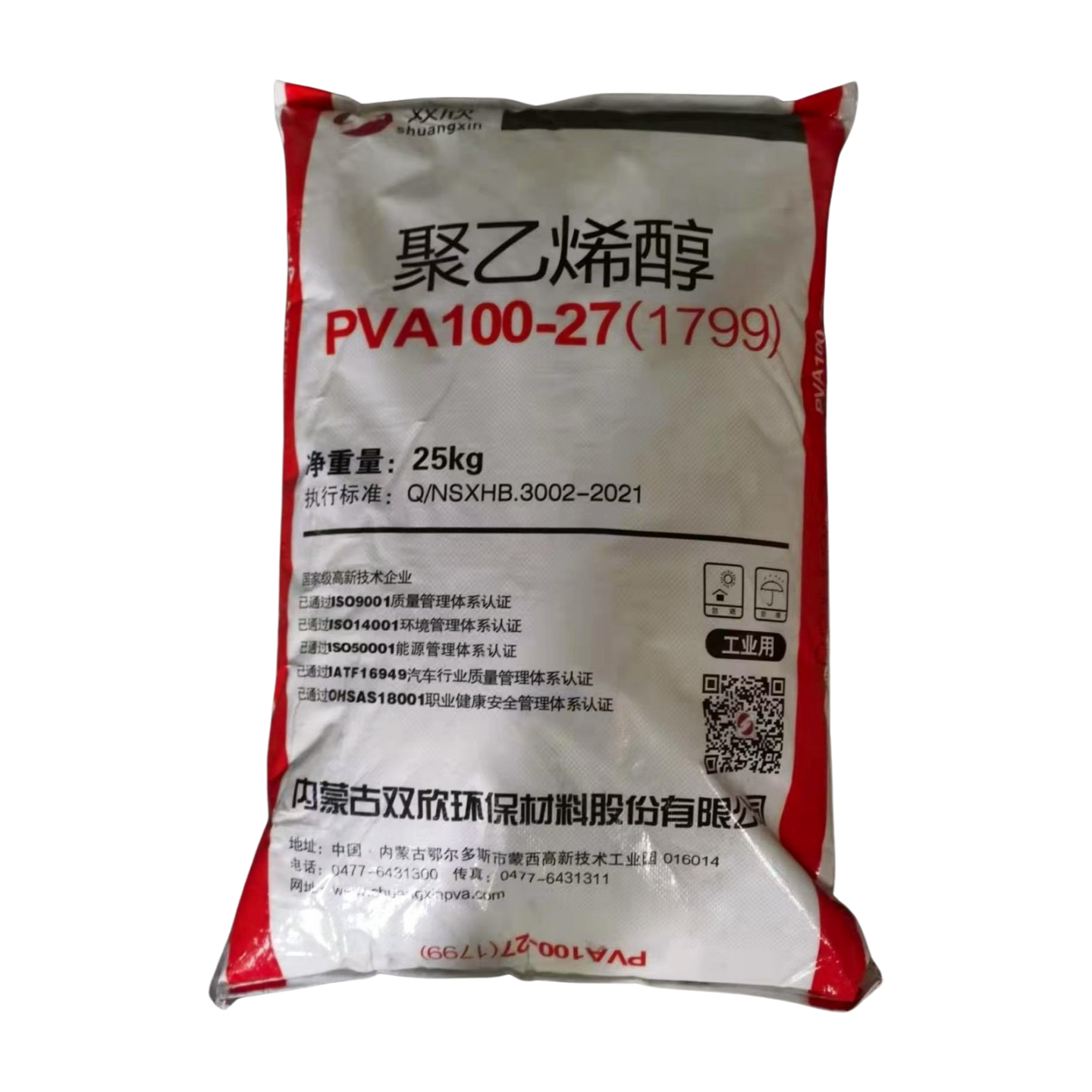
Exceptional Film Strength and Substrate Adhesion of PVA 1799
Hydrogen-Bond-Dominated Film Formation Mechanism
PVA 1799, a fully hydrolyzed polyvinyl alcohol with a 98–99% degree of hydrolysis, forms sizing films almost entirely through intermolecular and intramolecular hydrogen bonds. Its dense array of hydroxyl groups enables tight, uniform chain packing—free of disruptive residual acetate groups—yielding highly crystalline, cohesive films with tensile strength of 40–80 MPa. This hydrogen-bond-driven network resists premature fracture under the high-stress conditions of modern weaving, including rapid acceleration and deceleration on projectile or rapier looms. The film remains elastic yet tough during repeated flexing and stretching, delivering continuous protection around each yarn. As a result, loom stops and weaving defects decline significantly on high-speed machines.
Superior Adhesion on Cotton, Polyester, and Blended Yarns
The same hydroxyl-rich structure that delivers film strength also ensures robust adhesion across diverse substrates. PVA 1799 forms strong hydrogen bonds with cotton cellulose and dipole-dipole interactions with polyester ester groups—earning a “very high” adhesion rating that exceeds partially hydrolyzed grades. On pure cotton warps, it penetrates the fiber surface and binds surface fibrils, effectively doubling yarn abrasion resistance. On polyester and cotton-polyester blends, it bridges chemically dissimilar fibers, preventing size shedding during aggressive weaving. This durable attachment maintains film integrity even under high-speed inter-yarn friction, reducing hairiness and filament breakage. Though desizing requires hot water (>90 °C) due to the film’s tenacity, the payoff is measurable: loom efficiency increases by 12–18% on cotton and up to 15% on blended warps—making PVA 1799 the standard for zero-defect, high-integrity fabric production.
Balanced Solubility and Thermal Stability for Efficient Production
Rapid Cold-Water Dissolution Reduces Energy and Downtime
PVA 1799’s alcoholysis degree (typically 86–89 mol%) strikes an optimal balance between hydrophilic hydroxyl groups and minimal hydrophobic acetate residues. This composition enables rapid, complete dissolution in ambient tap water within 30 minutes under gentle circulation—no steam heating or insulated kettles required. Unlike fully hydrolyzed PVAs demanding 90 °C and extended cooking, this cold-water solubility slashes thermal energy use by 35% (Textile Research Journal, 2022) and cuts associated carbon emissions. It also eliminates batch waiting times: fresh size can be mixed on demand, avoiding idle hot tanks during short loom stops. Cleanup between product changes simplifies to cold-water flushing—no hazardous chemicals needed—reducing downtime by half. This agility is essential in high-mix, responsive weaving environments.
Thermal Stability up to 220 °C Supports High-Speed Loom Operation
PVA 1799 retains film integrity well beyond operational temperatures encountered during high-speed weaving. Thermogravimetric analysis confirms onset of significant decomposition only above 220 °C in air—far exceeding the frictional heat at the size-reed interface, even on projectile or rapier looms running at 700 rpm. This exceptional thermal threshold prevents softening, melting, or shedding, preserving yarn protection throughout the shed cycle—even in demanding applications like dense polyester filament fabrics. As a result, loom efficiency stays consistently above 92%, without resorting to inter-cooling sprays or speed reduction. Mill trials confirm a direct correlation between this heat resistance and lower warp stops per million picks, as well as improved fabric finish post-desizing.
Predictable Rheology and Low-Foam Performance in Concentrated Baths
PVA 1799 exhibits near-Newtonian rheology across typical sizing shear rates—a marked advantage over natural and many synthetic polymers that display nonlinear, concentration-sensitive viscosity shifts. This stability enables precise control of size pick-up, even at elevated bath solids (12–15% w/w), critical for high-speed loom performance. Mills avoid viscosity “drift,” which causes uneven coating and downstream breakage—an issue costing high-output operations an estimated $180,000 annually in downtime and waste (Textile Process Benchmarking, 2023).
Its ultra-high hydrolysis minimizes residual acetyl groups and surface-active impurities, resulting in inherently low foam generation. Unlike starch-based sizes—which produce persistent foam interfering with yarn penetration—the PVA 1799 bath remains stable and self-clearing. In identical 10% w/w baths, PVA 1799 shows markedly superior performance:
| Property | PVA 1799 | Typical Starch Size |
|---|---|---|
| Viscosity at 100 s⁻¹ (mPa·s) | 28 ± 3 | 60 – 180 (shear‑dependent) |
| Foam Height after 5 min (Ross‑Miles, mm) | < 8 | > 45 |
| Bath skimming required per shift | None | 2 – 3 times |
Eliminating anti-foam additives and frequent cleanouts extends uninterrupted weaving runs and lowers operating cost per metre. Stable flow parameters also simplify pump and circulation system design—supporting consistent performance and six-sigma quality in precision textile manufacturing.
Sustainability and Regulatory Compliance Advantages of PVA 1799
Certified Biodegradability (OECD 301B) vs. Synthetic Alternatives
PVA 1799 achieves over 90% ultimate biodegradation within 28 days under OECD 301B testing, mineralizing cleanly into CO₂ and water without generating persistent microplastics (2023 Textile Chemical Consortium data). In contrast, common synthetic alternatives—including acrylate-based polymers and polyester resins—show low inherent biodegradability and often require advanced oxidation or incineration for safe disposal. This intrinsic environmental compatibility supports compliance with ZDHC MRSL, EU Ecolabel, and REACH requirements, enabling mills to streamline effluent treatment, reduce regulatory exposure, and deliver certified eco-fabrics—without compromising weaving efficiency or quality.
FAQs
What is the primary mechanism that provides PVA 1799 its strength?
PVA 1799's strength is primarily due to an extensive network of hydrogen bonds that form tight, crystalline films.
Why is PVA 1799 suitable for cotton, polyester, and blended yarns?
Its hydroxyl-rich structure forms hydrogen bonds with cotton cellulose and dipole interactions with polyester ester groups, ensuring robust adhesion across these substrates.
How does PVA 1799 dissolve in water?
Thanks to its alcoholysis degree, PVA 1799 dissolves rapidly in cold water, eliminating the need for high-temperature heating.
What are the thermal stability advantages of PVA 1799?
PVA 1799 remains stable up to 220 °C, allowing it to withstand high-speed weaving without softening or shedding.
Is PVA 1799 environmentally friendly?
Yes, PVA 1799 is over 90% biodegradable under OECD 301B standards, decomposing into CO₂ and water without creating microplastics.