 EN
EN

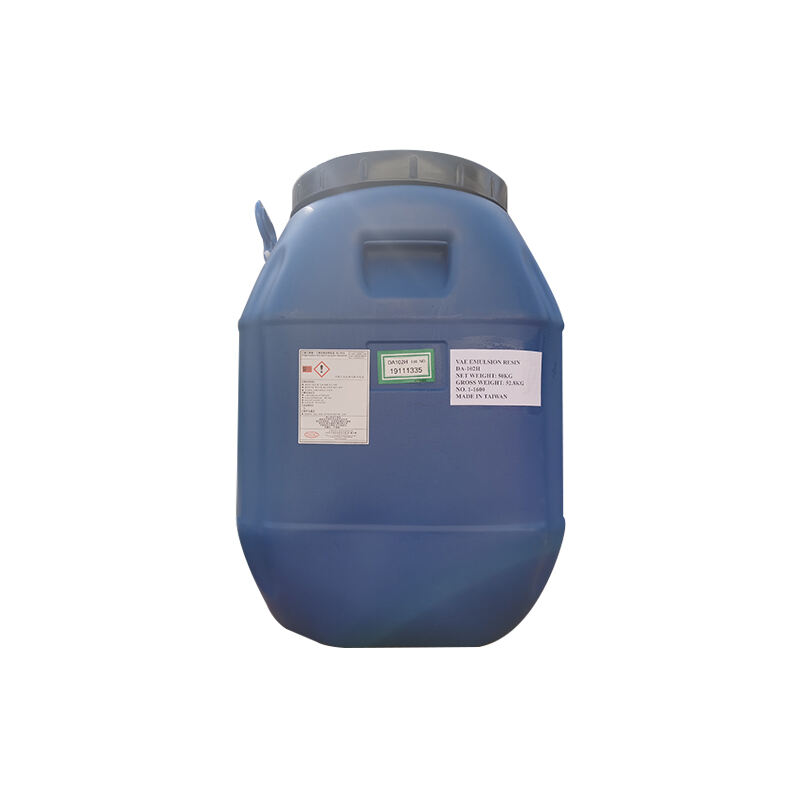
How VAE Emulsion Improves Paper Surface Smoothness
Film Formation and Surface Planarization Mechanism
The VAE emulsion works wonders for making paper surfaces smoother because of how it forms films. When the material dries out, those tiny polymer particles actually come together to form something like a continuous, bendy film across the paper's surface. This happens mainly due to capillary forces when moisture starts to leave, then later on the polymer chains start mixing with each other. What makes VAE different from other stiff binding agents is that it has this thermoplastic quality which lets it really mold itself around the fibers in the paper. Tests show this can cut down on surface roughness by about 35%, according to standard ISO 8791-4 measurements. The result is a flatter surface that helps prevent ink from spreading too much during printing, all without damaging the basic structure or breathability of the paper itself.
Role of Particle Size and Glass Transition Temperature (Tg) in Smoothness Development
The smoothness of coated surfaces depends mainly on two properties of polymers used in the process: how big the particles are and what temperature they transition from solid to soft (called Tg). When we get down to nano scale particles around 80 to 150 nanometers, these tiny bits actually work their way deep inside the fiber structure, filling those tiny gaps that make surfaces feel rough at a microscopic level. The glass transition temperature needs some fine tuning too. Polymers with lower Tg stay flexible for longer as they dry, giving better surface finish. But when we go up in Tg value, the material becomes more resistant to sticking together during storage in humid conditions or when running through calendering equipment. Getting both these factors right results in Bekk smoothness readings over 300 seconds most of the time. That's way better than what standard binders can achieve on modern high speed coating machines.
VAE Emulsion vs. Traditional Binders: Smoothness Performance Comparison
Benchmarking Against Starch and Styrene-Butadiene Latex Using ISO and Bekk Smoothness Metrics
Testing shows that when we look at things through the ISO 8791-4 air leak method and Bekk smoothness standards, VAE emulsions actually perform better than both starch and styrene-butadiene (SB) latex options. Starch binders have their limitations though. Because of their rigid molecules and tendency to create lots of tiny holes, they usually give Bekk readings under 100 seconds and often end up with films that aren't very even across surfaces. While SB latex does help with water resistance, it tends to crack when dried too quickly, which messes up the overall smoothness. That's where VAE stands out. Its unique balance between viscosity and elasticity, along with a lower glass transition temperature, allows for films that form uniformly without defects. These films actually fill in those small rough spots on substrates pretty well. Real world testing by independent companies backs this up. VAE coatings typically hit Bekk smoothness numbers between 200 and 320 seconds, which is about 30 to 50 percent better than what starch can manage. Plus, these coatings keep their gloss consistent without any patchy areas. For printers working on high quality jobs, this means less ink bleeding and much better production results overall.
Optimizing Coating Formulations with VAE Emulsion for Maximum Smoothness
Synergistic Effects with Calcium Carbonate and Rheology Modifiers
VAE emulsions work really well with calcium carbonate (CaCO3) and this helps create smoother surfaces because the filler and polymer actually interact in a helpful way together. The low surface tension means these tiny calcium carbonate particles (less than 2 microns in size) spread out evenly throughout the mixture. This even distribution reduces those annoying little gaps and prevents surface flaws from forming. When we mix VAE with certain types of thickeners called associative thickeners, something interesting happens. The whole formulation maintains good flow characteristics no matter what kind of stress it goes through. So during application there's less chance of things running or sagging, but after application the material still levels itself out properly. What makes this possible? Well, VAE has naturally occurring particles ranging from 0.5 to 2 microns which fit right into the spaces left between pigment particles and the actual paper surface underneath.
Balancing Solids Content, Coating Weight, and Gloss—Smoothness Trade-offs
VAE emulsions work really well with high solid content formulations, typically around 55 to 65% solids. This allows manufacturers to apply thinner coatings between 8 and 12 grams per square meter while still maintaining smooth finishes. As a bonus, this approach cuts down on drying energy requirements by approximately 18% compared to older binder technologies. But there's a catch worth mentioning here. When the solid content gets too high, it tends to make surfaces glossier than desired, which can actually affect how smooth they feel to touch, especially important for premium quality products. Finding the sweet spot seems to be around those same 8-12 g/m² figures. At this range, Bekk smoothness tests show values above 300 seconds, and the gloss levels stay within what most printing applications consider acceptable, keeping sheen below about 65 GU at 75 degrees. For applications needing even better film formation properties, lower Tg VAE grades ranging from minus 5 degrees Celsius up to 10 degrees Celsius perform exceptionally well. However, these might need special additives called rheology modifiers to prevent them from sinking too deeply into very porous materials during application.
Practical Implementation Guidelines for Printers and Coaters
Getting that smooth surface finish when working with VAE emulsion binders requires attention to several key factors based on what works in actual production settings. First things first, the coating needs to have a viscosity somewhere around 800 to 1200 mPa.s. Using those associative thickeners helps a lot since they stop those annoying streaks from appearing, especially when running at line speeds between 600 and 1000 meters per minute. When it comes to drying, there's a good reason why most facilities go with staged drying processes. Start off with temperatures between 90 and 110 degrees Celsius in the initial drying zones to prevent those pesky blisters from forming. Then crank it up a bit in the final stages to 110-130 degrees so the film actually forms properly. The concentration of VAE emulsion solids matters too. Aim for something like 12 to 18 percent of the total pigment weight to get even distribution across the surface. And don't forget about humidity control during rewinding operations. Keeping the ambient conditions under 60% relative humidity makes all the difference in preventing blocking issues down the road.
To check quality, we recommend measuring Bekk smoothness at three different spots along the web. A reading of 300 seconds or more means we're looking at premium grade material. But if the numbers drop below 200 seconds, something needs adjusting. Either tweak the calendering pressure somewhere between 100 and 200 kN/m or boost the VAE content by about 2 to 3 percent. These small changes can make a big difference in final product quality. Don't forget to run those weekly 75 degree sheen tests either they help catch any binder migration issues early on. And always remember to calibrate the viscometers right before starting each new batch. Special attention should go to recycled fiber substrates since they tend to be more porous. For these materials, applying retention aids in the range of 0.5 to 1.5 percent before coating works wonders for getting consistent VAE film formation and achieving that smooth, flat surface finish everyone wants.
FAQ
What is VAE emulsion?
VAE emulsion is a type of polymer used in coatings to improve surface smoothness and flexibility. It is particularly effective in paper production for achieving smoother finishes.
How does particle size affect surface smoothness?
Smaller particle sizes can fill in microscopic gaps in paper, leading to a smoother surface. Particles sized between 80 and 150 nanometers are particularly effective.
What is the significance of glass transition temperature (Tg)?
The glass transition temperature (Tg) is the temperature at which a polymer transitions from a hard state to a pliable one. Lower Tg values allow for better flexibility and smoother surfaces during drying.
How does VAE emulsion compare to other binders?
VAE emulsion outperforms traditional binders like starch and styrene-butadiene latex in terms of achieving higher Bekk smoothness ratings, resulting in fewer surface defects.
What role do calcium carbonate and rheology modifiers play?
Calcium carbonate and rheology modifiers enhance the smoothness of coatings by improving the flow and leveling characteristics of the VAE emulsion.