 EN
EN

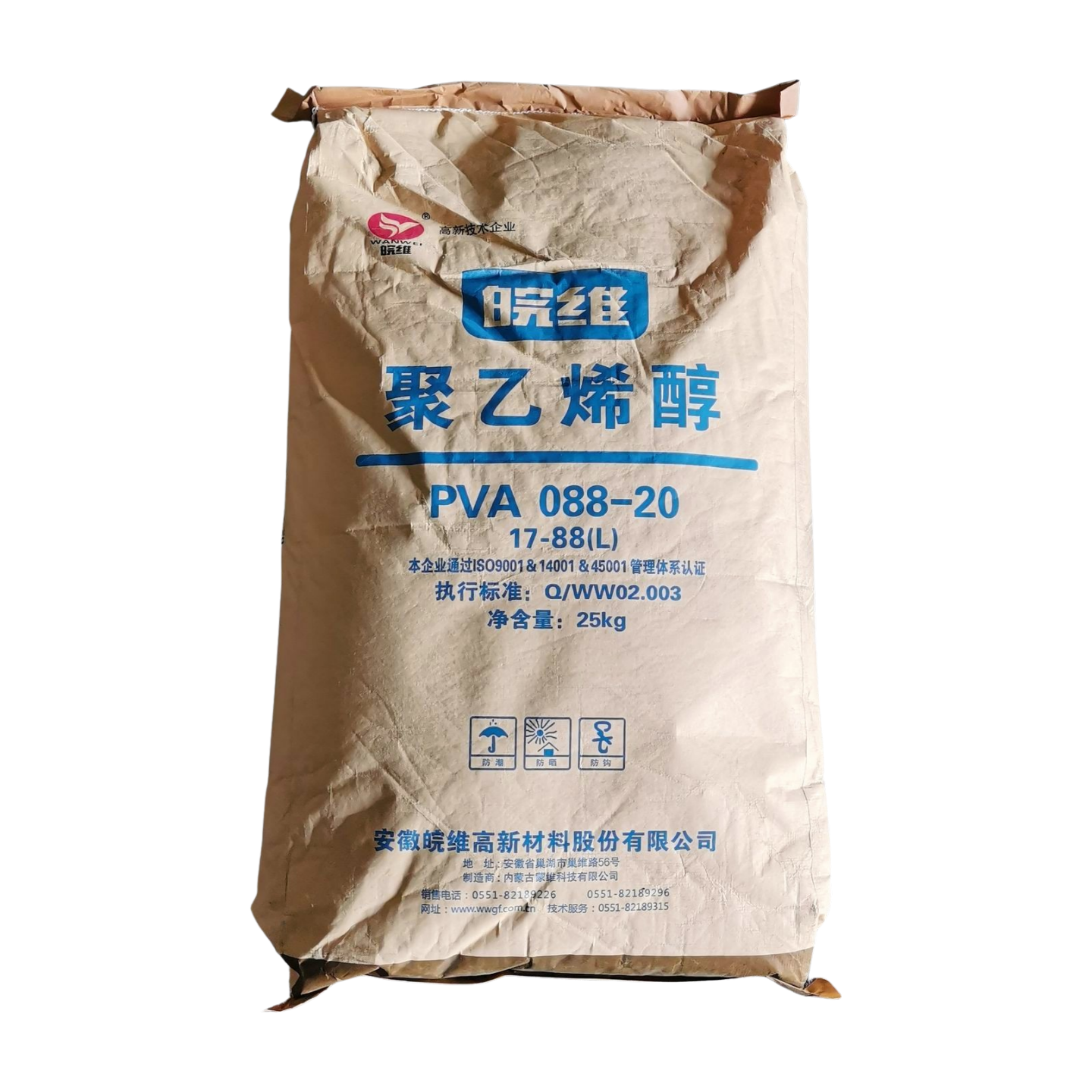
Role of PVA 1788 in Binding Pigments and Enhancing Coating Integrity
PVA 1788 is pretty much essential for paper coatings as it sticks pigments to those cellulose fibers really well. The molecule has lots of hydroxyl groups which means it can form hydrogen bonds with both the mineral stuff in the paper and the actual paper material itself. This creates this solid layer that doesn't just fall apart when handled. According to some tests from PaperTech Insights last year, PVA cuts down on coating dust problems by around 34% compared to regular starch options. That makes a big difference for manufacturers who want their products to look good and print properly without all that annoying flaking.
Superior Film Formation and Surface Smoothness with PVA 1788
The linear polymer chains of PVA 1788 facilitate rapid water evaporation during drying, resulting in defect-free films with surface roughness below 0.5 µm. Coatings using PVA 1788 achieve 27% higher gloss than acrylic-modified systems, contributing to smoother surfaces ideal for high-resolution printing. This precise film formation minimizes ink bleed while preserving substrate breathability.
Interaction Between PVA 1788 and Coating Slurry Components
PVA 1788 integrates effectively with common slurry additives, enhancing performance across formulations:
| Component | Interaction Benefit | Resulting Property Improvement |
|---|---|---|
| Calcium carbonate | Stabilizes particle dispersion | 19% higher opacity retention |
| Styrene-acrylate | Synergistic film flexibility | 2x fold endurance increase |
| Rheology modifiers | Maintains viscosity under shear conditions | 41% faster coating speeds |
This compatibility allows formulators to maintain slurry stability without sacrificing drying efficiency.
PVA 1788 vs. Alternative Binders: Performance Advantages in Coating Applications
Compared to other binders, PVA 1788 offers distinct advantages:
- 43% faster drying than casein-based systems at equivalent coat weights
- 2.3x lower VOC emissions versus solvent-borne polyurethanes
- 18% higher wet-rub resistance compared to styrene-butadiene latex
These benefits make PVA 1788 the optimal choice for premium paper grades requiring 5% coating porosity.
Enhancing Water Resistance and Moisture Barrier Properties
Inherent Water-Resistant Mechanisms of PVA 1788 in Coated Papers
PVA 1788's semi-crystalline structure naturally resists water penetration. Its hydroxyl groups bond with cellulose fibers, forming a dense network that reduces pore sizes by up to 83% compared to untreated paper (PaperTech Institute 2023). This structure maintains breathability while blocking liquid absorption—essential for packaging used in humid environments.
Cross-Linking Behavior of PVA 1788 During Drying for Improved Hydrophobicity
When heated to 60–80°C during processing, PVA 1788 undergoes thermal cross-linking, reorganizing into a hydrophobic matrix with contact angles reaching 112°C—38% higher than starch-based binders (Material Science Quarterly 2023). This transformation enhances moisture resistance without compromising flexibility, preventing cracks during folding or embossing.
PVA 1788 in Laminated Paper: Boosting Moisture Protection for Packaging
In multi-layer laminates, PVA 1788 functions as both adhesive and moisture barrier. A 12μm interlayer reduces water vapor transmission rates (WVTR) by 92% compared to acrylic alternatives (Packaging Materials Review 2024). Its compatibility with polyethylene and aluminum foil layers provides synergistic protection, extending dry food shelf life by up to 18 months.
Case Study: Food Packaging Solutions with Enhanced Moisture Barriers Using PVA 1788
One major cereal company saw remarkable results when they switched their packaging material to PVA 1788 laminates, achieving an impressive 99.5% moisture retention rate. Testing under accelerated conditions at 85% relative humidity revealed just 0.3% weight gain after 90 days, which represents around 70% better performance than what was possible with older EVOH barrier materials according to the Food Packaging Innovations Report from 2024. What makes this even more impressive is how well the new packaging holds up through extreme temperatures ranging from freezing cold (-20 degrees Celsius) all the way up to hot environments reaching 50 degrees Celsius. This kind of stability means products can travel anywhere in the world without worrying about quality degradation during transport or storage.
Improving Mechanical Strength and Long-Term Durability
Increasing Tensile and Tear Strength in PVA 1788-Coated Paper
When applied to paper products, PVA 1788 works by creating a kind of polymer web throughout the material that helps spread out mechanical stress when force is applied. What makes this stuff work so well? Well, it has both a heavy molecular weight and lots of hydroxyl groups which bond really strongly with those cellulose fibers in the paper. According to some research from Industrial Coating Studies back in 2023, this leads to about a third increase in tensile strength compared to what we get with regular starch based binders. And the end result? A film that stays pliable but doesn't crack easily either. This matters a lot for manufacturers running their machines at top speed since it means fewer tears and breakdowns during production runs.
Enhanced Internal Bonding and Layer Adhesion Through PVA 1788
Hydrogen bonding between PVA 1788 and fiber substrates improves interlayer adhesion by 15–25% in gravure-coated papers. This prevents delamination in multi-ply packaging while preserving foldability. The binder's balanced viscosity ensures deep, controlled penetration into porous surfaces without excessive saturation.
Aging Resistance and Structural Stability of PVA 1788-Treated Substrates
Under accelerated aging conditions (85% RH, 40°C), PVA 1788-coated paper retains 92% of its original folding endurance after 12 months—30% better than acrylic-bound counterparts. Its crystalline regions resist plasticization in humidity, and its UV-stable backbone prevents degradation in outdoor applications.
Processing Efficiency and Industrial Application Benefits
Solubility and Mixing Efficiency of PVA 1788 in Aqueous Coating Systems
PVA 1788 quickly dissolves in cold water, becoming fully hydrated within just 15 minutes when temperatures hit around 20°C. The resulting solution has very low viscosity, typically below 50 cP, which represents about a third better performance than regular PVOH products on the market. What makes this material particularly useful is how it allows for making slurries containing between 15 to 25% solids while keeping pigments well dispersed throughout. Industrial tests conducted last year showed mills that switched to PVA 1788 saw their energy costs drop by nearly 18%. Operators also needed to make adjustments during processing roughly 40% less often compared to traditional materials, as they reached desired viscosities ranging from 500 to 800 mPa s much more consistently across batches.
Improved Coating Runnability and Reduced Fouling with PVA 1788 Formulations
PVA 1788 achieves around 87 to 89 percent hydrolysis, and because of its straight chain structure, it interacts much less with calcium ions in recycled fiber systems. This means significantly less roller fouling problems too about 60 percent reduction when running production for those long 72 hour shifts. When coatings have between 5 and 8 percent PVA 1788 added, they actually let machines run about 22 percent faster compared to regular starch based systems while keeping coat weight pretty consistent across those 10,000 meter production runs with variations staying under 2 percent most of the time. The way this material resists deposit buildup really helps extend blade life anywhere from three to five times longer than before. And that translates into real money saved on maintenance expenses cutting costs down by roughly four dollars and twenty cents for every ton of coated paper produced according to recent TAPPI process efficiency studies from 2024.
Sustainability, Safety, and Regulatory Compliance of PVA 1788
Environmental Impact and Biodegradability of PVA 1788 in Paper Products
PVA 1788 supports sustainable practices through partial biodegradability under industrial composting. Testing under OECD 301B guidelines confirms 72% mineralization within 90 days (2023 biodegradability study), outperforming petrochemical-based binders. Unlike styrene-acrylic systems, it breaks down enzymatically into water and CO₂, minimizing microplastic release. Mills report 18–22% reductions in landfill-bound coating waste when transitioning to PVA 1788.
Compliance with Food Contact and Global Safety Standards
PVA 1788 carries the GRAS status from the FDA, which stands for Generally Recognized As Safe. This means it meets requirements under FDA regulation 21 CFR §175.300 when used for indirect contact with food through packaging materials. What makes this material stand out is that it doesn't contain any plasticizers at all, something many similar products do include. The residual vinyl acetate monomer stays below 0.1 parts per million, well within the safety thresholds set by EU Regulation 10/2011 regarding how much substance can migrate into food. Independent auditors have checked everything thoroughly too. They've confirmed compliance with REACH regulations in Europe and compatibility with Japan's Positive List standards for paper coatings that touch food. These certifications make sure that manufacturers can safely package perishable items around the globe without worrying about chemical transfer issues.
FAQ
What makes PVA 1788 stand out as a binder for paper coatings?
PVA 1788 is known for its efficient binding capabilities, superior film formation, rapid drying, and lower VOC emissions. It offers significant advantages in terms of gloss, mechanical strength, and moisture resistance, making it ideal for high-quality paper manufacturing.
How does PVA 1788 enhance water-resistance in coated papers?
PVA 1788's semi-crystalline structure effectively reduces pore sizes, preventing water penetration. Its thermal cross-linking during drying further enhances hydrophobicity by forming a matrix with higher contact angles, significantly improving moisture barrier properties.
Is PVA 1788 environmentally friendly?
Yes, PVA 1788 supports environmental sustainability through partial biodegradability and reduced landfill waste in paper production. It breaks down into water and CO₂, minimizing microplastic pollution.
Is PVA 1788 suitable for food packaging?
Absolutely, PVA 1788 meets global food safety standards, making it safe for indirect food contact. Its GRAS status, low monomer levels, and lack of plasticizers assure its safety in packaging applications.
Table of Contents
- Role of PVA 1788 in Binding Pigments and Enhancing Coating Integrity
- Superior Film Formation and Surface Smoothness with PVA 1788
- Interaction Between PVA 1788 and Coating Slurry Components
- PVA 1788 vs. Alternative Binders: Performance Advantages in Coating Applications
- Enhancing Water Resistance and Moisture Barrier Properties
- Improving Mechanical Strength and Long-Term Durability
- Processing Efficiency and Industrial Application Benefits
- Sustainability, Safety, and Regulatory Compliance of PVA 1788
- FAQ