 EN
EN

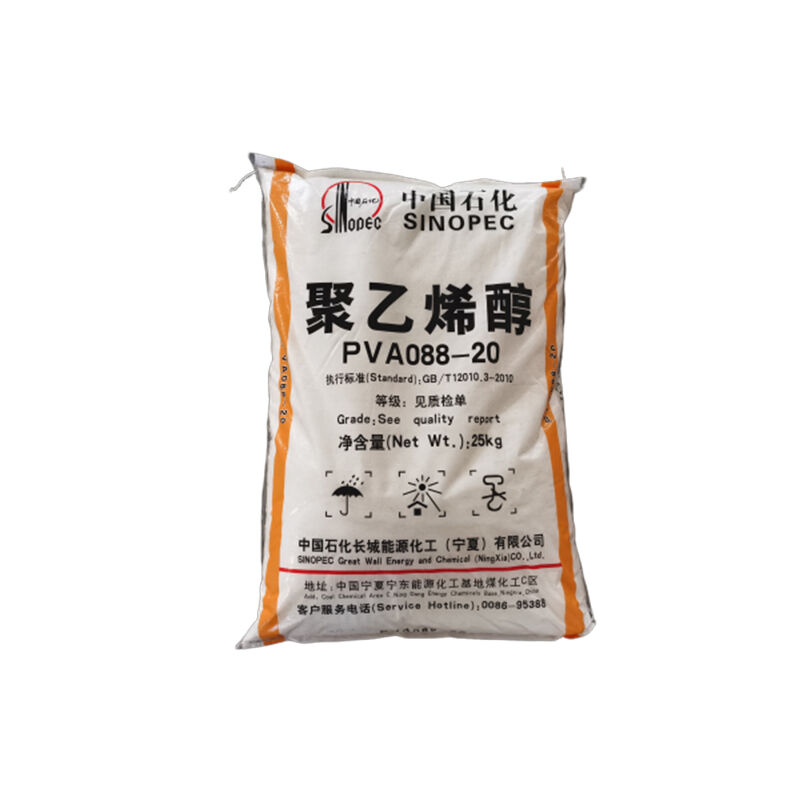
Understanding PVA 1788: Core Properties and Functional Role in Adhesives
PVA 1788 stands out as one of those key polymers used in making adhesives. What makes it special? Well, it has this pretty good balance between polyvinyl alcohol structure and about 87 to 89 percent hydrolysis. When we talk about partial hydrolysis here, what happens is there's sort of a sweet spot created between those water loving hydroxyl groups and the more water resistant acetate parts. This actually helps the material dissolve better in water based products while still maintaining those important connections between molecules. The end effect? Films form evenly across surfaces. Some testing shows that even after sitting in water for 24 hours at room temperature, most samples retain over 90% stability, which isn't bad at all considering what these materials typically go through.
Looking at the mechanical aspects, PVA 1788 performs pretty reliably when used as a wood adhesive. It can reach peel strengths between 3.2 to 4.1 N/mm while keeping elongation at break well over 200 percent. What makes this possible? The material forms these helical chains during the curing process of the film, which actually helps strengthen the bonds without making the material too stiff or brittle. An interesting point worth mentioning is how PVA 1788 holds up under tough conditions. After going through 30 complete freeze-thaw cycles, it still manages to maintain around 85% of its original bonding strength. This kind of durability matters a lot for products that need to work consistently across different weather conditions and temperature fluctuations.
Its hydroxyl-rich surface also promotes strong hydrogen bonding with cellulose-based substrates such as paper and wood. This combination of structural durability and interfacial adhesion makes PVA 1788 essential in applications ranging from packaging to construction composites.
Synergistic Blending of PVA 1788 with Natural Polymers for Sustainable Adhesives
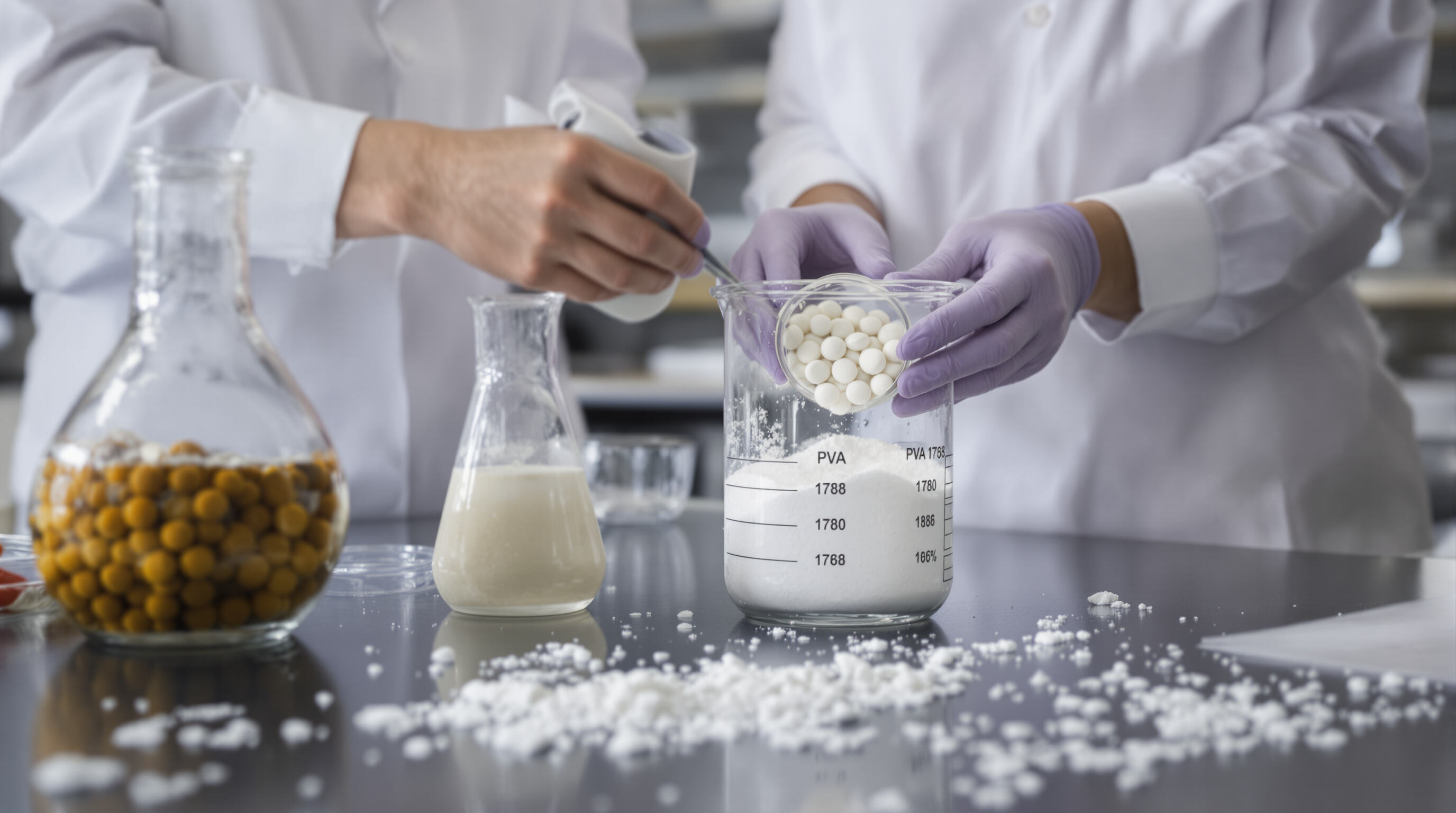
PVA 1788–Starch Blends: Enhancing Biodegradability and Cost-Effectiveness
When mixed together, PVA 1788 and starch create adhesives that are better for the environment and also cheaper to produce. Mixtures with around 30 to 40 percent starch can slash production costs nearly half without losing most of what makes pure PVA so strong. The adhesive properties stay pretty good too, holding about 85% of their original strength. What's really interesting is how much faster these blends break down naturally. Tests show that when buried in soil according to ASTM standards, composite films made this way decompose roughly 70% quicker than regular PVA 1788 alone. This means products reach the end of their life cycle much sooner, which is great news for reducing waste buildup.
Chitosan Integration: Antimicrobial Functionality and Interfacial Adhesion
Incorporating 15–20% chitosan into PVA 1788 matrices imparts antimicrobial properties, reducing bacterial growth by 99% (ASTM E2149). Chitosan’s cationic nature strengthens adhesion to cellulose substrates, increasing peel strength by 25% compared to unmodified PVA formulations.
Phase Compatibility and Mechanical Stability in PVA-Based Composite Films
Achieving homogeneity in PVA 1788–natural polymer blends requires precise control over viscosity and hydrolysis. A 3:2 PVA-to-starch ratio promotes uniform phase distribution, improving tensile strength by 30% and water resistance by 50% through enhanced hydrogen bonding.
Case Study: Eco-Friendly Packaging Adhesives Using PVA 1788–Starch Systems
A 2023 industrial trial demonstrated that a PVA 1788–starch adhesive—comprising 60% PVA 1788, 35% modified starch, and 5% crosslinkers—met ISO 15701 durability standards while reducing carbon emissions by 60%. With a shear strength of 1.8 MPa, comparable to epoxy adhesives, this formulation was adopted by a leading packaging manufacturer, eliminating 12,000 kg/yr of non-recyclable waste.
Reinforcement of PVA 1788 Adhesives via Nano-Fillers and Nanocomposite Engineering
Adding nano-fillers to PVA 1788 can boost mechanical, thermal, and functional properties quite a bit while still keeping it biodegradable. When we mix zinc oxide (ZnO) and silicon dioxide (SiO₂) nanoparticles at under 2% concentration, they create these network structures that really strengthen the material. Tests show this increases tensile strength somewhere between 40 to 60 percent and makes Young's modulus jump by about double compared with regular PVA films according to research published in Sustainable Materials and Technologies last year. Another interesting finding comes from using titanium dioxide (TiO₂) nanoparticles at around 1 weight percent. These particles block almost all UV-B rays - about 95% actually - which helps protect against sun damage. They also push back when materials start breaking down thermally, raising the temperature threshold from 220 degrees Celsius to nearly 285 degrees Celsius. That means better heat resistance overall for applications where thermal stability matters most.
Nanocellulose as a Sustainable Filler in PVA 1788 Matrices
Plant-derived nanocellulose fibrils (20–50 nm diameter) boost the modulus of PVA 1788 by 300% at 5% loading while reducing carbon footprint by 34% compared to mineral fillers. Their hydroxyl-rich surfaces form hydrogen bonds with PVA chains, creating shear-resistant interfaces without affecting optical clarity.
Dispersion Challenges and Strategies in PVA 1788 Nanocomposites
Nanoparticle agglomeration above critical thresholds—such as >3% for SiO₂—can reduce adhesion strength by 25–30%. Ultrasonic dispersion combined with amphiphilic surfactants (0.1–0.5% sorbitan monooleate) ensures >90% distribution uniformity, as validated in industrial nanocomposite production trials.
Crosslinking and Chemical Modification of PVA 1788 for Tailored Performance
Boric Acid and Glutaraldehyde: Effective Crosslinking Agents for PVA 1788
Both boric acid and glutaraldehyde have become popular additives for improving the properties of PVA 1788 material. When applied, glutaraldehyde creates those strong chemical bonds between polymer molecules which actually boosts the tensile strength quite dramatically. Some tests showed composite films reaching around 81 MPa according to a study by Mansur back in 2008. Then there's boric acid which works differently but just as effectively. It helps the material resist water better, cutting down on solubility rates significantly. We're talking about a drop from 24% all the way down to 12% when these two substances work together in what researchers call dual-crosslinked hydrogels. Recent studies looking at packaging adhesives confirm this effect, showing real practical benefits for manufacturers working with these materials.
Esterification and Acetalization: Improving Water Resistance and Durability
When we modify PVA 1788 chemically through processes like esterification, it becomes less water loving because those hydroxyl groups get replaced with parts that actually repel water. Another approach called acylation with acryloyl chloride forms these network structures that hold together even when submerged in water for about a month or so, which is really important if something needs to work properly undersea conditions. There's another benefit too - these changes make the material better at handling sunlight damage. Tests show that when titanium dioxide gets mixed into PVA composites, they keep roughly 9 out of 10 units of their original strength after being exposed to strong UV light for around 500 hours straight.
Impact of Crosslinking Density on Cohesive Strength and Flexibility
Crosslinking density directly influences mechanical behavior: low-density networks allow up to 800% elongation, ideal for flexible sensors, while high-density systems achieve rigidity (12 MPa strength). Research shows a 250% increase in mechanical robustness when crosslinker ratios align with polymer chain mobility. However, excessive crosslinking reduces biodegradability by 30%, highlighting the need for balance.
Balancing Crosslinking Efficiency with Biodegradability: Key Trade-offs
Optimizing eco-performance requires aligning crosslinking intensity with degradation rates. Dual-crosslinked PVA-starch films degrade 44% within 30 days—outperforming synthetic analogs—while maintaining adhesion strength. However, glutaraldehyde-heavy formulations suppress microbial activity by 50%, underscoring the value of biodegradable alternatives like oxidized polysaccharides.
Optimizing PVA 1788 Additive Synergy: Formulation and Industrial Application Strategies
Managing Hydrophilicity vs. Moisture Resistance in Hybrid Adhesive Designs
Getting the right balance between PVA 1788's water loving properties and its ability to resist moisture remains a big challenge when designing hybrid adhesives. Water soluble characteristics help these materials stick better to certain surfaces, but if they absorb too much moisture, the bonds tend to fail in damp conditions. When manufacturers crosslink PVA 1788 with boric acid, it forms stronger chemical connections that cut down on water sensitivity. According to research from the Polymer Science Journal last year, this treatment improves resistance to humidity by around 60 percent while keeping about 85 percent of the original sticking power intact. Mixing in some hydrophobic materials such as polyurethanes or alkyd resins helps create distinct layers within the material that block water penetration without affecting how safe it is for biological applications. New developments in processing techniques now allow manufacturers to fine tune things like what additives go where, how long to cure the mixture, and ideal pH levels depending on what specific job needs doing. For instance, products used outdoors need at least 90 percent stability under high humidity conditions, whereas temporary bonding applications require formulas that dissolve easily in water.
FAQs
What is PVA 1788?
PVA 1788 is a polyvinyl alcohol with about 87 to 89 percent hydrolysis, used extensively in making adhesives for its balance between water solubility and structural integrity.
How does PVA 1788 improve adhesive durability?
PVA 1788 creates helical chains during the curing process that strengthen bonds, allowing it to maintain a high level of bonding strength even after multiple freeze-thaw cycles.
What natural polymers are blended with PVA 1788 for sustainable adhesives?
Starch and chitosan are commonly blended with PVA 1788 to enhance biodegradability and imbue antimicrobial properties, respectively.
How do nano-fillers affect PVA 1788?
Nano-fillers like zinc oxide and silicon dioxide can significantly improve the mechanical, thermal, and functional properties of PVA 1788 adhesives.
What are the benefits of crosslinking PVA 1788?
Crosslinking with agents like boric acid and glutaraldehyde boosts tensile strength and water resistance, offering practical advantages in various manufacturing applications.
Table of Contents
- Understanding PVA 1788: Core Properties and Functional Role in Adhesives
- Synergistic Blending of PVA 1788 with Natural Polymers for Sustainable Adhesives
- Reinforcement of PVA 1788 Adhesives via Nano-Fillers and Nanocomposite Engineering
- Crosslinking and Chemical Modification of PVA 1788 for Tailored Performance
- Optimizing PVA 1788 Additive Synergy: Formulation and Industrial Application Strategies
- FAQs