 EN
EN

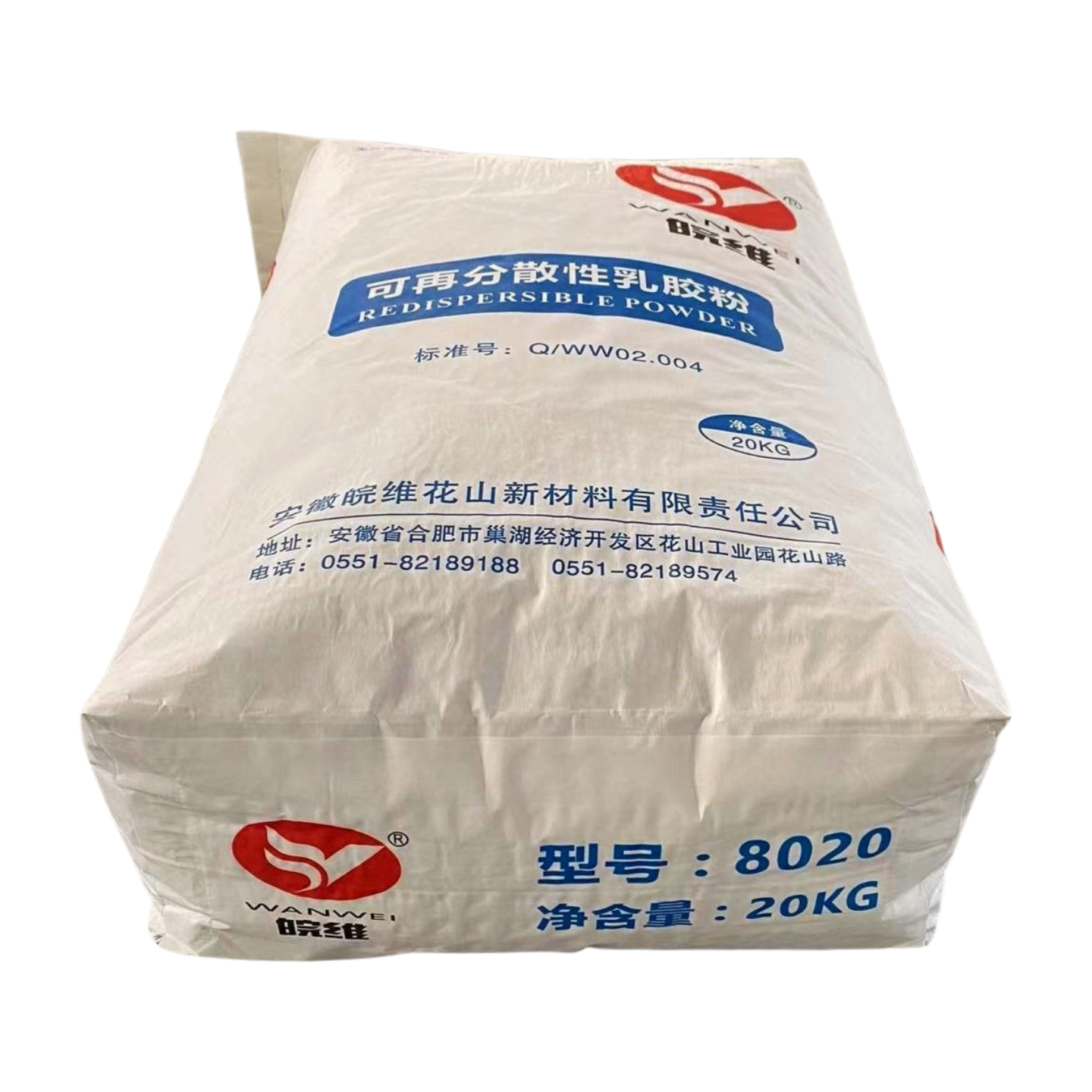
Redispersible Polymer Powder Dosage Requirements by EN 12004 Classification
C1 vs C2 Standards: Minimum RDP Content and Performance Thresholds
The EN 12004 standard defines clear performance classes for cementitious tile adhesives, with redispersible polymer powder (RDP) dosage serving as the primary determinant of classification. C1 adhesives—classified as normal-performance—require a minimum RDP loading of 2–3% by weight of cement to achieve the baseline tensile adhesion strength of ≥0.5 N/mm² after standard conditioning. C2 improved adhesives demand 4–6% RDP to consistently meet ≥1.0 N/mm², along with enhanced open time and water resistance. The table below summarizes this dosage-to-performance relationship:
| Classification | Minimum RDP Dosage (wt% of cement) | Tensile Adhesion Strength (N/mm²) | Open Time (min) |
|---|---|---|---|
| C1 | 2–3% | ≥ 0.5 | ≥ 20 |
| C2 | 4–6% | ≥ 1.0 | ≥ 30 |
Internal benchmarks from a leading polymer manufacturer show that adding 3% RDP boosts tensile adhesion by 60% over unmodified mortar (2023). Beyond this point, each additional 1% RDP typically increases adhesion strength by 0.15–0.2 N/mm²—making 4% the practical minimum for reliable C2 compliance. Formulators must also consider cement fineness and filler interactions; finer cements often require dosages at the upper end of the range to ensure full particle coating and uniform film formation.
How RDP Dosage Drives Compliance and Differentiation Between Adhesive Classes
RDP dosage is not a binary pass/fail parameter—it directly determines eligibility for EN 12004 sub-classifications. Transitioning from C1 to C2 hinges on the polymer’s ability to form a continuous, stress-absorbing film that bridges micro-cracks. At 4%, adhesives reliably meet C2 tensile requirements; achieving deformability classes S1 (≥2.5 mm transverse deformation) or S2 (≥5 mm) generally requires 6–8% RDP—often paired with higher-flexibility polymer grades. This enables targeted positioning for large-format tiles, underfloor heating systems, or exterior facades. A 2022 industry study found that increasing RDP from 3% to 5% secured C2 compliance and improved open time by 40% and wet adhesion by 55%, delivering premium performance without altering base cement chemistry. Even within C2, subtle adjustments—such as shifting from 4.5% to 5.5%—can mean the difference between meeting minimum thresholds and building in a robust safety margin against field variability. Thus, RDP dosage functions as both a compliance lever and a strategic differentiator.
Performance Impact of Redispersible Polymer Powder Dosage
The dosage of redispersible polymer powder (RDP) governs mechanical performance, application behavior, and long-term durability—small changes in weight percent yield measurable shifts across key metrics. The following subsections detail quantified impacts and critical trade-offs across common loading ranges.
Adhesion Strength and Flexibility: Quantitative Gains from 2–6% RDP Loading
At 2–3% RDP, typical C1 adhesives achieve tensile adhesion strengths of 0.5–0.8 MPa after water immersion—meeting the EN 12004 minimum. Increasing dosage to 4–6% delivers average adhesion gains of 45–55% over unmodified mortars, commonly exceeding 1.0 MPa (European Adhesive Performance Survey 2023). Flexibility improves markedly: transverse deformation rises from <1.0 mm in polymer-free mortars to ≥2.5 mm at 6% RDP, enabling accommodation of substrate movement and thermal stress without cracking. The curing polymer film bridges micro-cracks and distributes stress, raising cohesive strength proportionally. However, returns diminish beyond 6%—incremental gains become marginal while cost and workability penalties increase. For C2S1 or C2S2 formulations, precise calibration within the 4–6% window balances tensile strength, shear resistance, and deformability without over-engineering.
Water Resistance, Open Time, and Workability Trade-offs at Critical Dosage Levels
RDP dosage significantly enhances water resistance and extends open time—but these benefits are bounded by application constraints. At 3–4%, polymer films reduce capillary water absorption by up to 60% versus plain cementitious mortars (2022 Building Adhesives Durability Study), preserving bond integrity in wet environments. Open time increases from ~10 minutes at 2% RDP to 20–30 minutes at 5%, as the polymer retards surface drying and maintains tack. Yet workability degrades above 6%: excessive stickiness raises troweling drag and impedes full bedding coverage—especially critical in floor installations requiring rapid, consistent application. Accordingly, 4–5% RDP represents the optimal balance for moisture-exposed areas—delivering durable waterproofing and extended adjustability without compromising installer workflow.
Application-Specific Redispersible Polymer Powder Optimization
Large-Format and Porcelain Tiles: Higher RDP Dosage for Interface Stability and Load Distribution
Large-format and porcelain tiles intensify interfacial stress due to low porosity, high rigidity, and amplified thermal expansion. Standard mortars frequently fail under these conditions—lacking sufficient flexibility and wet adhesion. Elevating RDP to 4–6% by weight of cement addresses these challenges directly. Testing confirms 30–40% higher tensile adhesion on porcelain substrates and a threefold increase in transverse deformation at 5% dosage. The resulting polymer film evenly distributes shear stress, prevents edge-lifting and hollow spots, and sustains bond integrity under moisture and thermal cycling—critical for tiles exceeding 60 cm on any side.
Substrate and Climate Considerations: Adjusting RDP Content for Concrete, Plasterboard, or High-Humidity Environments
Substrate absorbency and ambient conditions necessitate dosage adjustments. Concrete slabs—particularly those exhibiting residual shrinkage—benefit from ≥4% RDP to bridge fine cracks and maintain bond strength. On smooth, low-absorbency plasterboard, 2–3% suffices for standard tiles, but large-format installations still require ≥4% for adequate flexibility. In high-humidity settings—including bathrooms, swimming pools, and exterior façades—water resistance becomes paramount. Increasing RDP to 4–5% forms a continuous hydrophobic network that resists penetration and preserves adhesion after prolonged immersion. Adhesives with 5% RDP retained >80% of original tensile strength after 28 days of water exposure, compared to <50% for 2% RDP formulations. Matching dosage to substrate and climate avoids brittleness, ensures waterproof integrity, and extends service life.
Formulation Best Practices and Common Redispersible Polymer Powder Dosage Pitfalls
Achieving optimal performance with redispersible polymer powder (RDP) demands disciplined formulation practices—dosage errors, poor dispersion, or environmental neglect can compromise bond strength, flexibility, and longevity. Precise dosage control is foundational: the 2–6% range (by cement weight) must be followed rigorously. Under-dosing yields brittle, debond-prone mortars; over-dosing softens the matrix and reduces compressive strength without proportional performance gains. Uniform dispersion is equally essential—RDP must be dry-blended with cement and aggregates before water addition to prevent clumping and ensure complete particle coating. Once opened, RDP should be used promptly or weighed into sealed batches to avoid moisture-induced premature coalescence. On-site mixing must follow standardized protocols: inconsistent water ratios or mixing times cause uneven polymer distribution and localized bond failure. A frequent error is ignoring substrate and environmental variables—while high-porosity or humid conditions may justify modest upward adjustments, such changes must be validated through testing—not applied arbitrarily. Cost-driven reductions in RDP content are especially risky: they rarely yield meaningful savings but frequently trigger callbacks and rework that far exceed additive costs. Treating RDP dosage as a precisely engineered variable—and pairing it with rigorous mixing, storage, and validation protocols—enables consistent compliance and avoids the most common formulation failures.
FAQs
What is the recommended RDP dosage for C1 adhesives?
C1 adhesives require 2–3% by weight of cement to meet baseline adhesion strength and open time requirements.
How much RDP is necessary for C2 compliance?
To achieve C2 compliance, 4–6% RDP by weight of cement is recommended, depending on the targeted performance thresholds and substrate conditions.
What are the primary benefits of increasing RDP dosage?
Increasing RDP dosage enhances tensile adhesion strength, flexibility, water resistance, and open time while reducing capillary water absorption. Dosages of 4–6% are optimal for high-performance applications.
How does RDP dosage affect workability?
While RDP improves adhesion and water resistance, excessive dosage (>6%) can increase stickiness and impede troweling, which affects workability.
Can RDP dosage be adjusted for specific tile types?
Yes, higher dosages (4–6%) are recommended for large-format and porcelain tiles due to their low porosity and increased stress at the interface.
What precautions should be taken when handling RDP?
RDP should be dry-blended thoroughly, used promptly after opening, and stored in sealed batches to prevent moisture-induced clumping or pre-coalescence.