 EN
EN

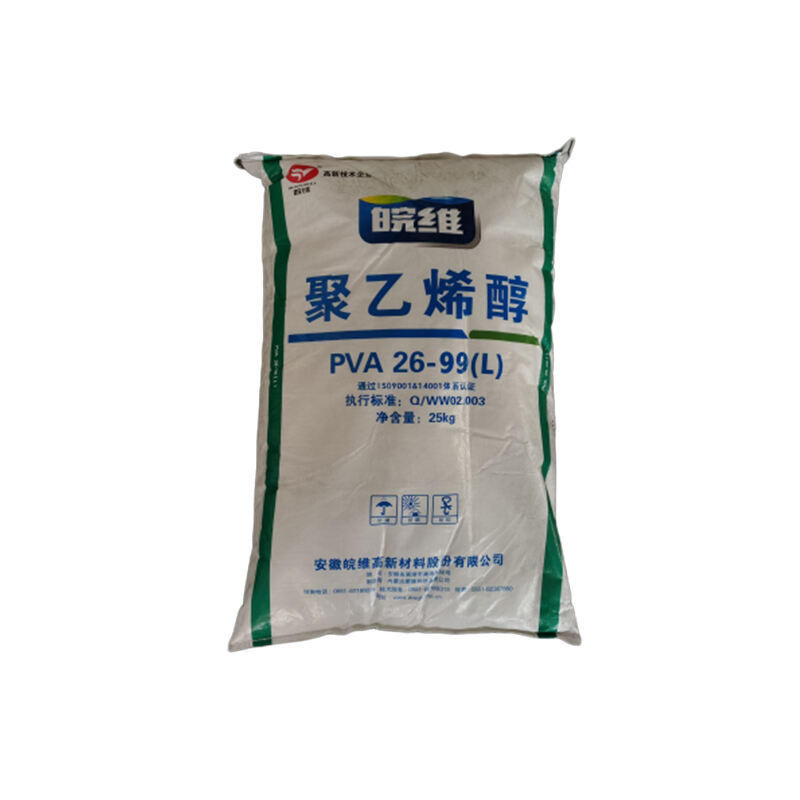
Understanding Dusting in Dry-Mix Mortars and the Role of Polyvinyl Alcohol
The problem of dusting: Health, safety, and handling challenges in dry-mix mortars
When dust gets kicked up during mixing and application processes, it creates serious breathing problems for workers, especially when there's respirable crystalline silica involved, plus it contaminates the entire worksite area. This dust problem typically comes from those flaky surface layers known as laitance, which happens when concrete gets too much water, finished too early, or just doesn't cure properly. Looking at the bigger picture, dust isn't just bad for health either. Silicosis and chronic bronchitis are real concerns, but there's also damage to the actual products being made because of poor mixing results, materials separating out incorrectly, and lots of wasted material. From an operational standpoint, everything slows down significantly. Cleanup becomes a constant chore, workers start losing faith in what they're doing, and everyone has to wear more protective gear all day long.
How polyvinyl alcohol (PVA) suppresses dust through particle agglomeration and binding
PVA, or polyvinyl alcohol, works as a binder that sticks to cement and other filler materials through hydrogen bonds. When mixed with water, this material creates sticky connections between small particles, which helps control how they clump together and keeps them from flying apart. The result? Powder becomes denser by about 15 to 20 percent, doesn't separate so much during shipping, and still flows freely without losing its workable qualities. How well PVA dissolves and performs depends on how much hydrolysis has occurred. Grades that are only partially hydrolyzed around 87 to 89 percent dissolve quickly in cold water, making them great for controlling dust at job sites. Fully hydrolyzed versions at 98 to 99 percent create stronger films and resist water better, which is why they're preferred for different applications where durability matters most.
Case study: Achieving 60% reduction in airborne dust with 1.5% PVA inclusion
A controlled trial compared standard mortar blends against formulations incorporating 1.5% partially hydrolyzed polyvinyl alcohol. Results demonstrated:
|
Parameter |
Standard Mortar |
PVA-Modified |
Improvement |
|
Airborne dust (µg/m³) |
850 |
340 |
60% reduction |
|
Handling complaints |
42% of workers |
8% of workers |
81% decrease |
|
Material waste |
9.2% |
3.1% |
66% reduction |
The modified mix retained full compressive strength and avoided setting retardation through optimized molecular weight selection (85–88% hydrolysis grade), confirming that effective dust control need not compromise structural or functional performance.
Mechanisms of Polyvinyl Alcohol in Enhancing Cohesion and Dust Control
PVA as a water-soluble adhesive: Improving powder cohesion in dry-mixed mortars
When polyvinyl alcohol comes into contact with water in dry mix mortars, it quickly dissolves and forms those important hydrogen bonds connecting cement particles to various fillers. What happens next is pretty interesting: these bonds create long polymer chains that actually stick together the tiny particles, making them form stable little clusters instead of flying around everywhere. Most contractors find that adding between half a percent and 1.5% PVA cuts down on fine material movement by about 40 to 60 percent. This means significantly less dust when workers are mixing, pouring, or handling the mortar on site. For best results where both strength and workability matter, look for PVA with molecular weights around 70k to 100k grams per mole and nearly complete hydrolysis at 98-99%. But if fast action against dust is what's needed right away, partially hydrolyzed versions at 87-89% still work well enough for many applications.
Impact on rheology: Reduced segregation and improved paste stability
When added to mortar, PVA changes how it flows by making particles rub against each other more and keeping water from moving around so much. The material's structure full of hydroxyl groups holds about 15 to 20 percent extra water compared to regular mixes. This means surfaces don't dry out as quickly at first, giving workers roughly an hour and a half longer window to work with the mixture before it starts to set. What really matters though is that PVA forms thin layers around the aggregate pieces. These layers stop heavier materials from sinking down through the mix, which keeps everything mixed properly together. As a result, problems like bubbles forming under the surface, cracks developing later on, and uneven finishes happen far less often. Some tests show this can cut down these issues by nearly three quarters, particularly when working on walls or other vertical surfaces where maintaining proper consistency is always tricky.
Optimizing Bonding Performance with Polyvinyl Alcohol in Mortar Applications
Film formation by PVA: Enhancing interfacial adhesion in putties and interface agents
When applied, dissolved PVA moves toward the areas where different materials meet and creates a continuous, flexible film as it dries. This film fills in the gaps between surfaces and actually forms chemical connections with the cement components, which makes the adhesion much better. Tests show putty mixtures with PVA can stick about 40% stronger compared to regular mixes without any modification. The flexibility of this film means it can handle temperature changes and physical stress without cracking, which is really important for places under constant pressure such as building joints, wall corners, and spots where repairs have been made. For best results, most applications work well with around 0.5 to 1.5 percent PVA by weight. Going beyond this amount might cause problems because the films start merging together, which slows down the hydration process and ultimately leads to weaker bonds over time.
Balancing dust control and adhesion: Selecting optimal PVA molecular weight and degree of hydrolysis
Dual objectives—robust dust suppression and durable adhesion—require deliberate PVA selection across two interdependent parameters:
- Molecular weight (MW): Low-MW PVA (10,000–30,000) delivers instant particle binding ideal for dust control but yields weaker films; high-MW variants (≥70,000) form resilient, waterproof networks better suited to adhesion-critical applications.
- Degree of hydrolysis (DH): Partially hydrolyzed PVA (87–89%) ensures cold-water solubility and rapid dispersion, whereas fully hydrolyzed types (98–99%) maximize water resistance and bond strength after curing.
|
Parameter |
Dust Control Priority |
Adhesion Priority |
|
MW Range |
10,000–30,000 |
70,000–100,000+ |
|
DH Level |
87–89% |
98–99% |
|
Key Benefit |
Instant particle binding |
Durable waterproof films |
Field validation shows mid-range MW (≈50,000) with 92–95% DH delivers the strongest compromise—reducing airborne particulates by 55% while retaining 95% of peak adhesive performance, eliminating the traditional trade-off between handling safety and structural reliability.
Evaluating the Impact of Polyvinyl Alcohol on Mortar Mechanical Properties
Effect of PVA on Tensile and Flexural Strength in Dry-Mix Mortar Systems
Polyvinyl alcohol (PVA) makes dry mix mortars tougher by strengthening the cement structure at a microscopic level. When mixed in, PVA forms a thin film that fills in tiny cracks and spreads out stress when weight is applied. Tests show that mortars with PVA can be about 15% stronger when bent and around 12% better at resisting pulling forces compared to regular mortars without additives according to research published in Materials journal last year. The reason behind these improvements has to do with how PVA molecules bond with the calcium silicate compounds as they hydrate, which changes how cracks propagate through the material. Instead of breaking suddenly, the mortar absorbs more energy before failing.
Addressing the Trade-Off: Dust Reduction Versus Potential Setting Time Retardation
While PVA’s water retention and particle encapsulation suppress dust effectively, they can delay initial set by ~20 minutes in standard formulations—due to transient inhibition of cement hydration kinetics. This effect is manageable through three targeted adjustments:
- Limiting dosage to 0.8–1.2% by weight to balance dust suppression and reactivity
- Selecting partially hydrolyzed PVA (87–89% DH) for faster dissolution and earlier release of cement surfaces
- Adding calcium formate (0.3–0.5%) as a non-reactive accelerator that counters retardation without interfering with PVA’s binding function
Validated in field trials across five European construction sites, this approach sustains >50% airborne dust reduction while maintaining setting times within ±5 minutes of project specifications—proving that operational safety and schedule integrity are fully compatible.
FAQ
What causes dusting in dry-mix mortars?
Dusting in dry-mix mortars usually stems from excessive water, premature finishing, or improper curing of concrete, leading to flaky surface layers called laitance.
How does polyvinyl alcohol help in reducing dusting?
Polyvinyl alcohol helps in reducing dusting by serving as a binder that creates strong bonds with cement and filler materials, thereby preventing particle dispersion and enhancing material density.
What is the role of PVA's hydrolysis in its performance?
The degree of hydrolysis in PVA affects its solubility and film-forming abilities, influencing its dust control and binding properties in mortar applications.
Can PVA improve the mechanical properties of mortars?
Yes, PVA enhances the tensile and flexural strength of mortars by forming films that fill micro-cracks and distribute stress more effectively.
Does using PVA delay the setting time of mortars?
While PVA can delay the initial setting time by about 20 minutes, correct dosage and formulation using accelerators like calcium formate can mitigate this effect.
Table of Contents
- Understanding Dusting in Dry-Mix Mortars and the Role of Polyvinyl Alcohol
- Mechanisms of Polyvinyl Alcohol in Enhancing Cohesion and Dust Control
- Optimizing Bonding Performance with Polyvinyl Alcohol in Mortar Applications
- Evaluating the Impact of Polyvinyl Alcohol on Mortar Mechanical Properties
- FAQ