 EN
EN

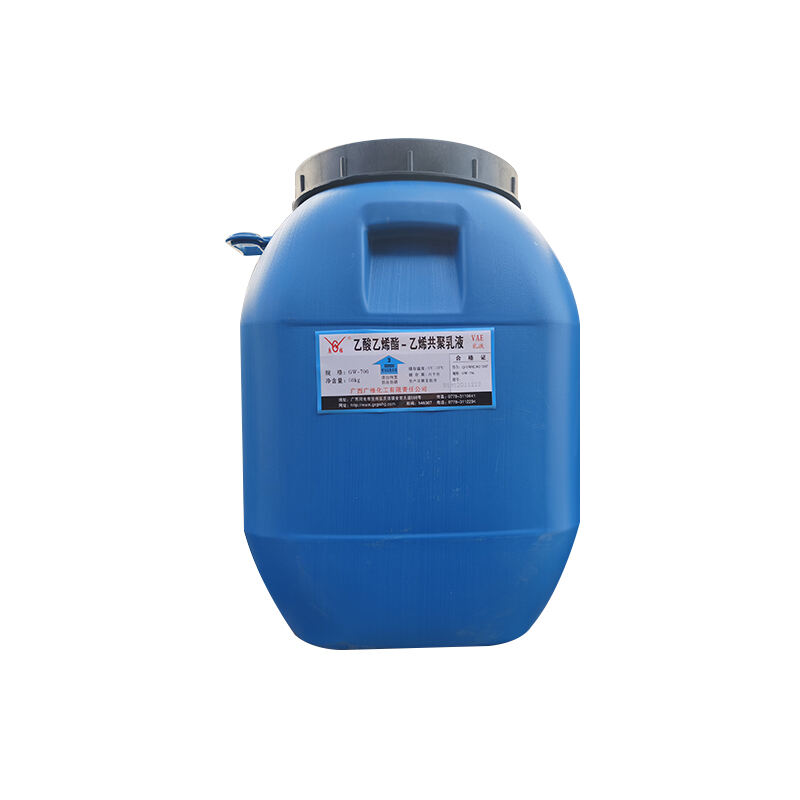
The Science Behind VAE Emulsion's Flexibility Enhancement
Plasticization and Interfacial Adhesion Mechanisms in Cement Matrices
Superior Tensile Elongation vs. Conventional Acrylic Emulsions (ASTM D412 Data)
When tested according to ASTM D412 standards, VAE emulsions show about 40 to 60 percent better tensile elongation compared to regular acrylic emulsions. With a fairly low glass transition temperature around minus five degrees Celsius to zero degrees Celsius, these materials can bounce back after being stretched or compressed. Regular acrylics tend to crack when strained beyond just 5%. The real advantage comes from this built-in flexibility. Coatings made with VAE can actually span tiny cracks measuring half a millimeter across without breaking down. This makes them especially useful on surfaces that move or shift over time, such as precast concrete structures or those expansion joints we see in roads and buildings.
VAE Emulsion's Crack-Bridging Functionality in Cement-Based Coatings
Elastic Film Formation and Microcrack Bridging via Recovery Behavior
When it cures, the VAE emulsion creates an elastic polymer film that weaves itself into the cement matrix. What happens next is pretty interesting - this network actually connects those tiny cracks that form from things like shrinkage, changes in temperature, or when the substrate moves around. The material has what's called a low glass transition temperature, which means it bounces back quickly after being stretched out. This property helps absorb mechanical stress and stops cracks from spreading further. Compared to other options like brittle acrylics or styrene-butadiene systems, VAE modified coatings hold together much better during extreme conditions. They work well even when temperatures swing between minus 15 degrees Celsius and 50 degrees Celsius, plus they handle humidity levels ranging from 30% to 90% without breaking down. Because of these characteristics, engineers often specify VAE products for tough infrastructure projects where durability matters most, such as bridge decks and waterproofing membranes for building foundations.
Quantified Crack Suppression: Polymer-Modified Mortar Case Study (EN 1504-2)
According to EN 1504-2 standards, when mortar samples had 8% VAE emulsion mixed in by weight, they ended up with about three quarters fewer cracks compared to regular samples after going through accelerated aging tests. These tests included things like compressive stress cycles between 5 and 20 MPa, sudden temperature changes, and repeated wetting and drying cycles. The modified mortar kept cracks under 0.1 mm wide while the control samples got fractures wider than 0.5 mm. What makes VAE work so well? It spreads out the tension forces across the polymer layer instead of letting them build up at vulnerable spots. Real world evidence from construction sites across Europe backs this up too. Projects using VAE improved coatings needed 60% fewer maintenance checks over five years, which saves both time and money in the long run for building owners and contractors alike.
Balancing Performance: Optimizing VAE Emulsion Dosage
Navigating the Flexibility–Strength–Cohesion Trade-off
Getting the right amount of VAE emulsion is all about finding that sweet spot between flexibility, strength when compressed, and how well different materials stick together. When we add more polymer content, say around 25% by weight, it helps prevent cracks because the material becomes more elastic and bridges gaps better. But go too far with the dosage and things start going wrong fast the compressive strength drops by as much as 30%, and the bond between materials breaks down especially bad in those thin film applications. On the flip side, if we put in less than 15%, the material just doesn't bend enough and ends up cracking from heat changes or physical stress. Most folks find that somewhere between 15% and 25% works pretty well, though what's best really depends on what exactly needs to be done. Flooring projects need stuff that won't wear away quickly and holds up strong, whereas repair mortars and exterior coatings require something that flexes without breaking apart and sticks properly. Testing how materials hold up during repeated temperature cycles still gives us the clearest picture of whether we've hit that balance point where everything performs as needed.
Proven Field Performance of VAE Emulsion in Real-World Coating Applications
Thermal Cycling Resilience in Exterior Facade Sealants (-20°C to +60°C)
When it comes to sealing exterior facades, VAE emulsion stands out for its remarkable ability to handle extreme temperatures ranging from as low as minus 20 degrees Celsius all the way up to plus 60. The flexible film formed by this material retains over ninety percent of its initial stretchiness after being exposed to real world conditions for five whole years. That's actually about forty percent better at preventing cracks than regular sealants we see on the market today. What makes VAE really special is how well it bounces back after expansion and contraction cycles. This means buildings stay watertight without peeling away from surfaces, even when faced with daily temperature changes sometimes hitting fifty degrees difference. We've seen these benefits play out practically everywhere in places like Germany, Britain, and parts of Canada where architects specified VAE modified systems. Buildings there last longer between maintenance cycles and need half as much recoating work compared to those using standard acrylic products.
FAQ Section
What is VAE emulsion?
VAE emulsion, or vinyl acetate-ethylene emulsion, is a type of polymer used to enhance the flexibility and adhesive properties of cement matrices and coatings.
How does VAE compare to regular acrylic emulsions?
VAE emulsions offer superior tensile elongation compared to regular acrylic emulsions, with better flexibility and crack-bridging capabilities.
Why is VAE preferred for tough infrastructure projects?
Engineers prefer VAE products for infrastructure projects due to their durability, ability to handle extreme temperatures, and reduced maintenance requirements over time.