 EN
EN

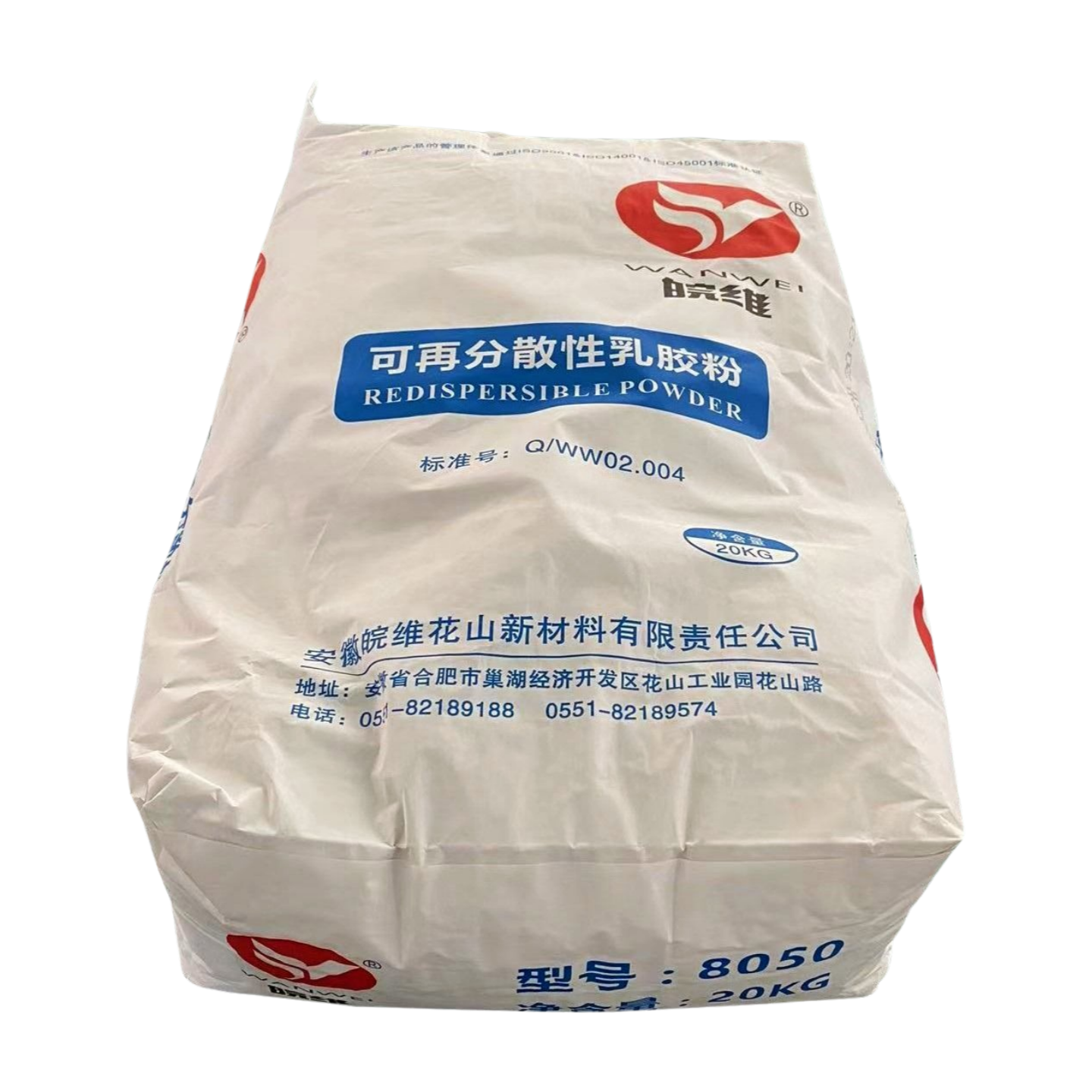
Understanding RDP Rehydration Fundamentals
Hydration Kinetics and Its Impact on Redispersion Quality
The speed at which Re-dispersible Polymer Powder (RDP) particles take in water plays a big role in how evenly they spread out. When the hydration happens too fast, it causes the surface to gel up and creates a barrier that keeps the dry parts of the polymer trapped inside. For best results, powders around or below 20 microns work well when slowly added to water that's been stirred into a vortex, especially if the temperature stays between about 5 degrees Celsius and 40 degrees Celsius. This allows the polymer chains to fully unwind properly. On the flip side, when hydration takes longer than about 90 seconds, there's actually a good thing happening: the amount of stuff that doesn't dissolve drops by roughly 60% compared to just throwing everything together all at once. This helps avoid those pesky "fish eyes" we see sometimes, which are basically clumps of partially wetted material that can really mess with the strength properties in cement based applications.
Why Pre-Wetting Is Often Critical—But Not Universal
Soaking RDP in ethanol or plasticizers helps break down those stubborn hydrophobic surfaces because it lowers the tension between different materials, which cuts down on clumping problems. This pretreatment really matters when dealing with thick polymers that have viscosity over 50,000 mPa·s, old powder batches sitting around for more than half a year with moisture levels below 0.8%, and situations where there's not much shear force during mixing. The good news is newer encapsulation tech allows these powders to dissolve right away in alkaline solutions with pH above 12. Higher salt concentrations in these systems actually speed up how fast particles break apart. Freeze dried versions of RDP stand out too since they form such porous structures. These can reach almost perfect dispersion rates at 98% without needing any special treatment first. What this shows is that nobody size fits all when it comes to rehydrating these materials. The approach has to match exactly what kind of formula we're working with and where it will ultimately be used.
Optimizing RDP Storage to Maintain Redispersibility
Effective storage of Redispersible Polymer Powder (RDP) is foundational to consistent redispersion performance. Compromised storage conditions degrade particle integrity, leading to irreversible agglomeration and functional failure in end-use applications.
Moisture Control, Packaging Integrity, and Shelf-Life Thresholds
Keeping moisture levels under 0.5% is really important if we want to avoid those early film formations happening between particles. This stability limit was actually verified in research published by the Journal of Coatings Technology back in 2023. For storage purposes, hermetically sealed packages featuring multiple layers of aluminum are absolutely necessary to stop outside humidity from getting inside. This becomes even more crucial when dealing with products stored in hot, humid areas like tropical regions where air can hold over 80% moisture. How long these materials last depends heavily on what kind of polymer they contain. Vinyl acetate ethylene copolymers tend to maintain their ability to redisperse properly for around 12 months when kept at room temperature conditions of 25 degrees Celsius and 60% relative humidity. Once past that timeframe though, breakdown processes start speeding up which leads to inconsistent results when it comes to developing proper mortar strength later on during application.
How Temperature Cycling Alters Particle Surface Morphology
When temperatures repeatedly go above 35 degrees Celsius, something called plasticizer migration starts happening. This creates areas on surfaces that repel water, making it harder for materials to get properly wetted. Tests done in labs where temperatures swing from 15 to 40 degrees Celsius mimic what happens daily in warehouses. These tests show that protective layers around particles shrink about 18 percent over time. What was once smooth becomes cracked and sticky instead. The change in shape makes mixing require more energy overall. Even when using powerful mixers that apply high shear forces, the ability to redistribute these materials drops by as much as 40 percent compared to before the temperature changes occurred.
| Storage Condition | Particle Surface Change | Redispersion Impact |
|---|---|---|
| Stable ¤25°C | Uniform colloidal film | Complete within 5 minutes |
| Cycled 15°C 40°C | Cracked, hydrophobic patches | 40% longer mixing required |
| >40°C sustained | Fully fused polymer matrix | Irreversible lumps |
Maintaining stable sub-30°C conditions preserves the polymer’s glass transition temperature (Tg), ensuring rapid, uniform water penetration upon rehydration.
Preventing Lumps During RDP Rehydration
Nucleation-Driven Agglomeration at the Water—Powder Interface
When RDP comes into contact with water, it quickly starts hydrating at the surface, forming areas of high viscosity that serve as starting points for particles to stick together permanently. The way this happens resembles crystal formation processes. Small clusters first pull in loose particles through electrical attractions and hydrogen bonds, gradually building up into sizable clumps measuring several centimeters across. These formations are surprisingly tough to break apart, even when mixed for long periods. If left uncontrolled, these big clusters can disrupt the smoothness of films and significantly weaken the bonding properties in mortar applications.
Shear Application Strategies to Disrupt Early-Stage Clumping
High shear mixing during those critical first 60 seconds after adding water actually breaks up the initial formation points before clusters can form stable structures. Most operators find that running vertical mixers between 500 to 1500 rpm creates just enough turbulence to separate particles properly. When working with pasty materials that tend to ball up, many manufacturers blend RDP with things like silica sand first. This simple step slows down how quickly the surface starts reacting with water. Cold water works best too. Keeping temperatures under 25 degrees Celsius really helps prevent lumps from forming because it slows down those pesky polymer chains from getting tangled together. The tricky part is finding the right balance with shear forces. Too much power brings in unwanted air bubbles, but not enough leaves behind little pockets that will eventually turn into bigger problems later on.
Ensuring Batch-to-Batch Consistency in RDP Applications
Getting consistent results from RDP processes really depends on keeping tight control over three main areas that all affect each other: what goes into the raw materials, how we handle hydration, and making sure our processes are properly validated. The first step is to stick with standardized polymer resins and get those protective colloid ratios right. When there's variation in particle size distribution beyond just 2%, the risk of clumping jumps up around 40% according to some powder flow research we've seen. That's why it matters so much. We also need to keep an eye on moisture levels while things are stored away. If humidity gets above 0.5%, it starts causing problems with premature film formation which nobody wants. And when it comes time for rehydration, there are several factors to consider including...
- Maintain water temperature within ±2°C of the polymer’s Tg
- Apply controlled shear at 800–1200 rpm for 90 seconds immediately after powder introduction
- Validate slurry viscosity using rotational rheometry prior to batch release
Tracking seven main parameters through statistical process control (SPC) helps catch problems before they become serious issues. These parameters include things like pH drift, how quickly materials redisperse, and adhesive strength measurements. Plants that implement this kind of step-by-step quality check typically see around 98% of their batches meeting standards, which cuts down on those pesky downstream problems we all know too well – think cracked mortar from shrinkage or tiles that just won't stick properly. When dispersion stays consistent throughout production, it creates that even polymer film layer everyone in the construction business knows is critical for materials to last the distance without failing prematurely.
FAQs About RDP Rehydration
What is the ideal temperature range for RDP rehydration?
The ideal temperature range for rehydrating RDP is between 5 degrees Celsius and 40 degrees Celsius. Staying within this range helps ensure that the polymer chains can properly unwind.
Why is pre-wetting often necessary for RDP?
Pre-wetting with substances like ethanol or plasticizers helps reduce clumping by breaking down hydrophobic surfaces, which is crucial for thick polymers and older batches with low moisture content.
How long can RDP be stored effectively?
RDP can generally be stored effectively for up to 12 months when kept at room temperature conditions of 25 degrees Celsius and 60% relative humidity. Beyond this, the degradation processes accelerate, potentially impacting performance.
What are the effects of temperature cycling on RDP?
Temperature cycling, especially above 35 degrees Celsius, can alter particle surface morphology, leading to reduced redispersion ability and increased energy requirements during mixing.
How can you prevent lumps during RDP rehydration?
To prevent lumps, employ high shear mixing within the first 60 seconds of water addition and maintain lower temperatures to slow down polymer chain entanglement. Proper mixing techniques are essential to disrupt early-stage clumping.