 EN
EN

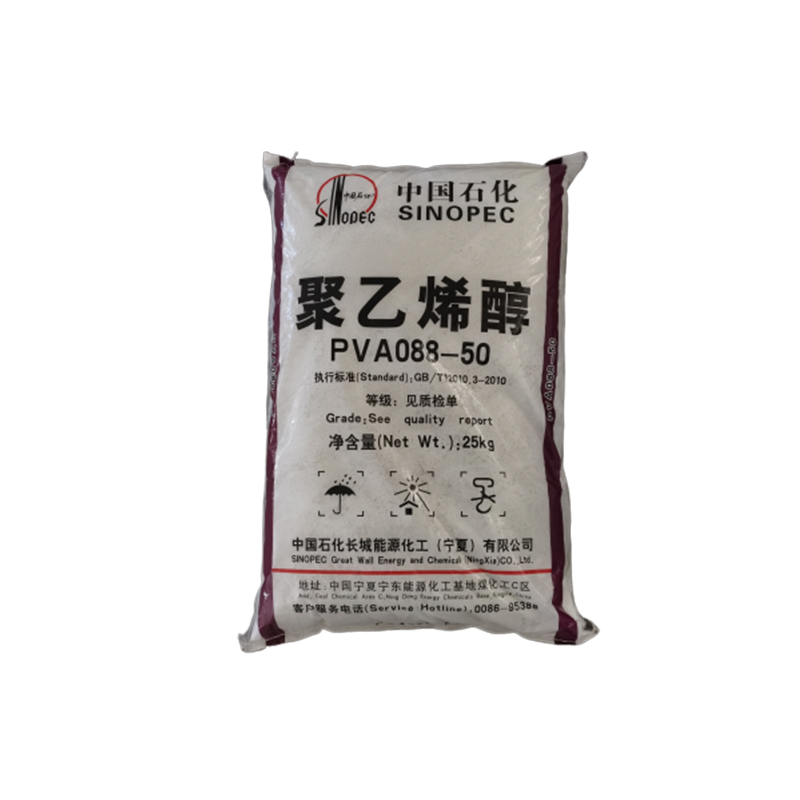
Assessing Saponification Degree for Target Performance
How Alcoholysis Level Governs Solubility, Film Strength, and Thermal Stability
The saponification degree—or alcoholysis level—of polyvinyl alcohol (PVA) fundamentally governs its solubility, film strength, and thermal stability. Fully hydrolyzed PVA (≥98% alcoholysis) minimizes residual acetate groups, enabling dense interchain hydrogen bonding. This yields high crystallinity, superior tensile strength (up to 100 MPa), and enhanced thermal stability—with decomposition onset exceeding 200°C. In contrast, partially hydrolyzed grades (87–89%) retain hydrophobic acetate units that disrupt chain packing, accelerating cold-water dissolution (≤5 minutes at 20°C) but reducing mechanical integrity and moisture barrier performance. Emulsion-based adhesives benefit from this rapid solubility; oxygen-barrier packaging films require full hydrolysis to maximize crystallinity and achieve oxygen transmission rates (OTR) below 1 cc/m²/day.
Application-Specific Thresholds: 87–89% vs. 98–99% Polyvinyl Alcohol Hydrolysis
Performance requirements dictate precise hydrolysis selection:
| Application | Target Hydrolysis | Key Benefit | Performance Limitation |
|---|---|---|---|
| Textile warp sizing | 87–89% | Rapid solubility (≤5 min, 20°C) | Reduced abrasion resistance |
| Oxygen-barrier coatings | 98–99% | Superior film integrity (OTR <1 cc/m²/day) | Limited cold-water solubility |
For paper coatings needing balanced water resistance and re-wettability, 94–96% hydrolysis delivers optimal compromise. Batch consistency must be verified using titration per ASTM D1393 or FTIR spectroscopy—methods recognized by industry standards for accuracy and reproducibility.
Selecting Optimal Molecular Weight for Functional Demands
Low-MW vs. High-MW Polyvinyl Alcohol: Viscosity Control, Binding Efficiency, and Ink Rheology
Molecular weight (MW) is the primary lever for tuning PVA solution behavior. Low-MW grades (20,000–80,000 g/mol) yield low-viscosity solutions ideal for applications demanding rapid wetting and deep substrate penetration—such as inkjet inks and thin-film paper coatings. Their shorter chains offer high binding efficiency per unit mass, supporting strong pigment adhesion without excessive thickening. High-MW PVA (>100,000 g/mol), by contrast, generates viscous, elastic solutions that excel as film formers and rheology modifiers. These grades deliver robust mechanical integrity in textile sizing and structural adhesives, where continuous, cohesive film formation is essential. The decision thus centers on process needs: low MW for mobility and speed; high MW for structural support and viscosity build.
Data-Driven MW Selection: ISO 1520 Testing and OEM Formulation Benchmarks
Engineers rely on standardized testing—not intuition—to match MW to functional demands. ISO 1520 cupping resistance testing evaluates film flexibility, elongation, and adhesion under deformation: higher MW generally improves puncture resistance and ductility, while lower MW enhances solubility and processing speed. Original equipment manufacturers (OEMs) often specify target viscosities—e.g., 20–50 mPa·s at 4% solids—to ensure consistent coating uniformity or ink transfer. Integrating rotational viscometry data with ISO 1520 performance metrics enables systematic, evidence-based MW selection—balancing flow control against end-use mechanical performance.
Ensuring Compatibility in Binder Systems and Aqueous Formulations
Polyvinyl alcohol serves as a critical stabilizer in aqueous binder systems, leveraging its amphiphilic structure to act as a protective colloid. It prevents phase separation and coagulation in complex formulations containing acrylic latex, starch, or pigment dispersions—enhancing film uniformity, adhesion, and rheological predictability without compromising compatibility. Success hinges on aligning hydrolysis degree and molecular weight with the chemistry and stability requirements of the co-binder system.
Polyvinyl Alcohol Synergy with Co-Binders: Acrylic Latex, Starch, and Pigment Dispersion Stability
In acrylic latex systems, PVA bridges polymer particles during film formation, improving coalescence, final film continuity, and water resistance. With starch, it reinforces hydrogen-bond networks—boosting tensile strength and flexibility in paper and textile binders. For pigment dispersions, PVA functions as a steric dispersant, inhibiting agglomeration and ensuring color consistency, gloss, and shelf-life stability. This multi-functional synergy allows formulators to develop high-performance, aqueous-based coatings with tightly controlled viscosity, extended storage stability, and reliable application behavior.
Verifying Quality with Robust Analytical Validation
Rigorous analytical validation is foundational to industrial PVA quality assurance. Critical parameters—including solution viscosity (ISO 15023-2), hydrolysis degree (ASTM D1393), and ash content—must be measured using fully validated methods. Validation confirms reliability across specificity, accuracy, precision, detection limits, and robustness—directly safeguarding formulation performance in coatings, adhesives, and textile sizing. For example, validated viscosity testing prevents runnability failures in high-speed paper coating lines, where even minor rheological deviations cause streaking or metering errors.
| Parameter | Validation Purpose | Application Impact Example |
|---|---|---|
| Viscosity | Confirms shear-thinning behavior consistency | Screen printing ink transfer accuracy |
| Hydrolysis Degree | Verifies alcoholysis level within ±0.5% specification | Water solubility of packaging films |
| Ash Content | Ensures residual salts ≤0.3% via thermogravimetric analysis | Ceramic binder sintering performance |
Manufacturers must implement documented validation protocols covering equipment qualification, analyst competency, and statistical control limits. Regular method verification—including intermediate precision checks—maintains measurement system integrity. In photovoltaic film production, where trace impurities affect electrical conductivity, such discipline prevents costly batch rejections. Third-party accreditation to ISO/IEC 17025 provides auditable assurance for supply chains requiring traceable, defensible data integrity.
FAQ
What is the role of hydrolysis degree in polyvinyl alcohol?
The hydrolysis degree determines the extent to which polyvinyl alcohol has been alcoholyzed. It impacts solubility, thermal stability, and mechanical properties, making it critical for selecting the right grade for specific applications.
How does molecular weight affect polyvinyl alcohol performance?
Molecular weight influences viscosity, binding efficiency, and film-forming behavior. Low-MW grades are suited for applications requiring rapid solubility and penetration, while high-MW grades excel in structural integrity and rheological control.
Why is analytical validation necessary for polyvinyl alcohol?
Analytical validation ensures consistent quality and performance by verifying key parameters like viscosity, hydrolysis degree, and ash content, which are crucial for specific industrial applications like coating or adhesive formulation.
How does polyvinyl alcohol interact with co-binders?
PVA enhances film uniformity, adhesion, and stability by acting as a protective colloid and synergizing with other materials such as acrylic latex, starch, and pigment dispersions.