 EN
EN

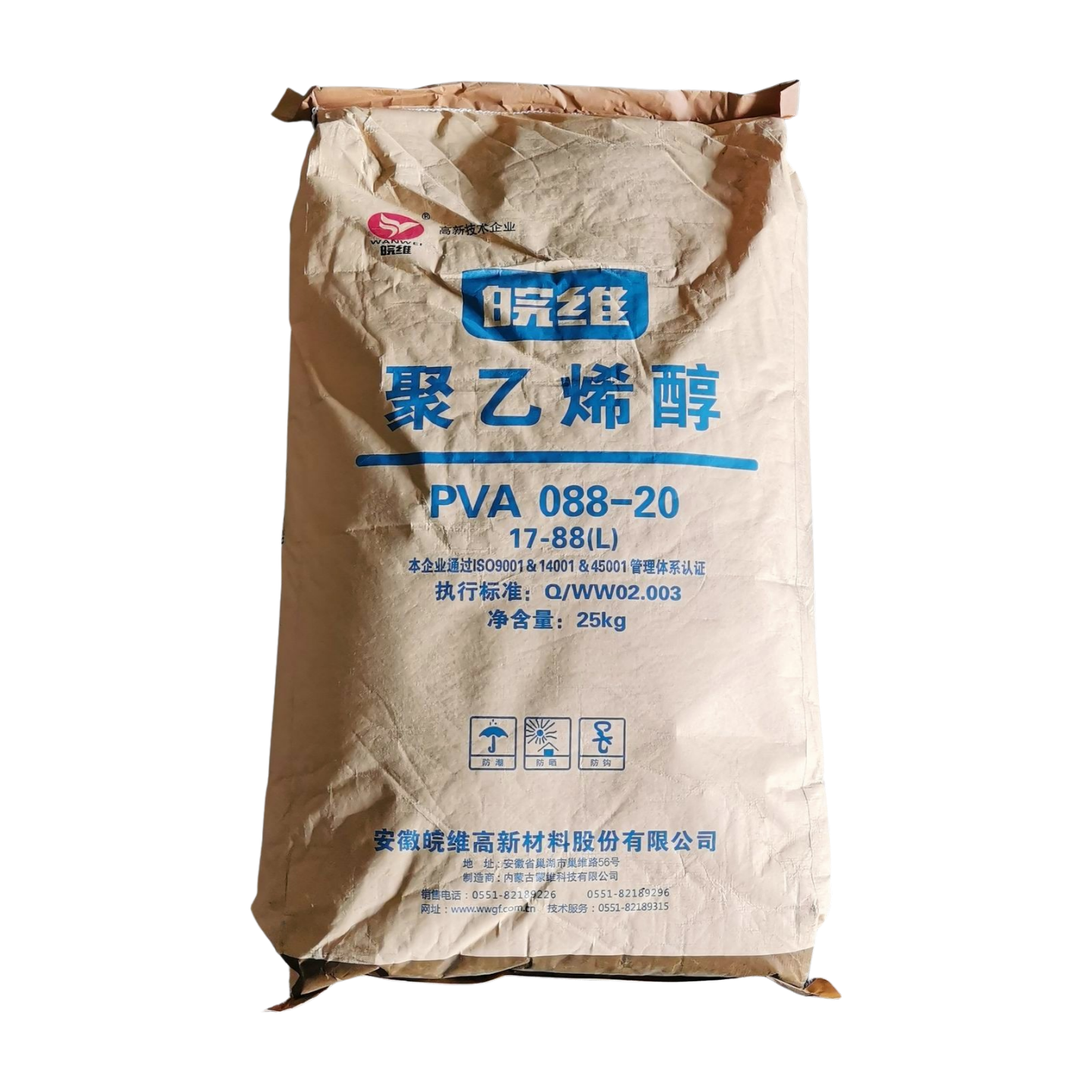
Why Polyvinyl Alcohol Dominates Water-Soluble Film Applications
Molecular Structure and Tunable Solubility of Polyvinyl Alcohol
Polyvinyl alcohol (PVA) dominates water-soluble film applications due to its unique molecular architecture: a linear polymer backbone densely populated with hydroxyl groups that form strong hydrogen bonds with water. This structure enables precise control over solubility through two key parameters—hydrolysis degree (87%–99%) and molecular weight—allowing dissolution times to be engineered from seconds to hours. For example, detergent pods require rapid, complete dissolution within five minutes, while agricultural chemical carriers may need delayed release over six hours or more. That level of functional tunability is unmatched among commercially viable water-soluble polymers.
Performance Benchmark: Polyvinyl Alcohol vs. PVP, PEO, and Other Soluble Polymers
Compared to alternatives like polyvinylpyrrolidone (PVP) and polyethylene oxide (PEO), PVA delivers superior mechanical and barrier performance at scale. Its tensile strength ranges from 40–60 MPa—significantly higher than PVP’s ~25 MPa and PEO’s ~15 MPa—while maintaining an oxygen transmission rate below 0.2 cc/m²/day, outperforming both competitors. Unlike PEO, which degrades in humid conditions, or PVP, which exhibits high moisture vapor transmission (15 g/m²/day), PVA retains structural integrity across variable storage environments and dissolves cleanly without toxic residues. These advantages underpin its 9.5% CAGR in water-soluble packaging—outpacing alternatives by combining technical performance with scalable economics.
Regulatory Tailwinds and Verified Sustainability Benefits of Polyvinyl Alcohol Films
Growing regulatory momentum worldwide is accelerating adoption of PVA films. Policies such as the European Union’s Single-Use Plastics Directive and the U.S. Environmental Protection Agency’s Safer Choice program provide direct financial and compliance incentives for brands transitioning to biodegradable alternatives. Under the EU framework, detergent manufacturers using PVA-based packaging avoid per-unit levies of €0.85—making sustainability a cost-saving strategy, not just a compliance obligation.
EU SUP Directive, US EPA Safer Choice, and Global Policy Alignment
More than 67 countries now enforce Extended Producer Responsibility (EPR) schemes covering plastic packaging, per the OECD’s 2023 policy inventory. These regulations uniquely favor PVA films because of their verified marine biodegradation profile: third-party testing confirms full dissolution within hours—not fragmentation into persistent microplastics—aligning with stringent benchmarks like New York’s Packaging Reduction and Recycling Infrastructure Act. This regulatory fit, combined with PVA’s compatibility with existing wastewater infrastructure, positions it as the only water-soluble polymer broadly recognized across major jurisdictions as functionally and legally sustainable.
Lifecycle Evidence: 32–47% Packaging Waste Reduction in Detergent Pods Using Polyvinyl Alcohol
Peer-reviewed lifecycle assessments confirm PVA films deliver measurable environmental gains. In single-dose detergent pods, they reduce total packaging mass by 32–47% compared to rigid plastic tubs and scoops, according to research published in the Journal of Cleaner Production (vol. 411, 2023). This reduction lowers transportation emissions, minimizes landfill burden, and eliminates secondary packaging waste. Crucially, dissolved PVA shows no residual toxicity in ISO-accredited aquatic ecotoxicity tests—validating its safety in municipal wastewater systems and supporting its classification as fully biodegradable within 90 days under standard wastewater treatment conditions.
Innovations Advancing Polyvinyl Alcohol Film Performance and Circularity
Nanocellulose-Reinforced Polyvinyl Alcohol Films: Strength and Dissolution Balance
Nanocellulose reinforcement enhances PVA’s mechanical performance without compromising its defining water-solubility trait. The nanofibers create an interpenetrating network that improves tensile strength and tear resistance—critical during high-speed filling and handling—while preserving rapid, uniform dissolution. This synergy allows manufacturers to down-gauge film thickness without sacrificing protection, reducing raw material use and packaging waste. The result is a thinner, stronger, and equally soluble film optimized for demanding applications like laundry pods and agrochemical delivery sachets.
Biopolymer Blends (Chitosan, Starch) for Targeted Biodegradation in Agriculture
Blending PVA with natural polymers such as chitosan or starch introduces enzymatically cleavable linkages that accelerate degradation in soil environments. Unlike pure PVA—which persists longer under dry, low-microbial conditions—these blends disintegrate within weeks upon exposure to soil moisture and native microbes, ensuring timely release of active ingredients while avoiding microplastic accumulation. Field trials confirm these composites retain robust barrier properties during storage and transport, yet trigger rapid, controlled breakdown post-application—making them ideal for precision agriculture and seed coating technologies.
Bio-Based Polyvinyl Alcohol from Sugarcane: Carbon Footprint and Commercial Readiness
Producing PVA from sugarcane-derived ethanol—rather than petrochemical vinyl acetate—reduces its cradle-to-gate carbon footprint by 40–50%, per recent LCA studies. Commercial-scale fermentation and polymerization processes now achieve monomer conversion efficiencies and film-forming performance on par with conventional PVA. Major film producers have begun integrating bio-based grades into non-food packaging and industrial wraps, with pricing approaching parity as fermentation technology matures. Because it requires no line modifications or formulation changes, bio-based PVA offers brands a seamless pathway to cut Scope 3 emissions—turning sustainability ambition into operational reality.
FAQs
Q: Why is polyvinyl alcohol the dominant polymer for water-soluble films?
A: Polyvinyl alcohol is dominant due to its unique tunable solubility, excellent mechanical and barrier properties, and verified sustainability credentials, unmatched by alternatives like PVP or PEO.
Q: How can PVA films be fine-tuned for specific applications?
A: The degree of hydrolysis (87%–99%) and molecular weight of PVA can be adjusted to control solubility, enabling applications ranging from detergent pods to agricultural carriers.
Q: Are PVA films environmentally friendly?
A: Yes, PVA films are biodegradable within 90 days under standard wastewater treatment, verified through peer-reviewed lifecycle assessments. They leave no toxic residues after dissolution.
Q: What innovations are enhancing PVA films?
A: Innovations include nanocellulose reinforcement for strength, biopolymer blends for agriculture, and bio-based PVA derived from sugarcane for reduced carbon footprints.
Q: How do regulatory policies favor PVA films?
A: Global policies like the EU Single-Use Plastics Directive and EPA's Safer Choice Program incentivize PVA use due to its compatibility with waste systems and biodegradable nature.