 EN
EN

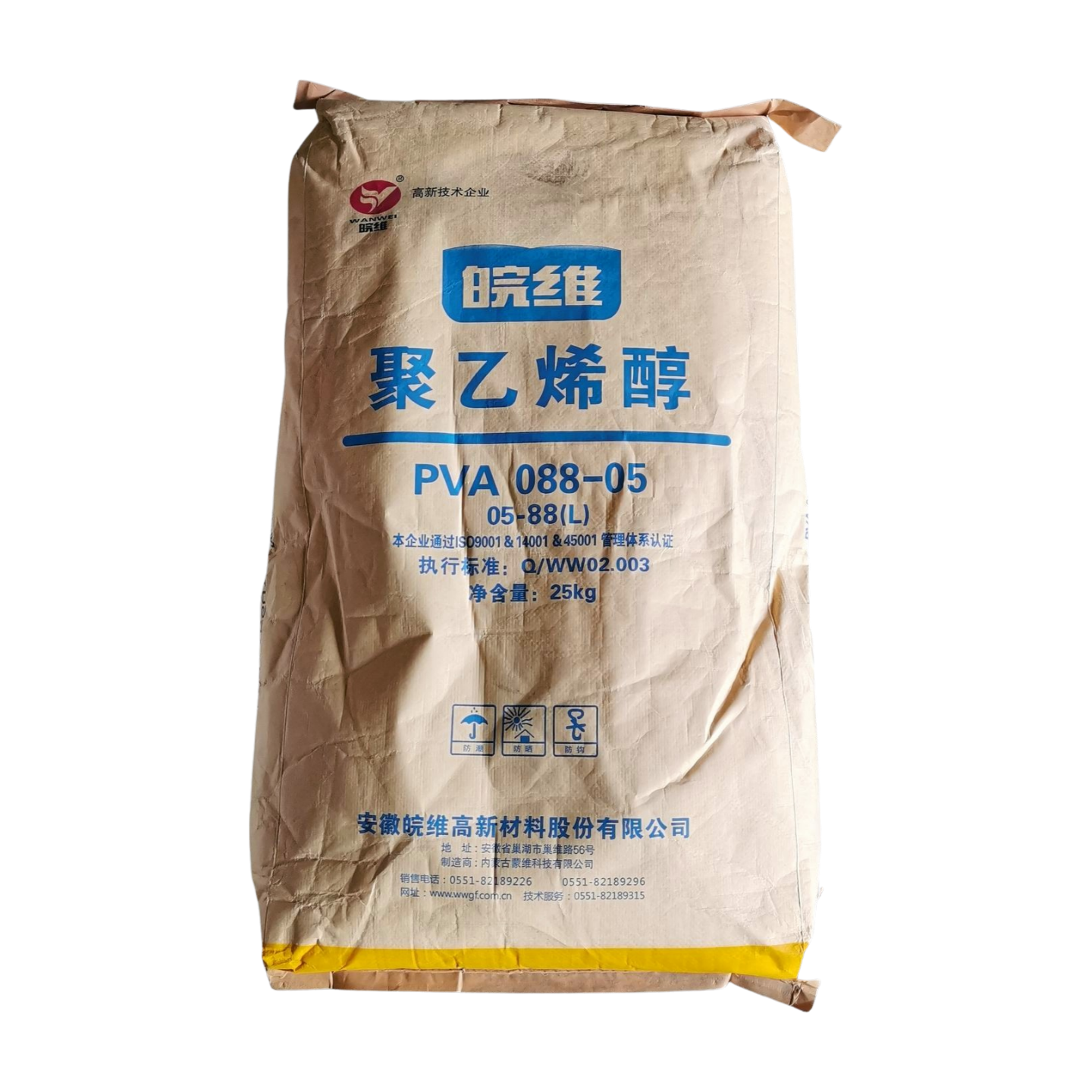
Selecting the Right PVA Grade for Target Application Performance
Matching Degree of Hydrolysis and Molecular Weight to Dissolution Rate and Mechanical Strength
Selecting the optimal Polyvinyl Alcohol (PVA) grade requires precise alignment between polymer properties and functional requirements. The degree of hydrolysis (DH) directly governs dissolution behavior: higher DH (e.g., 98–99%) yields slower water dissolution but superior mechanical strength—ideal for detergent pods requiring delayed release. Conversely, partially hydrolyzed grades (87–89% DH) dissolve rapidly in cold water, making them well-suited for agrochemical packaging. Molecular weight (MW) further modulates performance: higher MW enhances film toughness and barrier properties but increases solution viscosity, complicating processing. Industry studies indicate that an MW range of 85,000–146,000 g/mol balances tensile strength (>40 MPa) and practical dissolution times (<3 minutes at 25°C), enabling reliable unit-dose packaging without compromising throughput efficiency.
Evaluating Thermal Stability and Moisture Sensitivity for Processing Reliability
Processing conditions demand rigorous evaluation of PVA’s thermal and hygroscopic characteristics. Thermal degradation typically begins at 170–200°C, limiting melt extrusion temperatures to ≤160°C to prevent chain scission and discoloration. Moisture sensitivity is equally critical: films with >5% moisture content exhibit a depressed glass transition temperature (Tg), increasing blocking risk during storage. Humidity-controlled environments (<40% RH) and barrier packaging are essential to maintain film integrity. Accelerated aging tests show that PVA films retain functional solubility (<90 seconds) and mechanical properties (elongation >200%) for 18 months when stored below 30°C with desiccants—ensuring reliable integration into automated packaging lines.
PVA Film Manufacturing Methods: Choosing Between Solution Casting and Melt Extrusion
Solution Casting for Precision Applications Requiring Optical Clarity and Thickness Control
Solution casting remains the preferred method for producing PVA films where optical transparency and tight thickness tolerances are critical. The process begins by dissolving PVA powder in distilled water at 70–100 °C under continuous stirring until a homogeneous, bubble-free solution forms. This solution is cast onto a smooth substrate and dried in a controlled oven—typically at 40 °C—to gradually remove water. By adjusting PVA concentration (commonly 8–12 wt%) and drying duration, manufacturers can precisely tailor final film thickness from microns to hundreds of microns. The absence of high shear or thermal stress preserves molecular integrity, yielding films with excellent clarity and uniform dissolution behavior. This approach is ideal for unit-dose packaging, where predictable release profiles and visual inspection demand defect-free surfaces. However, its batch nature limits throughput, making it best suited for specialized, lower-volume production.
Melt Extrusion Adaptations for High-Volume Production of Thermally Stabilized PVA Films
Melt extrusion offers a continuous alternative—but neat PVA degrades near its melting point (∼220 °C), requiring careful formulation to enable processing. To overcome this, manufacturers incorporate plasticizers—such as glycerin or sorbitol—along with thermal stabilizers to lower the glass transition temperature and widen the processing window. In a twin-screw extruder, the PVA-pellet feed is melted, homogenized, and forced through a flat die onto a chill roll, producing film at linear speeds far exceeding solution casting. Adjusting screw configuration and temperature profiles helps prevent gel formation and ensures uniform thickness across the web. The resulting films, while slightly less transparent than cast counterparts, maintain adequate solubility and mechanical strength for bulk applications like laundry pods and agricultural mulch. Melt extrusion thus excels when cost efficiency and output volume outweigh the need for ultimate optical clarity.
Optimizing PVA Film Application: Dissolution, Sealing, and Integration
Controlling Dissolution Parameters—Temperature, pH, and Agitation—for Predictable Release Profiles
Precise control of dissolution parameters ensures reliable release profiles for PVA films in water-soluble applications. Temperature dictates dissolution speed: higher temperatures accelerate breakdown—target 5–40°C depending on required activation time. pH levels below 4 or above 10 significantly accelerate dissolution, whereas neutral environments slow the process. Agitation intensity must align with end-use conditions; gentle stirring mimics packaging in flowing water, while turbulence simulations suit industrial washers. For instance, solution viscosity studies show that specific agitation patterns reduce film fragmentation by 22%. Balance these variables using:
- Temperature calibration: ±2°C tolerance for batch consistency
- pH buffers: Citric acid or sodium carbonate solutions
- Agitation metrics: 50–200 rpm for uniform dissolution
Achieving Robust Heat or Solvent Sealing Without Compromising PVA Solubility Integrity
Sealing methods must preserve PVA's water solubility while ensuring package integrity. Heat sealing at 110–130°C for 1–3 seconds enables localized polymer chain realignment without premature dissolution. Solvent-based sealing—using ethanol-water blends—creates strong bonds without thermal degradation, making it ideal for heat-sensitive contents. Crucially, cross-linking techniques using agents like oxalic acid maintain solubility thresholds while improving seal strength by up to 34%. Implement these protocols:
- Heat sealing: Lower temperatures (<100°C) with longer dwell times
- Solvent selection: ≤30% ethanol concentration to avoid crystallization
- Edge design: 3–5 mm seal margins to contain dissolution initiation zones
Monitor relative humidity below 50% during sealing to prevent moisture-triggered partial dissolution.
Managing Environmental Factors to Ensure Consistent PVA Film Handling and Performance
Polyvinyl alcohol (PVA) films are highly sensitive to ambient humidity and temperature fluctuations due to their hydroxyl groups. These environmental conditions directly affect moisture content—which in turn alters dissolution rates, mechanical strength, and sealing reliability. To maintain consistent handling and performance, manufacturers must implement robust moisture management strategies, including desiccant use, moisture-resistant coatings, and optimization of drying temperature and dwell time. Partial cross-linking of PVA polymer chains with agents like oxalic acid reduces moisture absorption while enhancing thermal stability and creep resistance. Adhering to industry standards for acceptable moisture levels ensures batch-to-batch uniformity. By controlling these environmental factors, businesses can prevent processing delays, reduce waste, and deliver films that meet end-user expectations.
FAQ
What is the significance of the degree of hydrolysis in PVA selection?
The degree of hydrolysis in PVA affects its dissolution properties and mechanical strength. High DH (98–99%) offers slower dissolution but better strength, while partially hydrolyzed grades (87–89%) dissolve faster, making them suitable for applications like packaging.
Why is moisture management crucial in PVA film storage?
Moisture affects PVA film’s mechanical strength, dissolution rates, and sealing reliability. Proper storage conditions—such as maintaining low humidity levels and using desiccants—ensure film performance and longevity.
What are the benefits of solution casting compared to melt extrusion?
Solution casting provides higher optical clarity and precise thickness control, ideal for specialized applications. Melt extrusion, though less transparent, is better for high-volume, cost-efficient production.
How can sealing integrity be maintained without compromising PVA solubility?
Using heat sealing at controlled temperatures or solvent-based sealing methods helps maintain solubility while ensuring proper sealing strength without degradation.
Table of Contents
- Selecting the Right PVA Grade for Target Application Performance
- PVA Film Manufacturing Methods: Choosing Between Solution Casting and Melt Extrusion
- Optimizing PVA Film Application: Dissolution, Sealing, and Integration
- Managing Environmental Factors to Ensure Consistent PVA Film Handling and Performance
- FAQ