 EN
EN

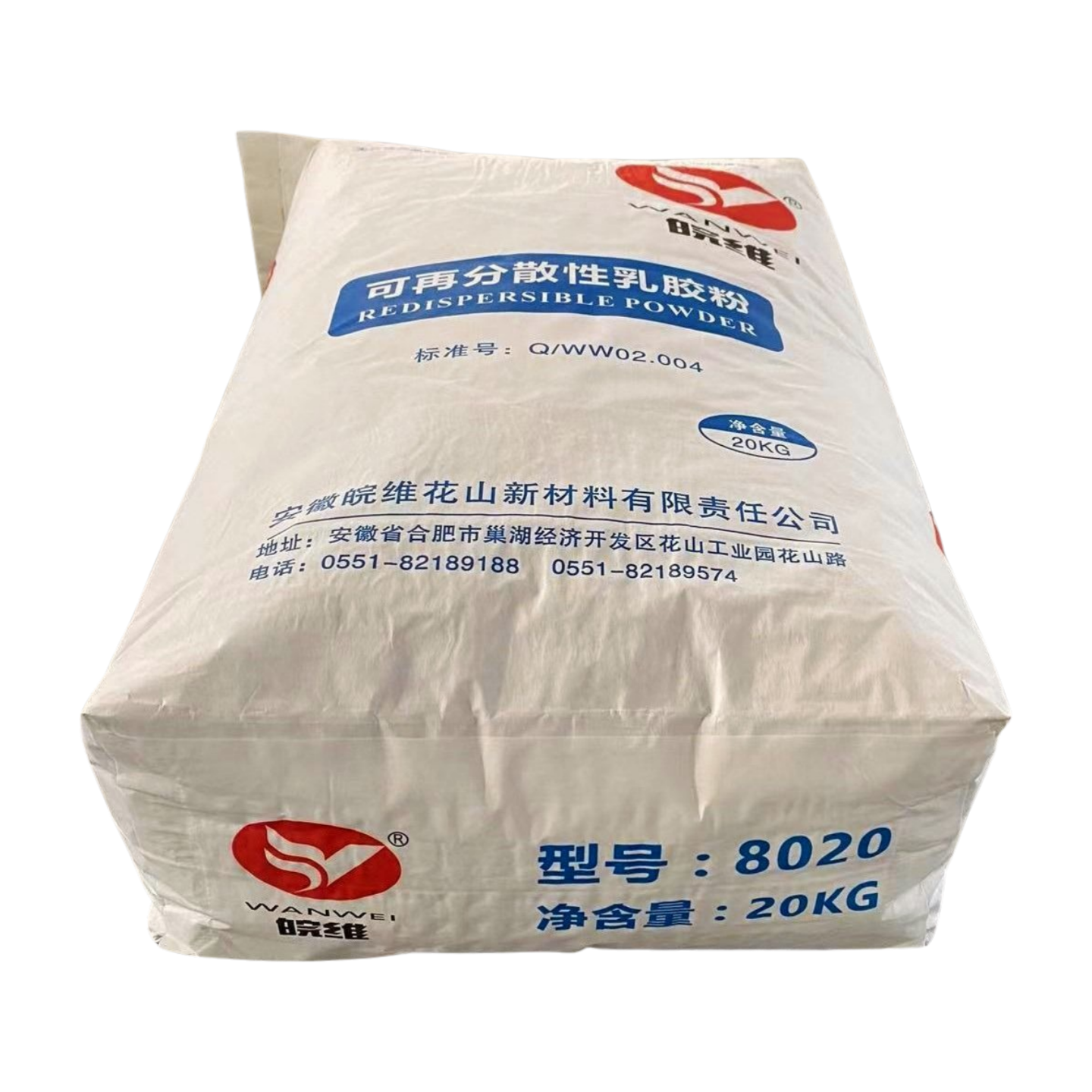
Enhanced Adhesion: How Redispersible Polymer Powder Strengthens Cementitious Bonds
Molecular mechanisms of polymer-cement interfacial bonding
Redispersible polymer powder (RDP) establishes a dual binding system in cementitious mortars. Upon mixing, RDP particles redisperse in water and coalesce during drying to form a continuous, flexible polymer film. This film interpenetrates the calcium silicate hydrate (C–S–H) network, bridging microgaps between cement particles and substrate to create mechanical interlock. Functional groups—particularly hydroxyl and carboxyl—form hydrogen bonds with C–S–H surfaces, reinforcing chemical adhesion. Crucially, unlike brittle cement crystals, the polymer film deforms elastically under stress, suppressing interfacial debonding.
Quantified adhesion gains: Pull-off strength improvements in tile mortars (EN 12004 data)
Per EN 12004, unmodified cementitious tile adhesives meet Class C1 (minimum tensile adhesion ≥0.5 N/mm²). Incorporating RDP elevates performance to Class C2 (≥1.0 N/mm²)—a 100% increase in minimum pull-off strength. This improvement is especially critical for low-absorption substrates such as glazed tiles, polished concrete, or existing finishes, where unmodified mortars frequently fail due to poor interfacial bonding.
| Mortar type | EN 12004 class | Minimum pull-off strength (N/mm²) |
|---|---|---|
| Unmodified | C1 | 0.5 |
| RDP-modified | C2 | 1.0 |
This quantified uplift directly mitigates tile slippage and detachment in high-risk applications—including façades, wet rooms, and large-format installations—where sustained bond integrity is non-negotiable.
Improved Water Resistance: Hydrophobic Film Formation and Absorption Reduction
Redispersible polymer powder forms a hydrophobic, pore-filling network within the cement matrix. As the polymer film coalesces during curing, it coats capillary walls and seals microvoids—physically blocking water ingress via capillary action. Unlike hydrophobic admixtures that merely reduce surface tension, RDP creates an integral, durable barrier that remains effective even under substrate movement or thermal cycling.
Hydrophobic polymer network formation inhibiting capillary water ingress
The coalesced polymer film bridges microcracks and lines pores without compromising vapor permeability—allowing moisture vapor to escape while repelling liquid water. This selective transport behavior prevents internal condensation and freeze-thaw damage in exterior systems.
25–40% reduction in water absorption observed in redispersible polymer powder-modified mortars (BAM & ETAG 004 studies)
Standardized testing per BAM (Federal Institute for Materials Research and Testing) and ETAG 004 confirms RDP-modified mortars achieve 25–40% lower capillary water absorption versus unmodified controls. Mortars formulated with 2–5% RDP consistently demonstrate ~30% average reduction—with optimized systems reaching up to 40%. These results satisfy ETAG 004’s stringent requirements for external thermal insulation composite systems (ETICS), making RDP a cornerstone of durable, weather-resistant façade solutions.
Crack Bridging and Freeze-Thaw Durability: Elasticity Meets Environmental Resilience
Elastic polymer film deformation accommodating microcrack movement
RDP-integrated mortars develop an elastic polymer matrix that accommodates microcrack opening under tensile stress. Rather than propagating, cracks are bridged by the deformable film, which absorbs mechanical energy and maintains cohesion across the fracture plane. This mechanism significantly enhances resistance to dynamic loading, thermal expansion/contraction, and substrate creep—key failure drivers in thin-set applications and repair systems.
Freeze-Thaw cycle endurance: ≥300 cycles without spalling in RDP-enhanced fiber cement (DIN EN 480-12)
By restricting capillary water uptake—the primary accelerator of freeze-thaw degradation—RDP-modified composites exhibit exceptional resilience. Per DIN EN 480-12 accelerated testing, fiber cement formulations with high-purity RDP withstand ≥300 freeze-thaw cycles with no spalling, strength loss, or visible surface deterioration. In contrast, conventional mortars typically degrade after 50–100 cycles due to internal ice pressure. This durability leap ensures long-term performance in infrastructure, façades, and civil engineering projects across cold-climate regions.
Balancing Performance: Trade-Offs Between Flexibility, Strength, and Long-Term Durability
Integrating RDP introduces a deliberate trade-off: enhanced flexibility, adhesion, and water resistance come at the cost of a modest reduction in ultimate compressive strength—typically 5–15%, depending on dosage and base formulation. However, this compromise is strategically advantageous. The polymer film substantially improves flexural strength, crack resistance, and toughness—attributes far more relevant than peak compressive strength in real-world applications like tile adhesives, EIFS base coats, and structural repair mortars.
For construction professionals, the engineering priority shifts from maximizing early stiffness to optimizing service-life resilience. A well-formulated RDP mortar—typically dosed at 2–6% by weight of cement—delivers superior resistance to thermal cycling, vibration, and differential movement. Over its lifecycle, this translates into fewer repairs, lower maintenance costs, and extended functional performance—making flexibility-driven durability not a concession, but the most economically and technically sound choice for demanding construction environments.
FAQ
What is redispersible polymer powder (RDP)?
RDP is a powdered polymer that redistributes into its original dispersion upon mixing with water, enhancing adhesion, flexibility, and water resistance in cementitious mortars.
How does RDP improve adhesion in cementitious mortars?
RDP forms a flexible polymer film that interpenetrates the calcium silicate hydrate (C–S–H) network, creating mechanical interlock and chemical bonding, leading to enhanced pull-off strength.
What are the quantified adhesion gains with RDP?
RDP-modified mortars achieve a 100% increase in pull-off strength, upgrading from Class C1 (0.5 N/mm²) to Class C2 (1.0 N/mm²) adhesion as per EN 12004.
How does RDP enhance water resistance?
RDP forms a hydrophobic, pore-filling film that prevents water ingress without compromising vapor permeability, reducing water absorption by 25–40%.
Can RDP protect against freeze-thaw cycles?
Yes, RDP-modified mortars exhibit exceptional freeze-thaw durability, withstanding ≥300 cycles without damage as per DIN EN 480-12 testing.
What are the potential trade-offs when using RDP?
Using RDP moderately reduces compressive strength by 5–15%, but it significantly enhances flexibility, crack resistance, and long-term durability.
Table of Contents
- Enhanced Adhesion: How Redispersible Polymer Powder Strengthens Cementitious Bonds
- Improved Water Resistance: Hydrophobic Film Formation and Absorption Reduction
- Crack Bridging and Freeze-Thaw Durability: Elasticity Meets Environmental Resilience
- Balancing Performance: Trade-Offs Between Flexibility, Strength, and Long-Term Durability