 EN
EN

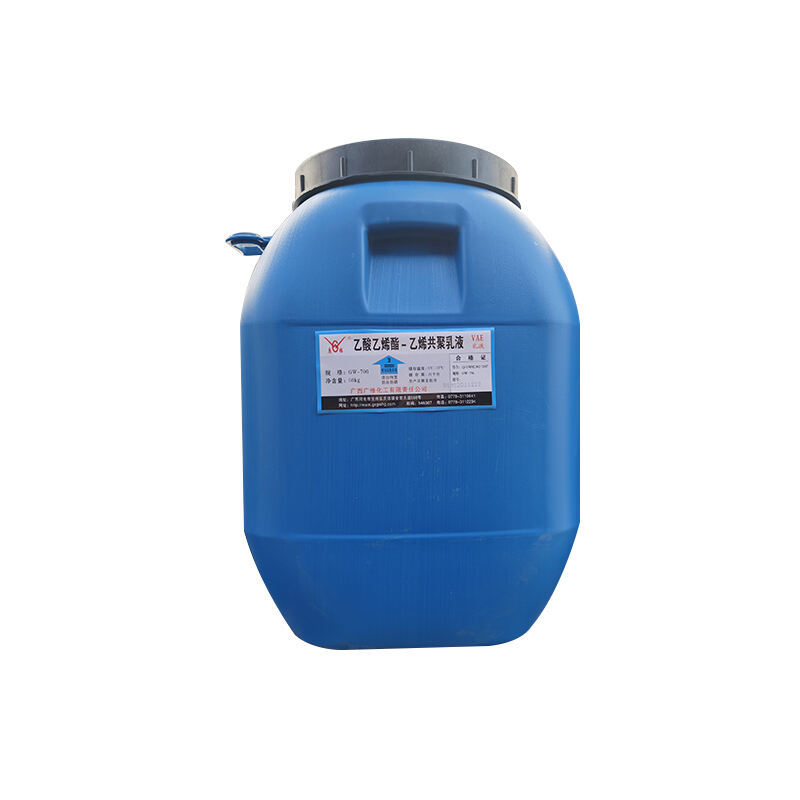
How VAE-RDPs Transform Tile Adhesive Performance at the Material Level
Hydration modulation and polymer film formation in dry mortar systems
VAE-RDPs really boost how cement hydrates by controlling when and where water is available during the process. What happens is these powders have a special structure that slows down water evaporation and stops moisture from escaping too quickly into porous materials. This means the hydration process can continue properly, leading to stronger C-S-H crystals forming in the cement. When everything dries out, the VAE particles come together to form a flexible film across the surface. This film actually works its way through the cement itself. We get this interesting combination where mineral crystals are both physically held in place and chemically connected by the polymer. The result? Better stickiness between layers, stronger grip on surfaces, and less chance of tiny cracks spreading through the material. Plus, this polymer film handles temperature changes pretty well and helps fix those small cracks that appear right after installation. For anyone working with big tiles or thin set applications, this makes all the difference in performance and durability over time.
Critical film formation temperature (CFT) and its impact on VAE-RDP activation
How well VAE-RDP works depends largely on something called the Critical Film Formation Temperature or CFT for short. Most commercial products have CFT values somewhere between freezing point and around 15 degrees Celsius. When temperatures drop below this threshold, those tiny polymer particles just sit there without sticking together properly. What happens next isn't good either - we get these brittle films that break apart easily when subjected to normal wear and tear or heat changes. That's why manufacturers add ethylene during production. This process makes the polymer chains more flexible while also lowering what's known as the glass transition temperature (Tg). The result? Films that form correctly even when it gets pretty chilly outside. Once above the CFT mark, the material transforms into something quite different altogether. It becomes elastic and water resistant, creating membranes that actually perform better in many real world conditions.
- Flexibility (>200% elongation vs. rigid cement)
- Impact resistance (up to 3– higher than standard adhesives)
- Wet adhesion strength through reduced water penetration at the adhesive–substrate interface
This thermally responsive behavior directly supports EN 12004’s performance classifications for demanding service conditions.
Key Performance Gains from VAE Powder Addition in EN 12004-Compliant Tile Adhesives
Improved water retention, slump resistance, and open time with 3–6% VAE-RDP dosage
Using around 3 to 6 percent VAE-RDP in mortar mixtures gets those three key handling characteristics just right for anyone doing serious tile work. Water stays put better when mixed with this additive, so it doesn't get sucked too quickly into porous surfaces beneath the tiles. This means the cement has time to hydrate properly and form that strong C-S-H network we all want. The second benefit? Mortar mixed with VAE-RDP resists slumping about 40% more than regular mortar does. That makes a huge difference when laying tiles vertically or overhead where slippage would be a nightmare. Thirdly, workers get roughly 30 extra minutes before the surface starts to skin over, giving them plenty of time to position those big format tiles exactly where they need to go without having to start over. All these improvements match up nicely with what EN 12004 specifies for workability standards, open time requirements, and slip resistance classes. Plus, there's less wasted material and fewer frustrated workers trying to fix mistakes later on.
Enhanced adhesion strength, crack bridging, and substrate flexibility tolerance
The film forming process of VAE-RDP gives it some serious structural benefits beyond what regular adhesives offer. When applied, the polymer actually sticks to cement particles and works its way into tiny pores in the surface material. This includes tricky surfaces like old ceramics, concrete coated with epoxy, or even waterproof membranes. Tests show this approach boosts bond strength by at least 1.0 Newton per square millimeter when compared to standard products. What makes VAE-RDP really stand out is how its elastic properties handle different expansion rates between tiles and their base. It can bridge gaps as big as 1.5 mm without losing hold, which matters a lot during repeated stress cycles. These characteristics make it work exceptionally well in challenging settings where movement is constant, think radiant heated floors, areas prone to earthquakes, or tall building exteriors. The product meets the top durability requirements set by EN 12004 standard, specifically category S1 for flexible bases and S2 for materials that need extra deformation resistance.
Key performance highlights:
- 200% improvement in crack-bridging capacity over unmodified mortars
- Substrate movement accommodation up to 3 mm without adhesive failure
- Water immersion resistance meeting C2TE classification per EN 12004
Why VAE-RDP Outperforms Liquid Emulsions in Dry-Mix Tile Adhesive Formulations
Superior shelf stability, dust-free handling, and logistics efficiency of VAE powder
When it comes to making dry mix tile adhesives, VAE-RDP definitely beats out those liquid polymer emulsions. The fact that it comes as a redispersible powder means no worrying about things like phase separation happening, or microbes growing in it, plus it doesn't break down when frozen and thawed again and again. This stuff can last up to 18 months on the shelf without needing any special cold storage. What this really means is less wasted product at job sites and much easier stock control for suppliers. On factory floors, these VAE powders work great through automated batching equipment because they don't clump together or create excessive dust during handling. Workers aren't exposed to messy alternatives that tend to absorb moisture from the air or stick together in bags. From a logistics standpoint, switching to powder cuts down shipping weights somewhere between 30 to 40 percent since there's no water content anymore. Packaging becomes spill proof too, and warehouses need half the space to store everything. Most big name adhesive makers around the world have already made the switch to VAE-RDP for their dry mix products simply because it makes so much sense operationally while still being good for the environment.
Balancing VAE-RDP Dosage: Optimizing Flexibility Without Compromising Structural Integrity
Getting the right amount of VAE-RDP is essential for good results. The polymer content definitely helps with flexibility, making materials tolerate deformation much better when we're looking at around 5% dosage levels. But there's a catch: going beyond 6-8% concentration actually cuts down on compressive strength by nearly half and messes with how the cement hydrates properly. Finding that sweet spot depends heavily on what the material will be used for. Most contractors find that 4-5% works well for things like building exteriors or radiant floor systems. At these levels, they usually see shear adhesion above 1.5 MPa while still maintaining decent flexural strength and keeping dimensions stable over time. Going past that magic number creates problems though. We start seeing tiny cracks from shrinkage, areas where too much polymer accumulates and doesn't bond well with cement, plus eventual loss of cohesion between components. For manufacturers, running tests according to EN 12004 standards makes sense here. They need to check thermal cycling effects, water resistance, and how materials hold up under stress during deformation tests. This helps determine exactly when the continuous polymer film starts working against rather than for the overall durability of the cement mix.
FAQs
What are VAE-RDPs? VAE-RDPs are vinyl acetate-ethylene redispersible powders used in tile adhesives to enhance their performance and properties.
What is CFT in relation to VAE-RDPs? CFT stands for Critical Film Formation Temperature, which affects how VAE-RDPs activate and form films in adhesive mixtures.
How does VAE-RDP improve tile adhesive performance? VAE-RDP improves water retention, adhesive strength, crack bridging, and flexibility in tile adhesives.
What is the ideal dosage of VAE-RDPs for tile adhesives? The ideal dosage typically ranges between 4-5% to balance flexibility with structural integrity without compromising strength.
Why are VAE-RDPs preferred over liquid emulsions? VAE-RDPs offer superior shelf stability, are dust-free, ease logistics, and prevent issues like phase separation and microbial growth.
Table of Contents
- How VAE-RDPs Transform Tile Adhesive Performance at the Material Level
- Key Performance Gains from VAE Powder Addition in EN 12004-Compliant Tile Adhesives
- Why VAE-RDP Outperforms Liquid Emulsions in Dry-Mix Tile Adhesive Formulations
- Balancing VAE-RDP Dosage: Optimizing Flexibility Without Compromising Structural Integrity