 EN
EN

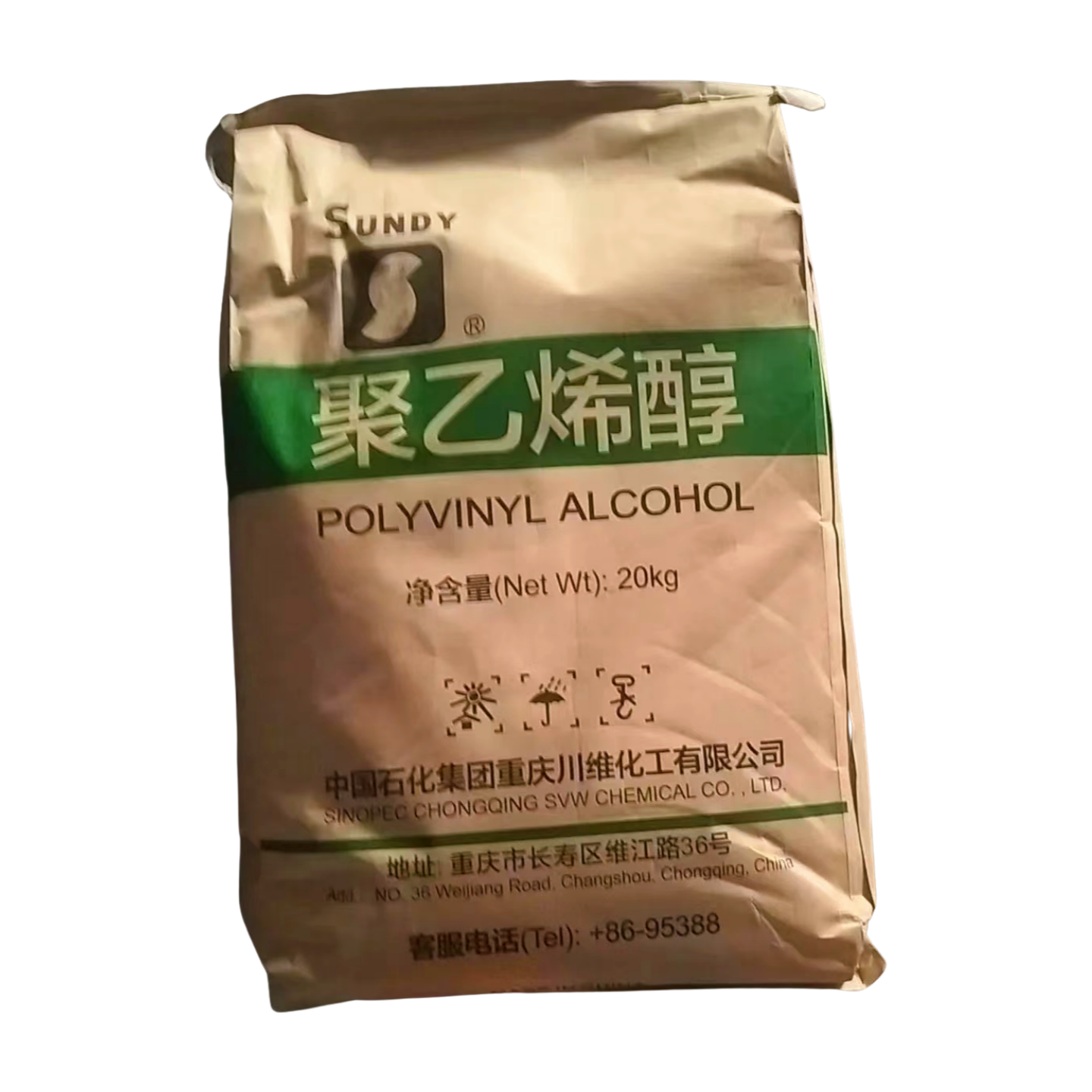
Why PVA Is the Leading Warp Sizing Agent for Breakage Reduction
Polyvinyl alcohol (PVA) dominates warp sizing due to its unparalleled ability to reduce yarn breakage during high-speed weaving. By forming a cohesive, flexible film around individual fibers, PVA minimizes friction between yarns and loom components—a primary cause of warp breaks. This protective layer enhances tensile strength while preserving elasticity, enabling threads to withstand abrupt directional changes and mechanical stress in modern weaving.
Textile mills report up to 20% fewer warp stops after switching to PVA-based sizing agents—directly improving loom efficiency and reducing downtime. Unlike starch or acrylic alternatives, PVA adheres strongly to both cotton and synthetic fibers without compromising desizing efficiency. Its water-soluble nature ensures complete removal during fabric finishing, preventing residue that could weaken fibers or cause defects.
The global shift toward sustainable textile production further solidifies PVA’s position. As a non-toxic, biodegradable polymer, it aligns with tightening environmental regulations while delivering measurable performance gains. For manufacturers prioritizing both operational efficiency and eco-compliance, PVA remains the optimal solution for minimizing breakage and maximizing fabric quality.
How PVA’s Film-Forming Properties Protect Yarn Integrity Under High-Speed Weaving
Cohesive film strength and surface abrasion resistance
PVA forms robust, tightly adhering films that create a cohesive barrier against high-speed weaving stresses. This strong bonding resists shearing forces from heddles, reeds, and other loom components—preserving yarn integrity. Its superior surface abrasion resistance reduces friction-induced damage by over 20% compared to starch-based alternatives, significantly lowering fiber loss and breakage in commercial operations.
Elongation capacity vs. loom stress: Balancing flexibility and rigidity
Optimal PVA films stretch to absorb loom-induced tension without rupturing. An elongation capacity of 150–200% strain allows yarns to flex under sudden acceleration while maintaining structural rigidity. Excessive rigidity leads to film cracking; insufficient flexibility causes slippage. This precise balance cuts warp breakages by 15–30% in high-speed settings, and is achieved through controlled formulation—not generic polymer selection.
Optimizing PVA Selection: Alcoholysis and Polymerization Degree for Minimal Breakage
Selecting the optimal PVA grade requires balancing alcoholysis degree and polymerization degree (DP), as these parameters directly influence film strength, desizing efficiency, and flexibility during high-speed weaving.
High- vs. low-alcoholysis PVA: Impact on desizing efficiency and residual defects
Low-alcoholysis PVA (86–90%) dissolves readily in cold water, enabling efficient desizing with minimal residue. This reduces defects like uneven dyeing by over 15% compared to high-alcoholysis variants (98–100%), which require hot-water removal and often leave stubborn residues. The hydrophilic nature of low-alcoholysis grades ensures cleaner fabric surfaces, while high-alcoholysis types risk stiffening yarns if incompletely removed.
Polymerization degree (DP) effects on tensile reinforcement in fine-count cotton warps
Higher DP (≥2000) significantly boosts tensile strength in fine-count cotton warps—DP 2400 increases abrasion resistance by 20% versus DP 1700. However, excessive DP reduces flexibility, increasing breakage risk under loom stress. For yarns above 100-count, mid-range DP (1700–2000) delivers the ideal balance of reinforcement and elasticity—critical for surviving rapid shedding motions.
| Property | Low-Alcoholysis PVA | High-Alcoholysis PVA |
|---|---|---|
| Alcoholysis Range | 86–90% | 98–100% |
| Desizing Efficiency | High (cold water) | Moderate (hot water) |
| Residual Defect Risk | Low | High |
| DP Range | Tensile Gain | Flexibility | Fine-Yarn Suitability |
|---|---|---|---|
| 1700–2000 | Moderate | High | Optimal |
| 2000–2400 | High | Moderate | High-stress scenarios |
The interplay between alcoholysis and DP dictates real-world performance: low-alcoholysis with mid-DP minimizes breakage in standard weaves, while specialized applications may demand tailored combinations.
Advanced PVA Solutions: Modified Variants for Next-Generation High-Speed Looms
Conventional PVA sizing agents face limitations in extreme high-speed weaving environments—where mechanical stresses exponentially increase warp breakage risks. To address this, modified PVA variants—specifically oxidized and graft-modified types—deliver enhanced performance. These engineered polymers exhibit superior adhesion to synthetic fibers and improved solubility, critical for modern automated looms operating above 1,000 RPM.
Oxidized PVA introduces carboxyl groups into the polymer chain, significantly improving biodegradability and enabling efficient desizing at lower temperatures (60–70°C). Graft-modified PVA incorporates monomers like acrylamide, creating branched structures that boost film elasticity by 40% compared to standard PVA—directly combating snap failures during peak shuttle acceleration. Industry trials demonstrate that weaving mills adopting these variants achieve 15–20% fewer warp stops, translating to a 12% reduction in downtime. Their optimized viscosity profile also prevents size migration in blended yarns, eliminating weak spots that trigger breaks under tension.
FAQ
Why is PVA considered the leading warp sizing agent?
PVA is highly effective in reducing yarn breakage during high-speed weaving by forming a cohesive and flexible protective film around fibers. It enhances tensile strength, minimizes friction, and aligns with sustainability goals due to its biodegradable and non-toxic properties.
How does PVA compare to starch-based alternatives?
Compared to starch-based alternatives, PVA provides superior film strength, better surface abrasion resistance, and reduced frictional damage, resulting in significantly fewer warp breakages in weaving operations.
What are the advantages of low-alcoholysis PVA?
Low-alcoholysis PVA (86–90%) dissolves efficiently in cold water, making desizing easier and minimizing residual defects such as uneven dyeing. It is especially beneficial for ensuring cleaner fabric finishing processes.
What are modified PVA variants, and why are they necessary?
Modified PVA variants, like oxidized and graft-modified types, are engineered for extreme high-speed weaving environments. These variants enhance adhesion, elasticity, solubility, and biodegradability, reducing warp stops and improving overall loom efficiency.
Table of Contents
- Why PVA Is the Leading Warp Sizing Agent for Breakage Reduction
- How PVA’s Film-Forming Properties Protect Yarn Integrity Under High-Speed Weaving
- Optimizing PVA Selection: Alcoholysis and Polymerization Degree for Minimal Breakage
- Advanced PVA Solutions: Modified Variants for Next-Generation High-Speed Looms
- FAQ