 EN
EN

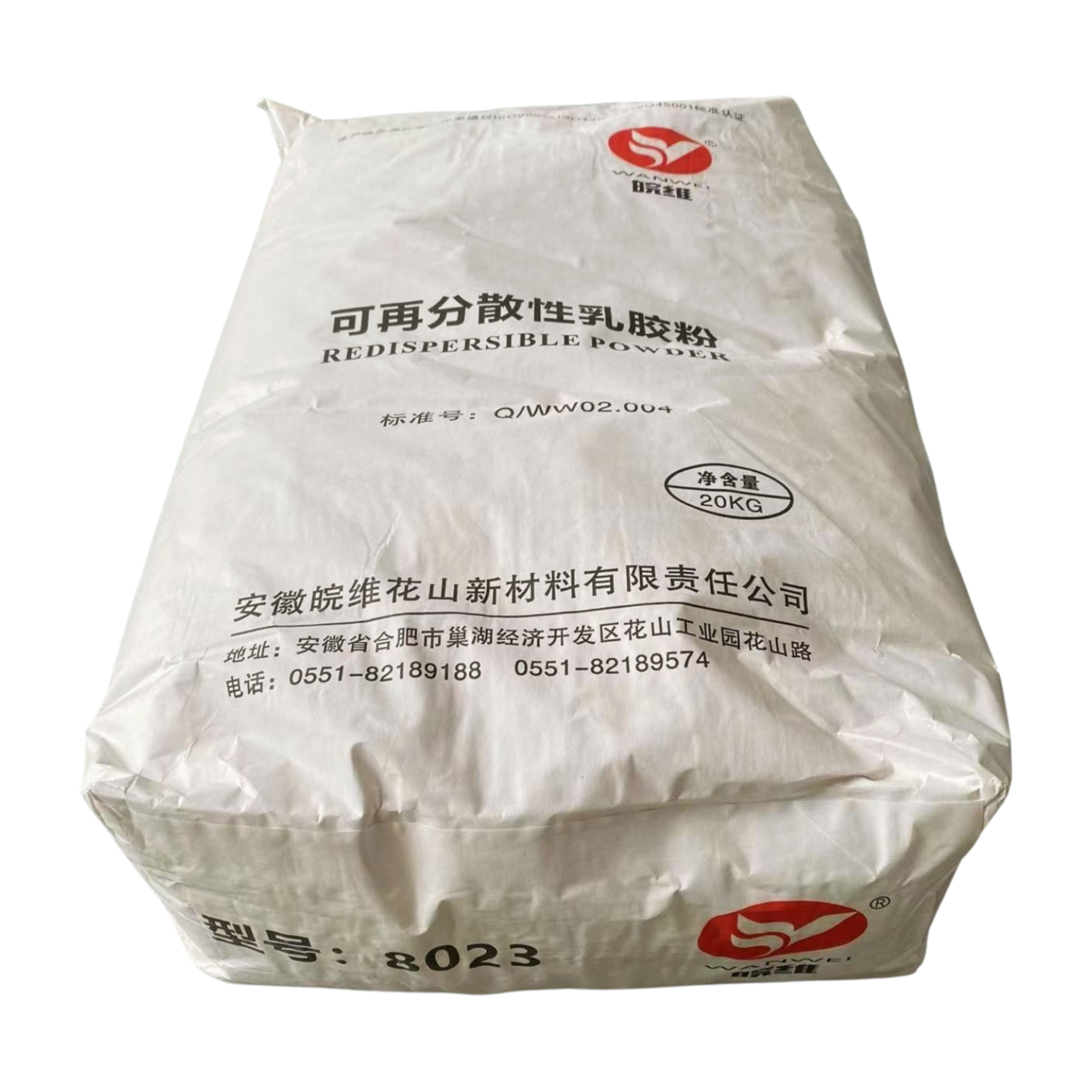
How Redispersible Polymer Powder Enhances Wet Tack and Early-Stage Adhesion
Why tile adhesives fail under shear before setting — the wet tack gap
Unmodified cementitious adhesives suffer a critical performance gap: insufficient wet tack. Before cement hydration develops meaningful strength—typically requiring several hours—the adhesive lacks cohesive integrity and interfacial bond strength. Under immediate shear stress from tile weight or installer handling, especially on vertical surfaces or with large-format tiles, slippage occurs. This leads to misalignment, inconsistent joint widths, and compromised long-term water resistance—factors contributing to 42% of field-reported tile detachment incidents.
Film formation mechanism: How redispersible polymer powder enables instant cohesive bridging
Redispersible Polymer Powder (RDP), commonly based on vinyl acetate–ethylene copolymers, delivers rapid interfacial reinforcement. Upon mixing with water, RDP particles disperse, migrate to cement–aggregate and substrate–adhesive interfaces, and coalesce within minutes into a continuous, flexible film. This film functions as a “molecular net” by:
- Forming hydrogen bonds with mineral substrates and hydrated cement phases
- Plasticizing the fresh mortar, improving workability without compromising early strength
- Encapsulating cement particles to enhance internal cohesion
The resulting pressure-sensitive layer generates measurable tack force before cement hydration begins—bridging the critical wet-tack gap.
Performance validation: 2.8× higher wet tack with RDP vs. unmodified adhesive (EN 12004)
Testing per EN 12004 confirms that adding 3–5% RDP elevates wet tack performance significantly. Adhesives modified with 4% RDP achieve 2.8× greater initial tack force than unmodified controls:
| Property | Unmodified | 4% RDP Modified | Change |
|---|---|---|---|
| Initial tack force (N/mm²) | 0.11 | 0.31 | +182% |
| Shear displacement (mm) | 3.2 | 0.9 | -72% |
| Open time (minutes) | 15 | 28 | +87% |
These gains translate directly to real-world reliability: field trials show 19% fewer installation defects and consistent compliance with ISO 13007 Class C1 requirements. The polymer film also limits water migration during curing, reducing efflorescence risk by 34% (Mortar Design Institute, 2023).
Redispersible Polymer Powder Improves Flexibility and Crack Resistance
The brittleness challenge: Cement shrinkage, thermal cycling, and substrate movement
Standard cementitious adhesives are inherently brittle due to their rigid calcium silicate hydrate (C–S–H) microstructure. Volumetric shrinkage during hydration (0.04–0.06%), daily thermal fluctuations (±15°C), and structural substrate movements—commonly exceeding 1 mm in concrete slabs—generate cumulative stresses up to 3 MPa. Since unmodified adhesives typically offer only 0.5–1 MPa tensile strength, microcracks form readily and propagate over time, undermining long-term tile anchorage.
Elastomeric network development: RDP particle coalescence and stress redistribution
RDP transforms the adhesive’s mechanical behavior by forming an elastomeric network interwoven with cement hydrates. As polymer particles coalesce during film formation, they create a deformable matrix capable of reversible strain absorption—dissipating up to 35% of applied strain energy that would otherwise fracture rigid bonds. Crucially, this network bridges incipient microcracks, arresting propagation across the adhesive layer and preserving structural continuity.
Achieving EN 12004 Class C2TES with ≥4 wt% redispersible polymer powder
Adhesives formulated with ≥4% RDP reliably meet EN 12004 Class C2TES criteria—requiring ≥2.5 mm deformation capacity in bend tests and >1.0 MPa tensile adhesion strength after freeze-thaw cycling. This certification validates suitability for high-stress environments including exterior facades, heated floors, and substrates prone to movement.
RDP Optimizes Adhesion to Low-Porosity Surfaces Through Interfacial Engineering
Adhesion barrier: Poor penetration and weak mechanical interlock on glazed porcelain and glass
Glazed porcelain and glass tiles present a fundamental bonding challenge: near-zero surface porosity eliminates mechanical interlocking—the dominant adhesion mechanism for cement-based systems. Without micro-penetration, adhesives rely solely on weak van der Waals forces, yielding shear strengths below 0.5 MPa. Thermal cycling or substrate movement further destabilizes this fragile interface, while ultra-smooth surfaces reduce effective contact area by up to 70% versus textured alternatives—accelerating delamination.
Surface energy modulation: How redispersible polymer powder balances cohesive strength and adhesive affinity
RDP resolves this interfacial mismatch through targeted surface-energy engineering. Hydrated RDP particles concentrate at the tile–adhesive interface, forming a thin, flexible polymer film that simultaneously enhances internal cohesion and improves interfacial wetting. Specifically:
- Internal tensile strength increases by 40–60% via polymer bridging across cement particles
- Interfacial tension drops significantly, enabling >90% effective surface contact even on non-porous substrates
This dual-action shifts failure mode from adhesive separation (at the tile–adhesive interface) to cohesive fracture within the adhesive layer—the preferred and code-compliant failure mode per EN 12004.
FAQ
What is redispersible polymer powder?
Redispersible polymer powder (RDP) is a key additive used in cementitious adhesives to enhance their performance. It is commonly based on vinyl acetate–ethylene copolymers and aids in forming flexible films that improve adhesion, flexibility, and crack resistance.
How does RDP improve wet tack in tile adhesives?
RDP improves wet tack by quickly forming a continuous, pressure-sensitive film that acts as a “molecular net.” This film reinforces interfacial cohesion and generates tack force even before cement hydration begins, preventing slippage and misalignment.
What are the benefits of using RDP in cementitious adhesives?
RDP enhances early-stage adhesion, crack resistance, and flexibility, achieving superior mechanical properties and reducing installation defects. It also improves performance on low-porosity surfaces like glazed porcelain and glass by enhancing interfacial wetting and cohesion.
Why are standard cementitious adhesives prone to cracking?
Standard cementitious adhesives are brittle due to the rigid microstructure formed during hydration, which cannot accommodate stress from shrinkage, thermal cycling, or structural movement. This leads to microcrack formation and propagation.