 EN
EN

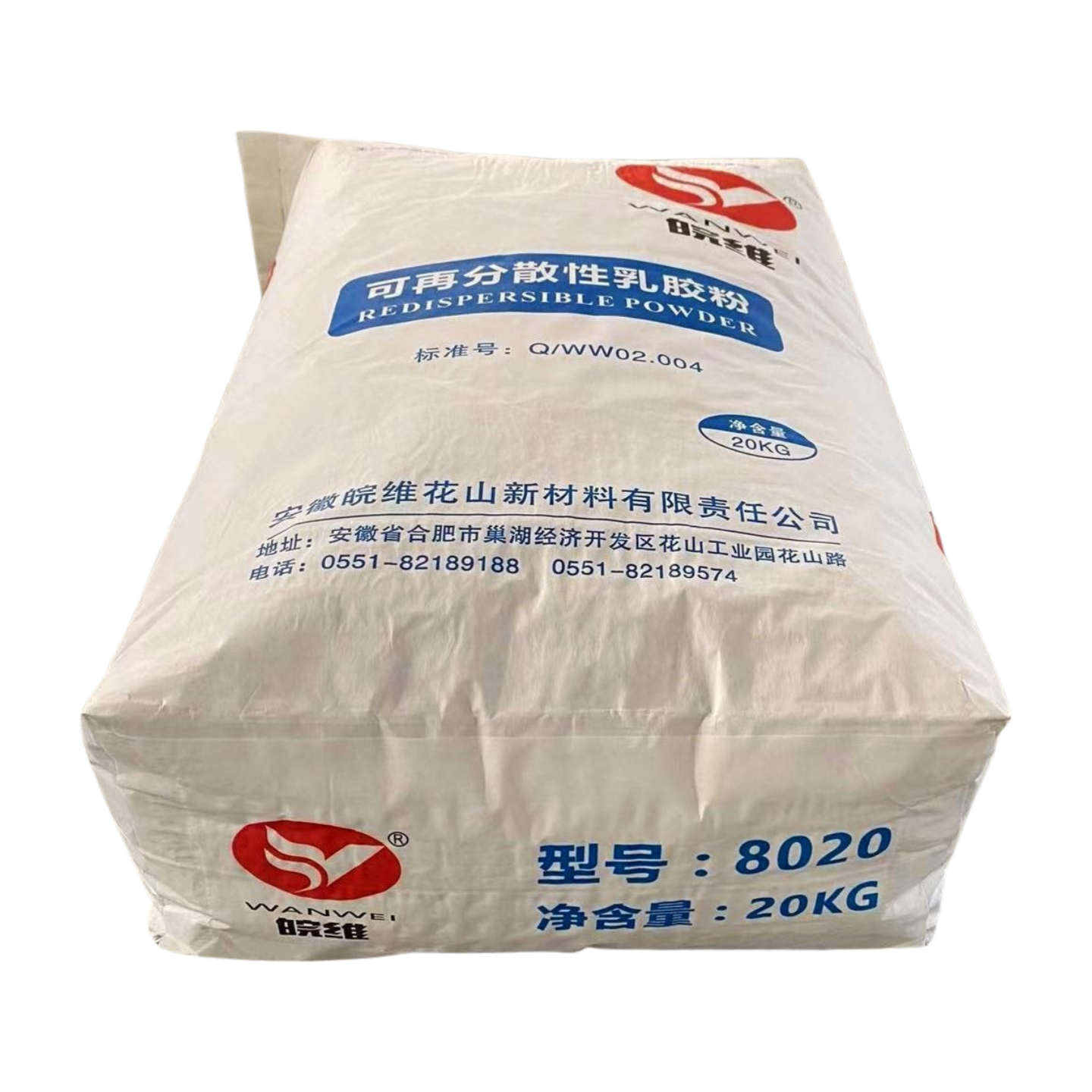
Core RDP Chemistries and Their Functional Impact on Tile Mortar Performance
VAE-Based Redispersible Polymer Powder for Balanced Adhesion and Workability
Vinyl acetate-ethylene (VAE) copolymers dominate the redispersible polymer powder market for tile adhesives due to their unique balance of film flexibility and adhesive strength. After redispersion, the polymer particles coalesce into a continuous network that bridges cement hydrates and tile surfaces, significantly enhancing tensile adhesion. A 2020 study by the International Journal of Adhesion and Adhesives found that a 3% VAE dosage increased pull-off strength by 38% compared to unmodified mortar—without compromising slump or trowelability. Its low glass transition temperature (≈0°C) promotes reliable film formation under typical job-site conditions, making it especially effective on ceramic and porcelain tiles bonded to concrete substrates. The dry powder also imparts a “ball-bearing” effect during mixing, reducing internal friction and extending open time by up to 15 minutes as measured by EN 1346 initial grab. For interior floor and wall installations, VAE-based RDP delivers a cost-effective, C1-compliant solution grounded in proven performance.
Hydrophobic Redispersible Polymer Powder (Styrene-Acrylic, Veova-Modified) for Wet-Area Durability
In moisture-prone environments—such as swimming pools, steam rooms, or exterior façades—standard VAE polymers lack long-term resistance to saturation. Styrene-acrylic and Veova-modified (vinyl ester of versatic acid) redispersible polymer powders are engineered with hydrophobic backbones that repel water and preserve bond integrity under prolonged immersion. According to a 2021 report from the RILEM Technical Committee, styrene-acrylic RDP reduced capillary water absorption by 62% after 24 hours—far exceeding the 15% reduction achieved by a typical VAE grade. This capability is essential for meeting C2S1 or C2S2 classifications under EN 12004, which mandate rigorous water immersion and freeze-thaw cycling. Veova-modified variants further improve early wet strength and alkali resistance, preventing re-emulsification in the highly alkaline cement matrix. At dosages of 3–5% by weight, these polymers form dense, cross-linked films that effectively bridge thermally induced cracks—making them ideal for demanding substrates like glass mosaics or fully vitrified tiles.
Glass Transition Temperature (Tg) as a Strategic Selector for Redispersible Polymer Powder
The glass transition temperature (Tg) of redispersible polymer powder decisively shapes the mechanical behavior of the cured polymer film. Below Tg, the polymer is rigid and glassy; above Tg, it becomes rubbery and flexible. This thermal switch governs crack-bridging capacity, open time, and early strength development—making Tg selection a critical formulation lever.
| Performance Attribute | Low‑Tg RDP (<10 °C) | High‑Tg RDP (>25 °C) |
|---|---|---|
| Film flexibility | Very high; film remains pliable even at ambient and low temperatures | Lower; film is stiffer and more resistant to deformation |
| Crack bridging | Excellent; absorbs movement from substrate expansion, vibrations, and thermal cycles | Moderate; may crack under high strain unless combined with flexible additives |
| Open time | Shortens slightly; rapid skin formation can reduce workability | Longer; slows surface drying, allowing extended tile adjustment |
| Early strength gain | Slower; polymer remains soft, delaying load resistance | Faster; rigid film contributes to early green strength |
| Climate suitability | Cold regions, freeze-thaw zones, outdoor facades | Hot climates, high-temperature installations, fast-track projects |
Low-Tg Redispersible Polymer Powder (<10°C) Enhancing Flexibility and Crack Bridging
Low-Tg redispersible polymer powder forms a soft, highly elastic film that remains deformable even in cold conditions—enabling superior crack bridging. When substrates or tiles experience thermal movement, vibration, or structural settling, the polymer stretches without rupturing, preserving bond integrity. This makes low-Tg RDP indispensable for external applications, heated screeds, large-format tiles on wooden substrates, and renovations over cracked concrete. While its extended rubbery phase can shorten open time in warm weather, this is readily managed through formulation—e.g., pairing with water-retaining agents—to retain exceptional crack resistance without sacrificing workability.
High-Tg Redispersible Polymer Powder (>25°C) Optimizing Open Time and Early Strength Gain
High-Tg redispersible polymer powder creates a harder, more rigid film under normal service conditions—translating directly into longer open time and faster early strength development. The delayed surface stiffening allows extended tile adjustment and reduces risk of cold joints, while the rigid film supports immediate load-bearing capacity—critical for vertical applications and fast-track construction. In hot climates where ambient temperatures regularly exceed 25°C, high-Tg RDP prevents excessive softening and potential tile slippage. Though less flexible than low-Tg alternatives, its combination of handling ease and dimensional stability makes it the preferred choice for large-area flooring, multi-story builds, and projects prioritizing speed and predictability over extreme deformability.
Matching Redispersible Polymer Powder to Substrate and Tile Characteristics
Boosting Bond Strength to Low-Absorption Surfaces: Vitrified Tiles, EPS Insulation, and Dense Concrete
Achieving reliable adhesion to low-porosity, non-absorbent substrates—such as vitrified tiles, expanded polystyrene (EPS) insulation panels, and dense concrete—requires RDP that compensates for the absence of mechanical keying. VAE-based RDP forms a continuous interfacial polymer film that enhances tensile adhesion by bridging micro-gaps and reducing the adhesive layer’s elastic modulus. This enables stress dissipation across thermal expansion mismatches and vibratory loads without cracking. For exterior or wet-area use, switching to a hydrophobic styrene-acrylic or Veova-modified RDP further improves water resistance and freeze-thaw durability. Laboratory testing confirms that a 2–3% dosage of such a powder can increase bond strength on vitrified tiles by over 40% versus unmodified mortar—while maintaining the open time and workability required for large-format tile installation.
Practical Implementation: Dosage Guidelines, Compliance, and Validation
Optimal Redispersible Polymer Powder Dosage (1–5%) and Diminishing Returns Beyond Critical Thresholds
The industry-validated dosage range for redispersible polymer powder in tile mortars is 1–5% by weight of dry mix. At 1–2%, polymer begins improving adhesion and flexibility without compromising early strength. At 3–4%, gains in wet-area performance and deformability become pronounced. Beyond 5%, however, benefits plateau sharply: excessive polymer can create an overly continuous film that traps air, lowers compressive strength, and drives up cost without meaningful performance uplift. Controlled testing by the Industrial Adhesives Consortium (2022) showed that increasing dosage from 5% to 8% raised material costs by 60% while improving tensile adhesion by less than 5%. For most applications, the 2–4% range delivers optimal balance between performance, durability, and economy.
Meeting EN 12004 and ISO 13007: How RDP Choice Directly Influences Key Test Metrics
EN 12004 and ISO 13007 classify tile adhesives based on tensile adhesion, open time, and deformability—metrics directly shaped by RDP chemistry and dosage. A well-chosen VAE-based RDP with moderate Tg typically achieves C2 classification, while styrene-acrylic systems enhance elongation to meet S1 or S2 requirements. Hydrophobic grades maintain adhesion after water immersion and freeze-thaw cycling—fulfilling the stringent criteria of C2S2 for pools, façades, and other high-moisture applications. Selecting the right RDP—not just the right dosage—ensures consistent compliance with cohesion, elongation, and durability standards, avoiding both underperformance and unnecessary over-engineering.
FAQ Section
What is redispersible polymer powder (RDP) and its role in tile mortar?
Redispersible polymer powder (RDP) is a dry, powdered polymer that, when mixed with water, forms a film in the cement matrix of tile mortar. It enhances adhesive strength, flexibility, and moisture resistance.
How does VAE-based RDP improve the performance of tile adhesive?
VAE-based RDP provides balanced adhesion and workability by forming a continuous network of polymer particles after redispersion. It increases pull-off strength and imparts flexibility for reliable film formation under diverse conditions.
Why are hydrophobic RDP variants used in wet areas?
Hydrophobic RDP variants like styrene-acrylic and Veova-modified powders repel water and maintain bond integrity under prolonged immersion, fulfilling high-performance requirements for C2S1 or C2S2 classification.
How does glass transition temperature (Tg) influence tile mortar performance?
Glass transition temperature determines whether the polymer film is glassy and rigid or rubbery and flexible. This affects crack bridging, open time, and early strength development.
What is the optimal dosage range for RDP in tile mortar?
The recommended dosage range is 1–5% by weight of dry mix. Going beyond 5% may result in diminishing returns in performance while increasing costs.
Table of Contents
- Core RDP Chemistries and Their Functional Impact on Tile Mortar Performance
- Glass Transition Temperature (Tg) as a Strategic Selector for Redispersible Polymer Powder
- Matching Redispersible Polymer Powder to Substrate and Tile Characteristics
- Practical Implementation: Dosage Guidelines, Compliance, and Validation
-
FAQ Section
- What is redispersible polymer powder (RDP) and its role in tile mortar?
- How does VAE-based RDP improve the performance of tile adhesive?
- Why are hydrophobic RDP variants used in wet areas?
- How does glass transition temperature (Tg) influence tile mortar performance?
- What is the optimal dosage range for RDP in tile mortar?