 EN
EN

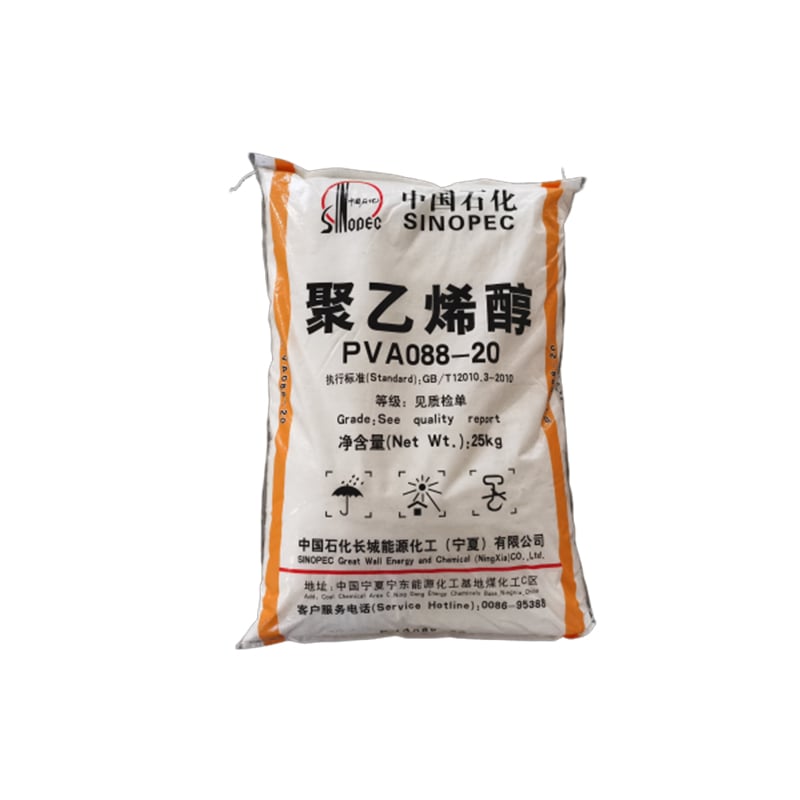
PVA 1788 in Textile Sizing: Enhancing Warp Strength and Process Efficiency
How PVA 1788’s 88% hydrolysis degree and optimal viscosity (28–33 mPa·s) enable deep fiber penetration and durable film formation
PVA 1788’s 88% hydrolysis degree delivers an ideal balance of hydrophilic and hydrophobic character—softening the polymer chain just enough to form a flexible, high-adhesion film on cotton, polyester, and blended yarns. Its viscosity of 28–33 mPa·s (measured as a 4% aqueous solution at 20°C) ensures deep penetration into yarn bundles, filling interstitial voids and coating individual fibers uniformly. Upon drying, it forms a slick, low-friction surface that suppresses hairiness and minimizes inter-fiber abrasion. Unlike fully hydrolyzed PVAs—which yield brittle films prone to cracking under tension—PVA 1788 retains sufficient elongation to endure repeated bending and high-tension cycles in modern air-jet and rapier looms. This durability maintains warp sheet integrity through shed formation and beat-up, significantly reducing size shedding and preserving weaving continuity.
Real-world impact: 22% reduction in warp breakage in denim mills — versus starch-based alternatives
Denim mills transitioning from modified starch to PVA 1788 sizing achieved an average 22% reduction in warp end breaks across 12 high-speed air-jet looms in a 2023 operational trial. Starch-based sizes tend to form inflexible surface coatings that fracture under mechanical stress, triggering frequent loom stops and lowering efficiency. In contrast, PVA 1788’s uniform, stress-distributing film flexes without failure—cutting downtime, improving machine utilization, and reducing fabric waste. Operators spend less time on warp repair, lowering labor costs. This performance gain reflects not only superior yarn protection but also measurable gains in process reliability and cost-per-meter economics.
PVA 1788 as a High-Performance Binder in Ceramics and Abrasives
Residue-free, low-temperature burnout (200–400°C) aligning precisely with ceramic sintering cycles
PVA 1788’s clean thermal decomposition is central to its value in technical ceramics. With its 88% hydrolysis degree and moderate molecular weight, it exhibits a narrow, predictable burnout window—200–400°C—perfectly synchronized with standard dewaxing and binder removal stages in sintering cycles. Under inert atmosphere, it degrades almost entirely into volatile byproducts, leaving ash content below 0.5% and no detectable carbon residue. This eliminates risks of internal porosity, strength loss, or discoloration in final components. Independent testing confirms >99.9% binder removal by 400°C (Ceramics Processing Institute, 2022), removing the need for extended hold times required by starch or clay binders. The result is faster, more repeatable cycles—boosting kiln throughput and part yield for alumina, zirconia, and silicon carbide components.
Improved green strength and dimensional stability in precision grinding wheels and technical ceramics
PVA 1788 markedly enhances green body integrity—critical for handling, machining, and holding tight tolerances pre-sintering. Its film-forming action creates a consistent adhesive layer around each particle, increasing green modulus of rupture by up to 28% compared to conventional clay binders (Abrasives Engineering Journal, 2023). In grinding wheel production, adding 2–5% PVA 1788 by weight enables thinner, higher-precision discs with improved edge retention during drying and handling. For alumina substrates and multilayer electronic packages, this translates to reduced warpage and tighter control over shrinkage variation. Its stable viscosity also ensures homogeneous distribution—preventing density gradients that cause distortion. These advantages directly lower scrap rates and support micron-level dimensional control in advanced ceramic manufacturing.
PVA 1788 in Additive Manufacturing: Enabling High-Fidelity Water-Soluble Supports
Rapid, controlled dissolution and low interfacial adhesion — critical for complex overhangs and fine features in FDM
PVA 1788 dissolves rapidly and predictably in ambient tap water—typically within 15–20 minutes—without requiring heated tanks or aggressive solvents. Its 88% hydrolysis degree and relatively low molecular weight yield both quick hydration and clean breakdown, preserving part geometry and surface fidelity. Crucially, interfacial adhesion between PVA 1788 and common build materials like PLA or PETG remains low enough to ensure clean, residue-free separation post-printing. That combination—strong in-process bonding yet effortless release—makes it uniquely suited for supporting intricate overhangs, micro-channels, and fine features in FDM. Users report up to 40% shorter post-processing times versus breakaway supports, with no compromise in model integrity. Its low solution viscosity (<50 cP) also ensures smooth extrusion through fine nozzles, enabling precise deposition of thin, conformal support layers.
Market traction: Growing adoption in high-resolution 3D printing amid 18.3% CAGR support-material demand (2024–2029)
Demand for water-soluble support materials is accelerating alongside the shift of FDM from prototyping to functional part production. A 2024 industry report projects an 18.3% compound annual growth rate for support-material demand through 2029—fueled by increasingly complex geometries and stricter surface-quality standards. PVA 1788 leads this expansion due to its consistent dissolution behavior, low toxicity, and compatibility with multi-material systems. Its benign degradation products—water and trace acetic acid—allow safe disposal in office and lab environments. As solvent-sensitive materials like TPU and medical-grade polymers gain traction, the ability to remove supports without chemical exposure becomes essential—further driving adoption away from HIPS or breakaway alternatives. Today, PVA 1788 underpins high-precision applications in dental models, surgical guides, and aerospace tooling, where surface accuracy and repeatability are non-negotiable.
Emerging & Niche Uses of PVA 1788 Across Specialty Sectors
Beyond its core applications, PVA 1788 is gaining ground in water-based woodworking adhesives—leveraging its 88% hydrolysis degree to deliver rapid setting and durable bonds across softwoods and hardwoods, streamlining furniture assembly. In construction, it serves as a high-strength, low-VOC binder for drywall compounds, tile mortars, and hardboard laminates—offering reliable adhesion in interior and light-duty structural contexts. Its film-forming properties also enhance specialty paper and label coatings, improving moisture resistance and printability without volatile organic compounds. As manufacturers prioritize sustainable, biodegradable, and low-emission formulations, PVA 1788’s water solubility, low toxicity, and balanced mechanical performance continue to open pathways in these evolving industrial segments.
FAQ
What makes PVA 1788 unique in textile sizing?
PVA 1788 has an 88% hydrolysis degree and a viscosity of 28–33 mPa·s, enabling deep fiber penetration and forming a durable, flexible film that reduces warp breakage and improves weaving efficiency.
Why is PVA 1788 suitable for ceramic sintering cycles?
PVA 1788 offers clean thermal decomposition within 200–400°C and leaves minimal residue, aligning with standard ceramic sintering cycles without compromising component quality.
How does PVA 1788 support 3D printing applications?
It dissolves rapidly in tap water, providing reliable support removal for intricate geometries in FDM printing without damaging part integrity.
Can PVA 1788 be used in other industries besides textiles, ceramics, and 3D printing?
Yes, PVA 1788 is gaining traction as a binder in woodworking adhesives, construction compounds, and specialty coatings due to its water solubility and mechanical properties.
Is PVA 1788 environmentally friendly?
Yes, PVA 1788 is low in toxicity, biodegradable, and produces benign degradation products, supporting sustainable industrial applications.